
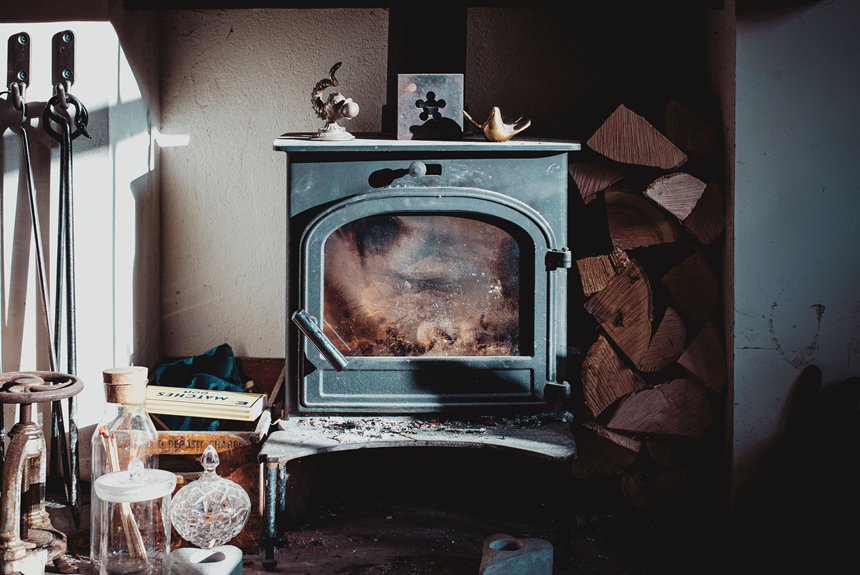
Most fireplaces won’t heat your whole house—I learned this when my living room stayed warm while upstairs bedrooms froze.
A wood-burning fireplace produces only 10,000–15,000 BTUs hourly, while homes typically need 40,000–60,000 BTUs.
Gas fireplaces with blowers fare better, warming about 1,400 square feet, but distant rooms still stay cold.
Heat rises and doesn’t distribute evenly, especially in open layouts.
You’ll get real comfort pairing your fireplace with central heating and proper zoning.
The real solution involves understanding why chimneys leak heat and what upgrades actually work.
Can a Fireplace Actually Heat a Whole House?
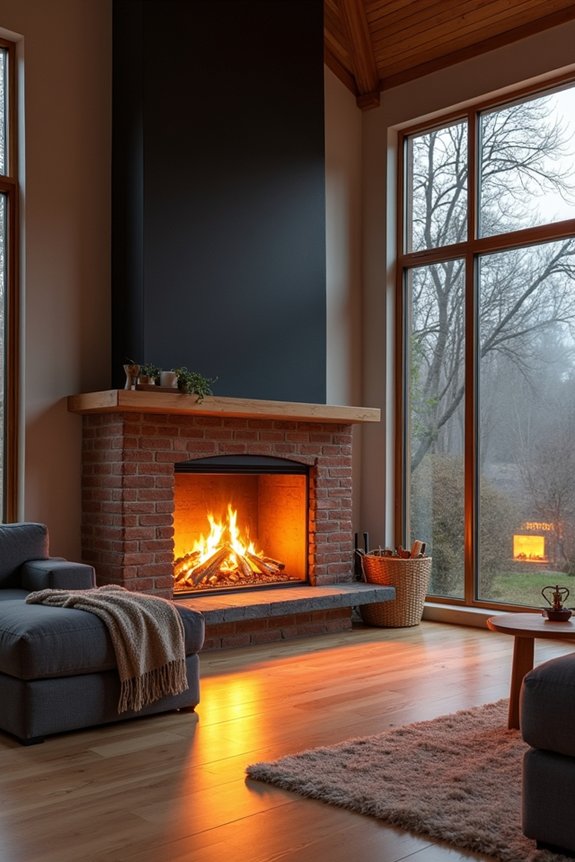
Most fireplaces won’t heat your entire house, though some come closer than others. I’ve watched friends struggle with uneven temperatures when relying solely on a fireplace. A direct-vent gas fireplace with a blower might warm about 1,400 square feet effectively, but that’s typically just one area. Wood-burning fireplaces? They’re even less efficient for whole-home heating. Electric options provide only supplemental warmth. What actually works is pairing a fireplace with central heating through proper zoning and circulation systems. I’ve seen homeowners achieve real comfort by combining fireplace warmth with their existing central heating setup. That’s the realistic path to heating your whole house effectively.
Why Wood-Burning Fireplaces Fall Short for Whole-Home Heating?
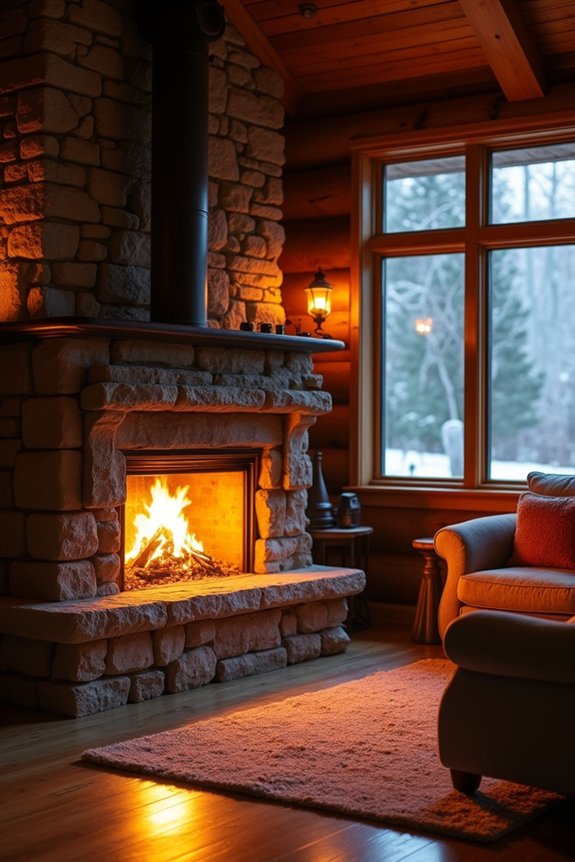
I’ve learned that wood fireplaces struggle with whole-home heating for three main reasons, and understanding them helped me manage my expectations. First, they simply don’t produce enough heat—most fireplaces generate only 10,000 to 15,000 BTUs per hour, while a modest home needs 40,000 to 60,000 BTUs to stay comfortable—so rooms beyond the immediate area stay cold. Second, the heat doesn’t travel well through your house because it rises and concentrates near the ceiling rather than spreading room-to-room, leaving hallways and distant bedrooms chilly even when the living room feels warm.
Limited Heat Output Capacity
Wood-burning fireplaces just don’t generate enough heat to warm your whole house, and I’ve watched this play out in countless homes. A typical wood-burning fireplace produces around 10,000 to 15,000 BTUs per hour—sounds decent until you compare it to what you actually need. Most homes require 40,000 to 60,000 BTUs hourly for comfortable whole-house heating. That means your fireplace is working at maybe 25% of what’s necessary. I’ve sat in living rooms where the fireplace roared, yet bedrooms upstairs stayed cold. The heat simply won’t travel far enough. You’re paying to warm one room while the rest of your home remains uncomfortable. That’s why your neighbors with central heating systems stay comfortable throughout winter.
Ineffective Room-to-Room Distribution
The real problem isn’t just that your fireplace doesn’t produce enough heat—it’s that the heat it does create can’t reach the rooms where you actually need it. Without a heat distribution system, warmth stays trapped near the fire. I’ve watched friends gather in their living rooms while bedrooms upstairs remain freezing. That’s because radiant heat weakens quickly with distance.
| Distance from Fireplace | Heat Strength | Room Temperature | Comfort Level |
|---|---|---|---|
| 0-6 feet | Very strong | 75-80°F | Excellent |
| 7-15 feet | Moderate | 65-70°F | Fair |
| 16+ feet | Weak | 55-60°F | Poor |
| Different floors | Minimal | 50-55°F | Inadequate |
Open floor plans make this worse. Warm air rises and escapes through windows, leaving distant spaces cold. You’ll need central heating for real whole-home warmth.
Chimney Airflow Heat Loss
About 1,000 cubic feet of your heated indoor air gets pulled up the flue every single minute. That’s a lot when you think about it. Your fireplace’s damper acts like opening a window, creating a vacuum that sucks warm air right out of your home.
Here’s what’s happening while you’re enjoying that fire:
- Warm air rises naturally up your chimney
- Cold outside air gets drawn in through gaps and cracks
- Your heating system works overtime to compensate
- Energy bills climb while your house actually gets colder
The US Department of Energy confirms that chimney heat loss happens constantly. Much of your fire’s heat escapes through the flue instead of warming your living spaces. Without proper heat exchangers, you’re paying to heat the outdoors. It’s a reality about fireplace efficiency.
Gas Fireplaces: A Better Option for Larger Spaces
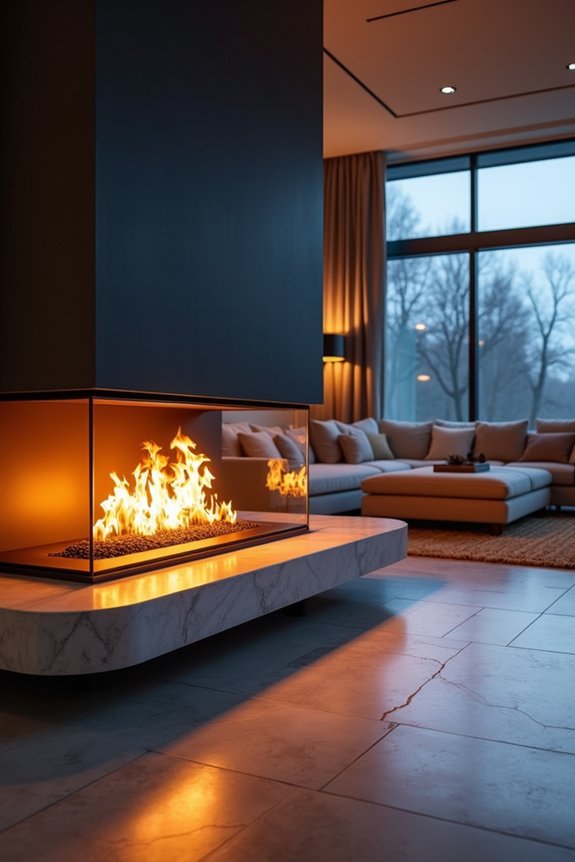
When I looked into upgrading from my old wood-burning fireplace, I discovered that gas fireplaces can heat about 1,400 square feet when properly sized, which is dramatically better than the single-room warmth I was getting before. Understanding how blower systems work was particularly helpful—they actively push heated air into other rooms instead of letting it get trapped near the fireplace, avoiding the hot-and-cold situations I’d dealt with for years. Pairing the right gas insert with a blower means I can warm my whole house, though I still need my central heating to handle the coldest nights evenly.
Heat Output and Capacity
How much heat can you actually expect from a gas fireplace? I’ve found that a properly sized direct-vent gas fireplace with a blower delivers reliable warmth. Here’s what you’re working with:
- Up to 1,400 square feet of heating capacity
- Controllable heat output compared to wood-burning alternatives
- Consistent performance without the unpredictability of traditional fireplaces
- Effective zone heating for main living areas and open spaces
The gas fireplace blower makes a real difference in heat distribution. I’ve noticed it pushes warmth throughout connected rooms efficiently. However, I’ll be honest—a single insert won’t handle your entire house evenly. Bedrooms and distant areas typically stay cooler. You’ll want supplemental heating for those spaces, especially during harsh winters.
Blower Systems for Distribution
The blower in a gas fireplace is what separates a decorative feature from an actual heating tool. When I installed one in my home, the blower-assistance made a noticeable difference pushing warmth into my living room and adjacent spaces. You’re looking at heating roughly 1,400 square feet when sized correctly. Here’s the thing though: even with a blower working hard, you won’t get uniform heat everywhere without planning. I learned this the hard way trying to heat my upstairs bedrooms from the main level. Strategic placement matters. Pairing your blower-equipped fireplace with ceiling fans or supplemental heating improves comfort levels significantly. One unit simply can’t do it alone for most homes.
Electric Fireplaces and Their Heating Limitations?
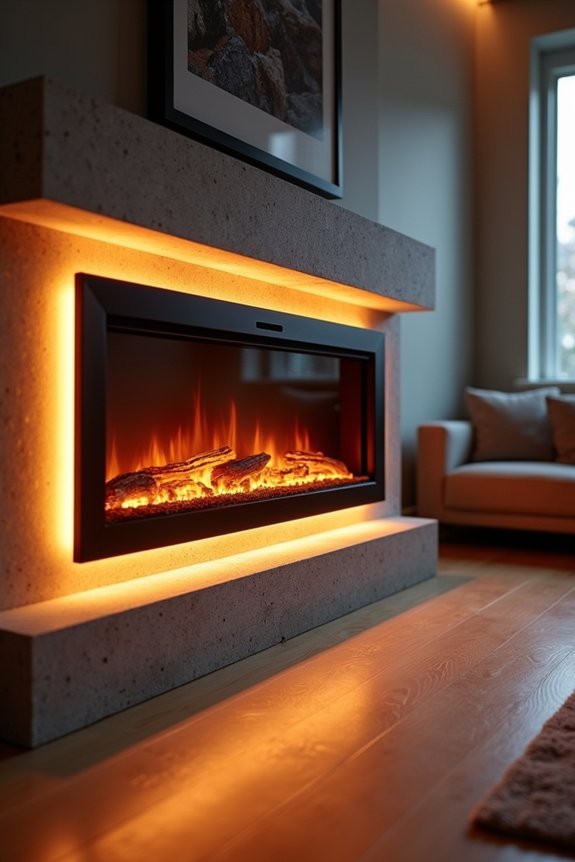
Ever wondered if that beautiful electric fireplace in your living room could warm your entire house? I learned the hard way that they can’t. Electric fireplaces typically generate 4,500–10,000 BTUs, which only heats limited spaces effectively.
Here’s what I discovered about their real limitations:
- Heat stays localized without air ducts or heat exchangers
- Distant rooms receive minimal warmth from a single unit
- Operating costs climb quickly for multi-room coverage
- Electric resistance heating proves inefficient compared to central systems
I’ve found they work well as secondary heat sources in well-insulated rooms. Think of them as zone heating rather than whole-house solutions. Pairing an electric fireplace with your main heating system creates comfort without disappointment. That’s when they work best.
Why Chimneys Leak Heat
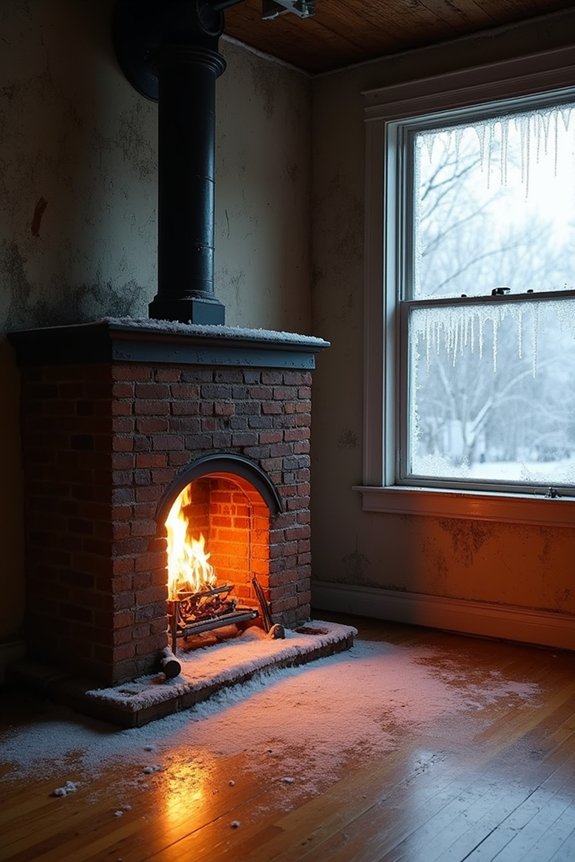
I’ve noticed that when you open your fireplace damper, you’re creating an open window—your home starts pulling about 1,000 cubic feet of warm air up the chimney every single minute. This vacuum effect happens because the fire needs oxygen, so it literally sucks heated indoor air out of your living space faster than the fireplace can replace it with warmth. Even while flames are burning, you’re losing more energy through that constant air exchange than you’re actually gaining from the heat the fire produces.
Damper Vacuum Effect Dynamics
How much of your hard-earned heat is literally floating up your chimney right now? When you light a fire, your damper acts like an open window, creating what I call the damper vacuum effect. This pulls warm air from your home upward and outside faster than replacement air can return.
Here’s what happens:
- Heated indoor air gets sucked toward the chimney
- About 1,000 cubic feet of warmed air escapes each minute
- Your heating system works overtime replacing lost heat
- Energy bills climb while comfort drops
I’ve watched this happen in my own home. An open damper and poorly insulated flue mean your furnace runs constantly, fighting against heat loss. That’s money disappearing up the flue, friends.
Air Exchange Energy Loss
Your chimney’s pulling thousands of cubic feet of heated air straight out of your house every single minute—and you might not even realize it’s happening. I learned this the hard way when my heating bills skyrocketed one winter. The air exchange happening inside your chimney is relentless. About 1,000 cubic feet of your warm air leaves every minute when that fire’s burning.
| Heat Loss Factor | Impact |
|---|---|
| Open damper | Massive warm air escape |
| Running fireplace | Continuous exhaust pathway |
| Poor sealing | Increased energy waste |
| No heat distribution | Uneven home warmth |
Think of it like leaving your front door cracked open during winter. That’s what happens without proper damper efficiency and sealing. You’re not just losing heat—you’re actively fighting against your own heating system.
Zone Heating: Heat Only the Rooms You Use
Ever notice how you’re heating rooms you barely use while shivering in the one where you actually spend time?
That’s where zone heating comes in. Instead of warming your whole house, you concentrate heat where you’re actually living. This approach saves money and keeps you comfortable. Here’s how to make it work:
- Place your fireplace in high-traffic spaces like living rooms
- Seal air leaks around doors and windows in that zone
- Lower your furnace temperature while the fireplace runs
- Use a fireplace insert or blower to push warmth into adjoining rooms
You’ll notice the difference right away. Your primary living area becomes warm and inviting, and you’re not wasting energy heating empty bedrooms. Pair this with supplementary heating for cooler spaces, and you have an efficient system that matches how you actually live.
What Fireplace Inserts Can Actually Deliver?
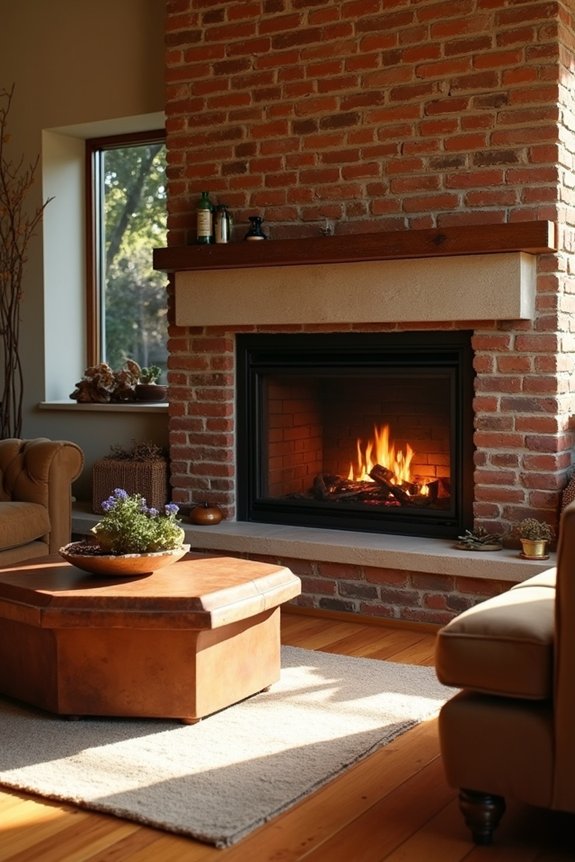
So here’s the truth about fireplace inserts: they work well for their intended purpose, but they have real limits. A direct-vent gas insert with a blower can heat about 1,400 square feet when properly sized. That’s genuinely helpful for one room or an open floor plan. The catch? Heat distribution becomes tricky beyond that space. I’ve watched people install inserts expecting whole-house warmth, only to discover their bedrooms stay chilly. Without central ducts channeling warm air elsewhere, you’re basically heating that immediate area. Think of it as targeted comfort rather than comprehensive warmth. If you’ve got multiple zones needing heat, you’ll probably need additional equipment or rely on your central system as your primary source.
How Home Size and Layout Affect Coverage
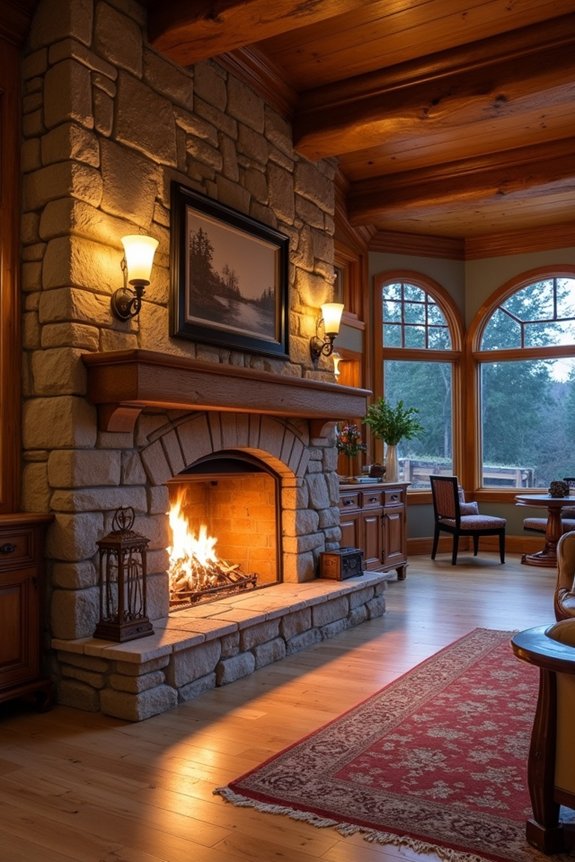
a fireplace insert’s heating power doesn’t work the same in every home. Your home’s size and layout significantly affect heat distribution and whether you’ll actually stay warm.
Consider these factors:
- Square footage – A direct-vent insert handles about 1,400 square feet when sized correctly, but sprawling homes need more coverage
- Open floor plans – Heat rises and disperses quickly without walls to contain it
- Multiple levels – Upstairs bedrooms stay cold while downstairs gets toasty
- Large windows – Glazed walls let warmth escape faster than you’d expect
I’ve seen perfectly sized inserts fail in poorly planned spaces. Your layout determines everything. Pairing your fireplace with proper air circulation and maybe a secondary heat source upstairs produces better results.
Fireplaces vs. Furnaces: The Efficiency Gap
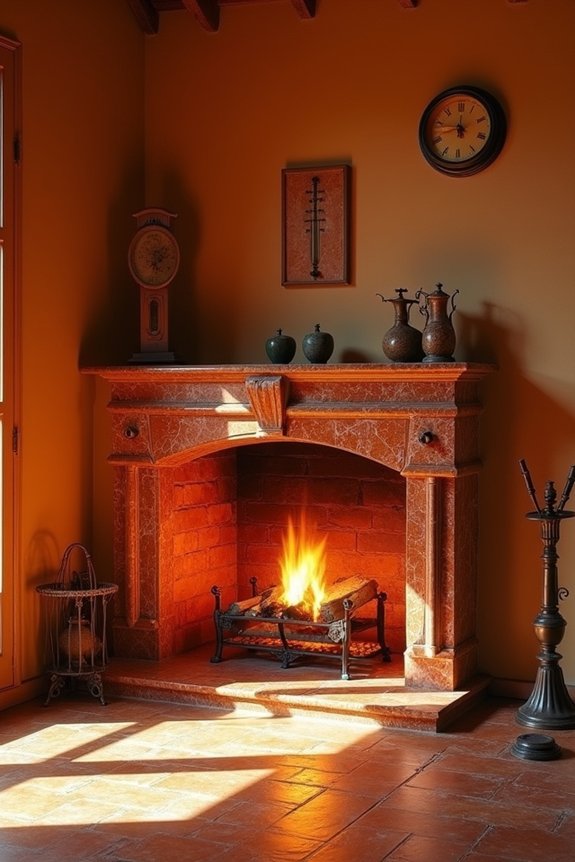
When I compared my fireplace’s heat output to my central furnace, I discovered a significant efficiency gap that caught my attention. My gas fireplace produces around 25,000–40,000 BTU, while my furnace delivers 60,000–100,000 BTU with even distribution throughout the house, meaning I’m spending more on fuel for less warmth when I rely solely on the fireplace. Furnaces cost less to operate monthly because they distribute heat systematically, whereas fireplaces waste considerable energy up the chimney or into unused rooms.
Heat Output Comparison
fireplaces and furnaces operate in completely different leagues when it comes to heating your whole house.
Let me break down the heat output reality:
- Wood-burning fireplaces produce roughly 10,000-15,000 BTUs, warming maybe one room effectively
- Gas fireplaces with blowers reach about 1,400 square feet of coverage when properly sized
- Central furnaces distribute 40,000-100,000+ BTUs evenly throughout your entire home
- A single fireplace creates temperature swings—toasty near the fire, chilly down the hall
I’ve seen this firsthand. My neighbor relied solely on his fireplace one winter and ended up huddled in his living room while bedrooms stayed freezing cold. The heat output simply can’t match a furnace’s consistent, distributed warmth. Most people underestimate the difference.
Energy Consumption Costs
How much does it actually cost to run your fireplace versus your furnace for the winter? I’ve learned the hard way that fireplaces drain your wallet faster than you’d think. While a gas fireplace with a blower might heat 1,400 square feet, your central heating system distributes warmth more evenly across your whole home, using less energy overall. Here’s what I’ve noticed comparing costs:
| Heating Method | Average Monthly Cost |
|---|---|
| Wood-burning fireplace | $150-250 |
| Gas fireplace with blower | $100-180 |
| Central heating system | $80-120 |
| Supplemental fireplace use | $60-90 |
The Department of Energy flagged something important: chimneys lose significant warmth. I’ve found that using your fireplace as supplemental heating alongside central heating actually cuts my bills considerably. It’s about working smarter, not burning more.
Using Your Fireplace as Backup Heat
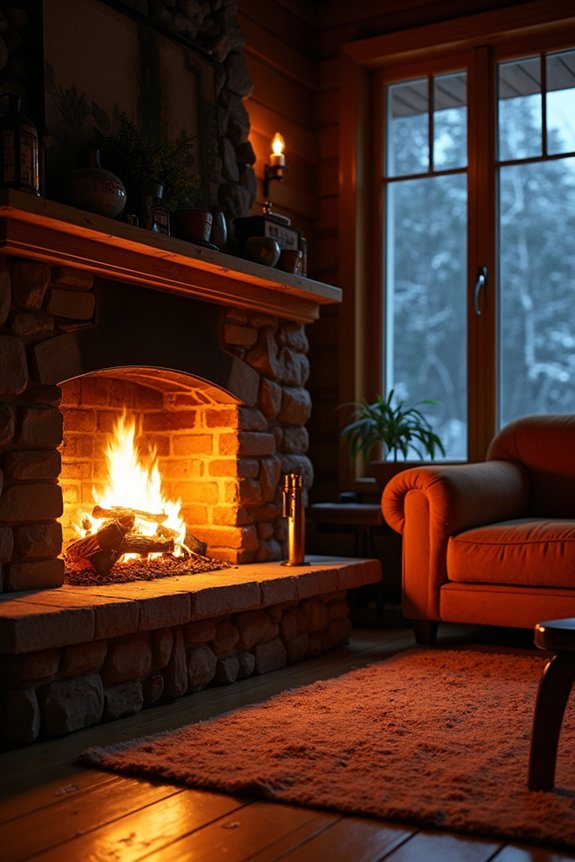
Rather than expecting your fireplace to shoulder the whole heating load, I’d suggest thinking of it as your home’s comfort insurance policy. I’ve learned that backup heat works best when you layer it strategically with your central system. Here’s how I approach it:
- Fire up your fireplace during peak cold snaps when your furnace runs continuously
- Use it to warm your main living areas while reducing central heating demand
- Close off unused rooms and rely on the fireplace to heat your occupied spaces
- Switch to backup mode during power outages or furnace maintenance
This approach cuts energy costs while keeping everyone comfortable. You’re not replacing your primary heating system—you’re smartly supplementing it. I’ve found this realistic strategy keeps my family cozy without wasting money on utility bills.
Six Ways to Get More Heat From Your Fireplace?
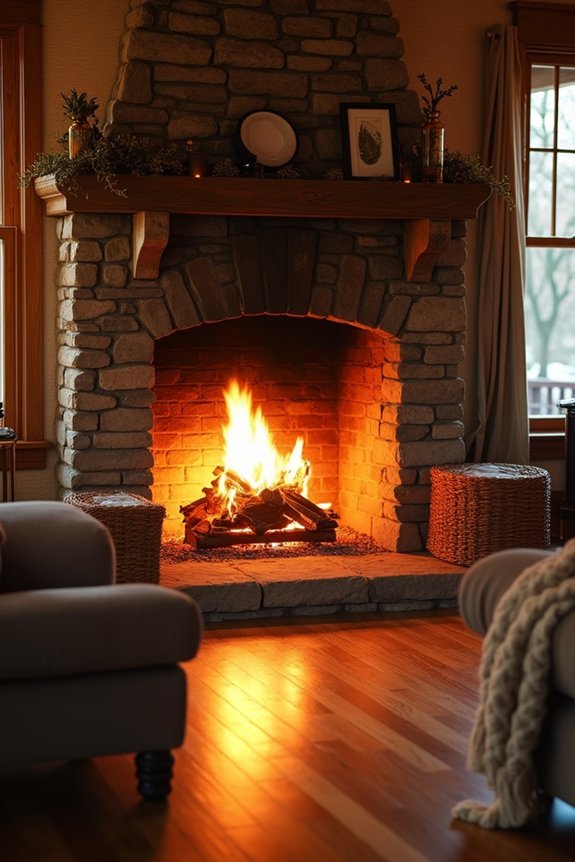
Now that your fireplace is working as a supplement to your heating system, let’s talk about getting more warmth from it. First, size your unit correctly—a direct-vent gas fireplace heats about 1,400 square feet when matched properly. Second, maintain proper airflow by opening doors to adjacent rooms so heat reaches beyond the immediate space. Third, use a blower fan; it’ll push warmth where natural convection won’t reach. Fourth, seal any gaps around windows and doors that let heat escape. Fifth, arrange furniture to promote circulation patterns. Finally, consider a supplementary zone heater for distant areas. These strategies work best when you’re realistic about your fireplace’s actual heating capacity and combine them thoughtfully.
Should You Upgrade to a Gas Insert?
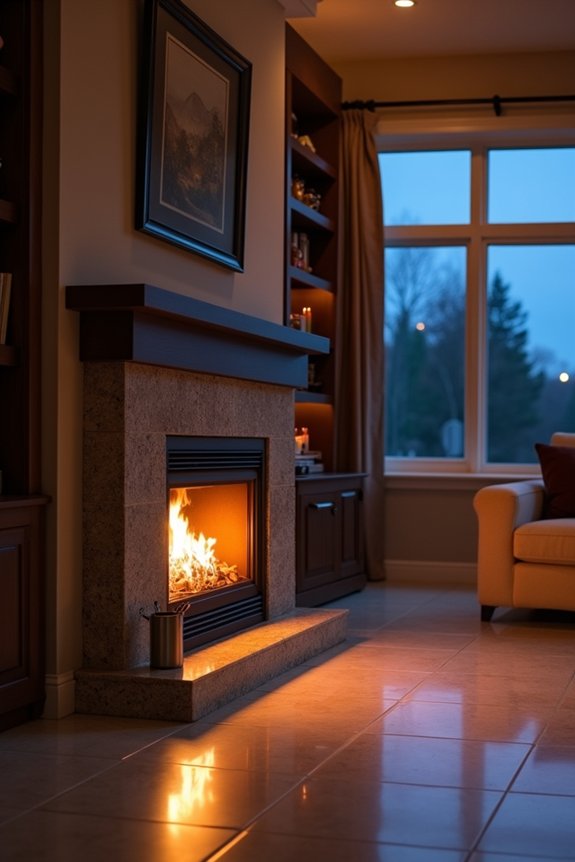
If you’ve been enjoying your fireplace but wish it’d actually warm your whole house, a gas insert might be worth considering. I’ve found that upgrading gives your fireplace genuine heating capability while keeping that comfortable ambiance you love.
Here’s what you’d gain:
- Consistent heat output without stoking fires or managing ash
- About 1,400 square feet of heating capacity when properly sized
- Better efficiency than traditional wood-burning fireplaces
- That beautiful glow without the smoke and mess
A gas insert won’t replace your central heating system, but it’ll significantly improve warmth on your main level. You’ll appreciate the reliability and convenience, especially during shoulder seasons when firing up the whole house seems wasteful. It’s the practical middle ground between ambiance and genuine comfort.
Fireplace Mistakes That Waste Heat
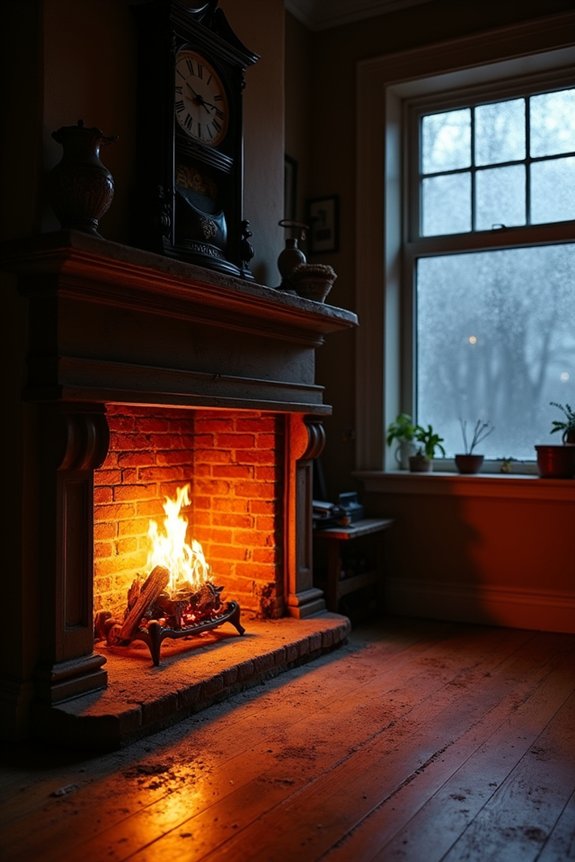
Ever notice how your fireplace feels warm when you’re sitting right in front of it, but the bedroom upstairs stays cold? That’s because we’re all making the same mistakes that waste heat.
| Mistake | Problem | Solution |
|---|---|---|
| Open dampers | 1,000 cubic feet of warm air vents up chimney per minute | Close damper when not in use |
| Poor placement | Radiant heat only warms nearby areas | Use fans to distribute warmth |
| Inefficient design | Heat loss through chimney draw | Install a fireplace insert |
I learned this the hard way. My fireplace was actually making my heating bills worse, not better. The open chimney was sucking warm air right out of my living room. Now I close that damper immediately after fires die down, and I’ve noticed real heat loss reduction throughout my home.
When Your Fireplace Is Enough
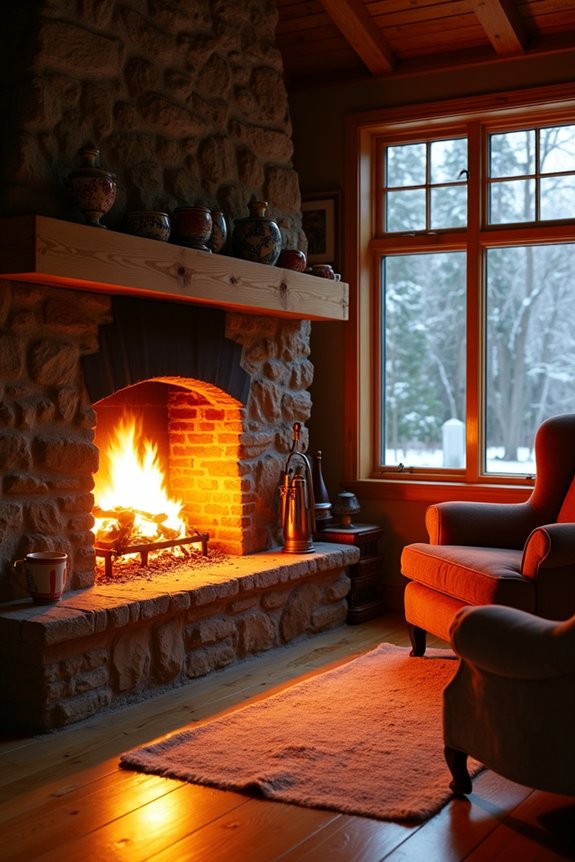
After you’ve fixed those heat-wasting mistakes, you might wonder if your fireplace can actually handle the whole heating job. Here’s what I’ve learned from my own experience: your fireplace probably isn’t enough on its own. A direct-vent gas fireplace with a blower can warm about 1,400 square feet effectively, but that’s just one area. Consider these situations where your fireplace falls short:
Your fireplace probably isn’t enough on its own. It works best as a supplemental heat source, not your primary system.
- Upstairs bedrooms stay cold while your living room toasts
- Open floor plans let heat escape to unused spaces
- Large windows pull warmth right out of the room
- Lower levels receive minimal heat distribution
I’ve found that pairing your fireplace with central heating gives you reliable comfort throughout your home. Your fireplace works best as a supplemental heat source, not your primary system.