
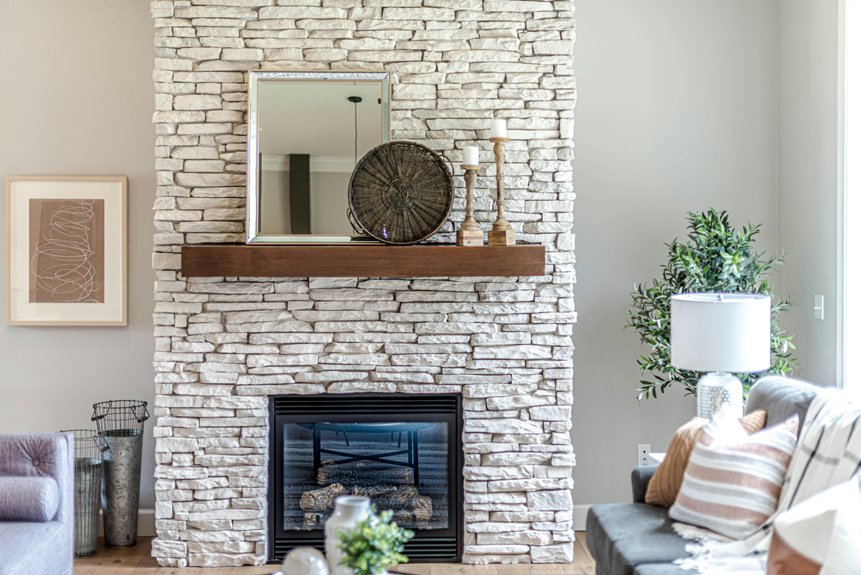
I start with tall anchor vases, around 18-24 inches, filled with oversized faux branches at each end.
Then I layer smaller pieces forward—stacked books, brass candlesticks, greenery stems in water glasses—to create depth without matching everything perfectly.
I mix textures like rattan, glass, and brass for warmth and contrast.
The key is building asymmetrically, letting elements breathe, and refreshing seasonally with different foliage tones.
This layering framework helps you build a mantel that feels collected and deliberate.
Start Your Mantel With Height and Drama
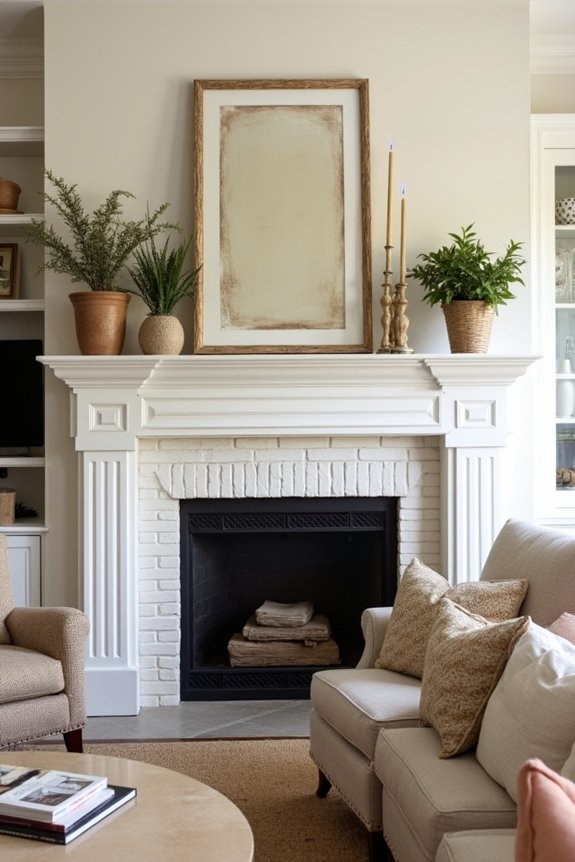
How do you make a mantel feel intentional instead of random? I’ve found that starting with height is your hidden advantage. I always begin by placing tall, rustic vases—think 18-24 inches—at each end of my mantel. They create visual interest immediately and draw the eye upward.
Then I fill those vases with faux oversized green leaf branches. The greenery stays vibrant without requiring constant maintenance, which I appreciate on busy weeks. These branches give you that lush, gathered-from-nature feeling while keeping things manageable.
The height from your vases anchors everything else you’ll add. It’s like building from the ground up—you’re establishing your foundation first. Once those tall elements are in place, you’ve got a framework that makes every other piece work together in a way that feels deliberate, not like you’re just filling empty space.
Make Foliage Your Focal Point and Anchor
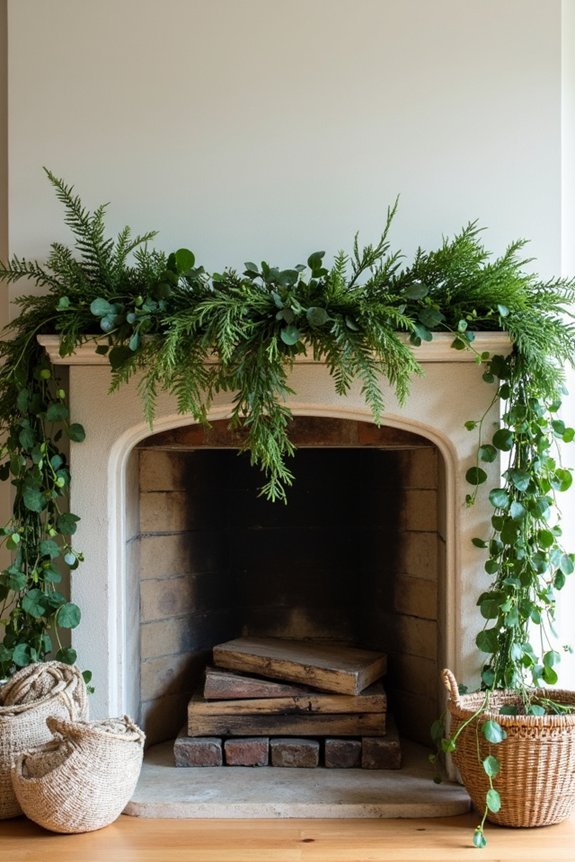
Once you’ve got those tall vases anchoring each end, the greenery becomes your real star—it’s what brings a bare mantel to life with purpose. I’ve learned that faux greenery works beautifully here because it stays fresh-looking all season long without wilting.
Here’s what makes greenery your main focus:
- Oversized branches create drama – I use faux eucalyptus or olive branches that extend upward, drawing eyes naturally higher
- Layering adds depth – Overlapping different greenery types gives that polished, considered feeling you’re after
- White space matters – I leave breathing room between stems so nothing looks crowded or cluttered
Fill your vases with water to keep fresh stems hydrated. This anchoring greenery brings everything together, creating that comfortable, modern rustic mood that makes people feel welcome in your home.
Balance It Without Matching Everything
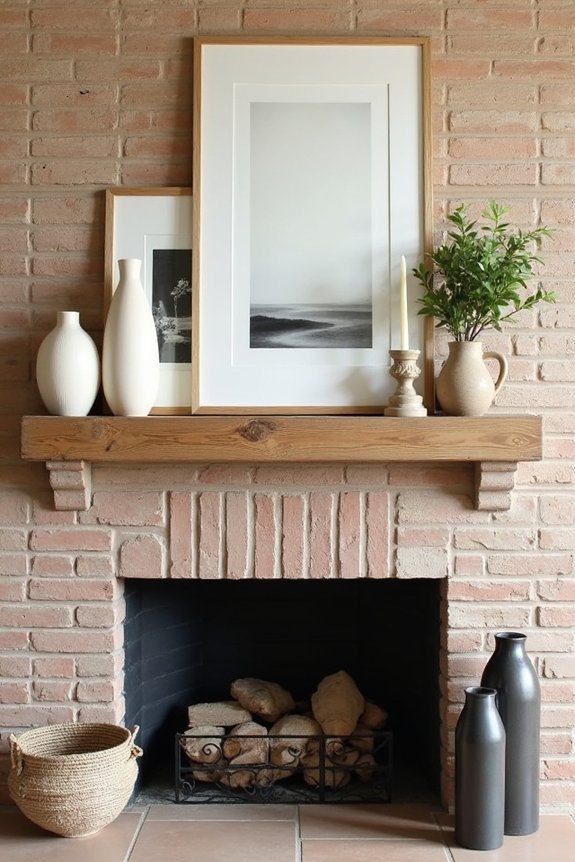
Why do so many people think a mantel has to match perfectly on both sides? Asymmetrical balance creates more visual interest. Place tall foliage in a rattan vase on one end, then anchor the opposite side with matching brass candlesticks. This creates height and draws your eye across the whole space. Layer elements at different depths—books stacked slightly forward, branches reaching back—so nothing feels flat. The real work happens when you stop worrying about identical pairs. Instead, think about weight and visual flow. A large mirror on the left balances a tall arrangement on the right. You’re creating movement, not symmetry. This approach shows you’ve gathered pieces you actually love over time.
Layer Vintage Pieces With Fresh Greenery
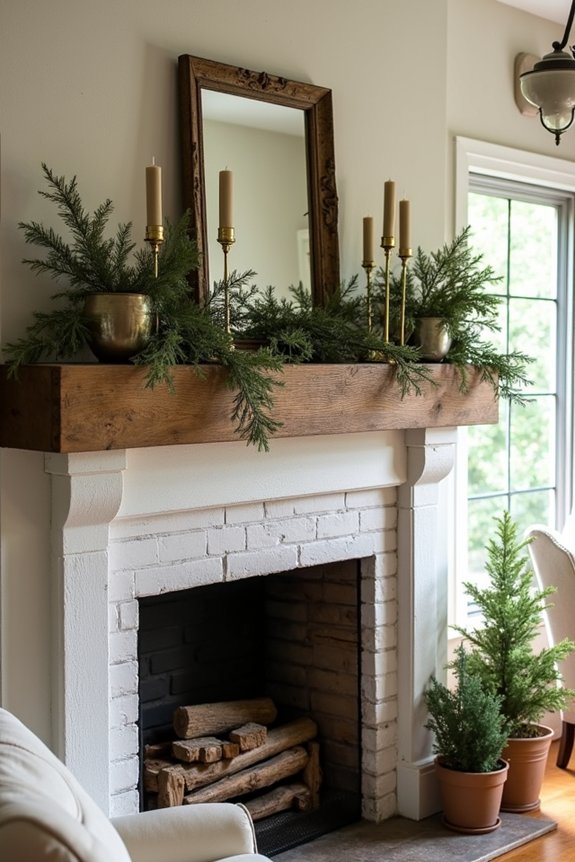
Now that you’ve got the asymmetrical balance down, it’s time to fill that mantel with pieces that actually tell a story. I’ve found that layering vintage pieces with fresh greenery creates that collected-over-time feeling we all want. Here’s what I add to make it work:
- Tall rattan vases (18-24 inches) paired with oversized faux branches for height
- Stacked vintage books in neutral tones as your center anchor point
- Fresh greenery stems in water glasses to keep everything alive and vibrant
The appeal comes from mixing old with new. Those weathered books paired with bright green leaves? That’s where the charm lives. It doesn’t look staged or perfect—it looks lived-in. Your mantel becomes a reflection of who you are.
Choose Brass and Metallics for Elegant Contrast
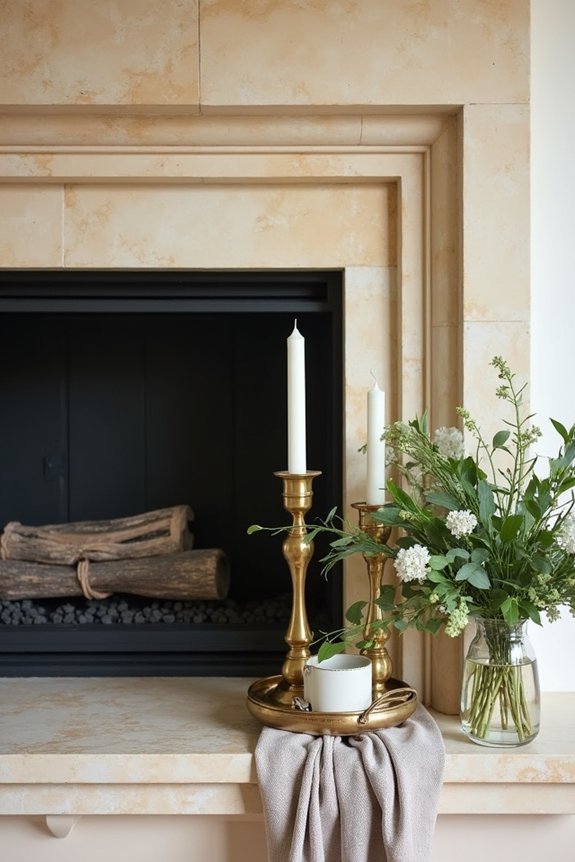
I’ve found that brass candleholders and metallic accents create warmth against lush green foliage, especially when you mix different metal finishes like polished brass with aged bronze pieces. When I layer these metallics at varying heights—placing a tall brass candlestick (around 12-15 inches) next to shorter pieces—the contrast draws your eye across the mantel and creates visual interest rather than clutter. Try grouping your brass ornaments and candlesticks on one side to balance taller rattan vases on the other, and you’ll notice how the warm metal glow makes the greenery stand out more.
Brass Against Green Foliage
pair brass candleholders with lush green foliage, and you’ve got yourself an arrangement that feels both classic and fresh. I’ve found this combination works beautifully because brass naturally complements the richness of faux greenery.
Start by anchoring your display with these essential elements:
- Tall rattan vases (18-24 inches) filled with oversized green foliage for height and drama
- Mirrored brass candlesticks on each end, creating balanced symmetry across your space
- A central brass ornament plus stacked vintage books to ground the composition
The key? Fill those vases with water to keep stems looking polished. This detail matters more than you’d think. Your mantel becomes a sophisticated focal point that feels well-planned, not random. That’s the balance we’re all after.
Antique Metallics for Warmth
What really creates warmth on a mantel is the addition of antique metallics. Brass candlesticks provide a welcoming glow that makes your room feel lived-in and personal. Pairing antique brass pieces with greenery offers that classic contrast—the cool greens against warm metals create balance and purpose.
I recommend placing two brass candlesticks as bookends, flanking a central arrangement. The aged patina on antique brass catches light beautifully, creating depth without the appearance of being shiny or new. You’re building a space that feels like home, not a showroom. Mix in vintage candleholders of varying heights, and your mantel begins to tell a story. That warmth is what draws people to your fireplace and keeps them there.
Mixed Metal Layering Technique
Once you’ve got that warm glow from antique brass, the next step is building layers with different metals that work together. This creates a sophisticated look on your mantels.
Here’s what I do to make it work:
- Pair brass candleholders with darker metals like iron or bronze for contrast
- Mirror brass pieces on opposite ends to frame your central focal point
- Mix in glass or wood accents to balance the metallic shine
When I arrange my mantel, I place a central cluster—stacked vintage books or brass ornaments work well—right in the middle. Then I flank each side with matching brass candlesticks. This approach blends vintage warmth with contemporary sophistication, giving your fireplace that refined quality.
Arrange Elements Front to Back for Visual Depth
I’ve found that thinking of your mantel like a stage helps create visual depth. Start by placing your smaller pieces—think 4-6 inch brass candlesticks or slim decorative objects—toward the front, then position heavier items like stacked books or larger ornaments in the middle and back. This layering technique creates dimension throughout the display. Position tall, dramatic elements like branches or greenery at the ends or back, which frames everything and guides the eye through the composition.
Layering Objects for Dimension
How do you keep a mantel from looking flat and one-dimensional?
Layering objects for depth works well for your entire fireplace. Start by placing larger, grounded pieces toward the back—think stacked books or tall candlesticks. Then layer smaller items in front to create natural overlap and visual interest.
Here’s what I do to add dimension:
- Mix textures like wood, metal, and greenery at different depths
- Position overlapping frames at varying heights, about 4-8 inches apart
- Center your arrangement with a balanced focal point, such as brass decorative pieces with books
This approach prevents that cluttered feeling while building real depth. I’ve decorated countless mantels this way, and every time, guests comment on how deliberate it looks. You’re not just placing objects—you’re creating a thoughtful arrangement that draws people in.
Positioning Smaller Items Forward
The real magic happens when you flip the layering order—placing your smaller pieces in front instead of hiding them in back. I’ve discovered that arranging smaller items forward creates genuine visual depth on your mantel. Think of it like this: a stack of three books (about 6 inches tall) positioned at the mantel’s edge draws your eye immediately. Then I layer taller elements—a 14-inch mirror or vase—behind them. This strategic layering prevents that flat, one-dimensional look. When I position candlesticks or framed photos in front, they anchor the composition while letting larger pieces have room behind. You’re creating a frame that guides viewers through your display. It’s simpler than it sounds, and honestly, this approach works well for most mantel arrangements.
Creating Depth With Scale
Now that you’ve got the front-to-back layering down, you’re ready to play with scale—and that’s where your mantel starts looking more deliberate. I’ve learned that mixing different heights creates drama against your wood beam backdrop. Here’s what I do to add depth:
- Place tall rattan vases or oversized faux foliage at the back to anchor everything
- Layer cascading greenery that tapers forward, creating natural dimension
- Stack vintage books centrally with brass ornaments to frame your arrangement
The trick? Let taller pieces breathe in back while smaller items float forward. This arrangement draws your eye through the space rather than across it flatly. When you combine vintage textures with fresh greenery this way, you’re building layers that make your mantel feel composed and lived-in—not overdone.
Incorporate Books and Collections for Storytelling
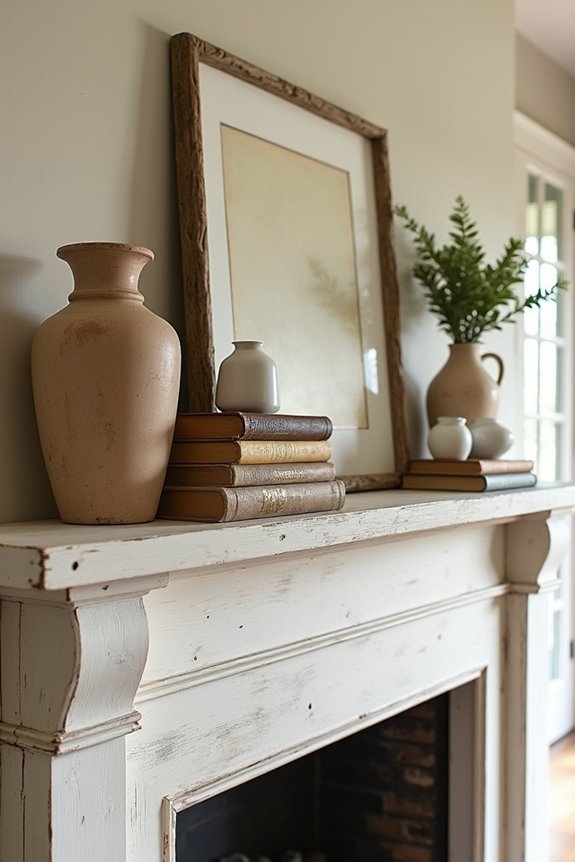
| Element | Purpose | Placement |
|---|---|---|
| Stacked old books | Creates height and visual interest | Center or slightly offset |
| Brass candleholders | Frames the display symmetrically | Flanking the books |
| Personal collections | Tells your story | Mixed throughout |
Arrange vintage pieces among fresh greenery on your mantel. Those objects spark conversations because they’re genuinely yours. Your collections don’t need to match perfectly—that’s where the real charm lives.
Mix Textures: Rattan, Glass, and Natural Materials
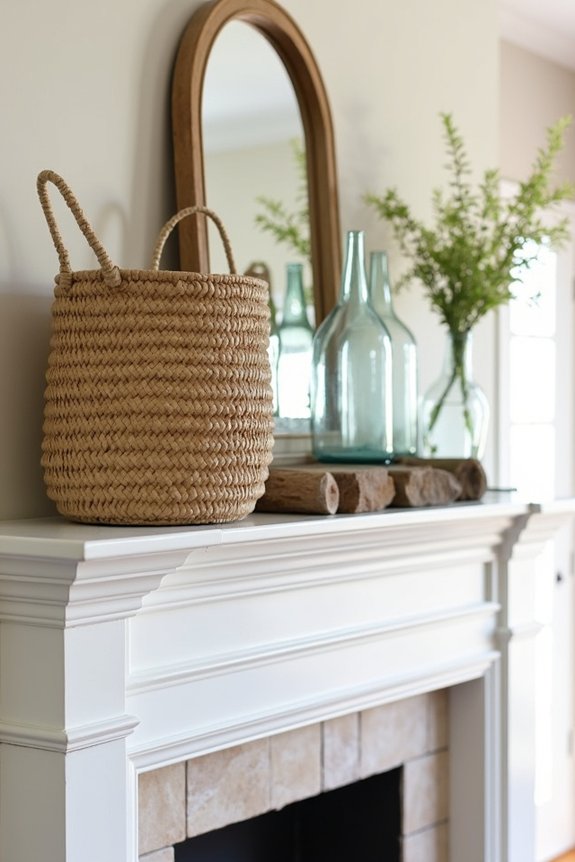
How do you create a mantel that doesn’t feel flat or one-dimensional? Mixing textures works well for this. When you combine different materials, the display gains dimension and interest.
Here’s what to layer together:
- Tall rattan vases filled with faux green branches for organic height and movement
- Vintage brass candleholders placed alongside the greenery for antique warmth
- Water-filled glass vessels that catch light and reflect your arrangement
The rattan brings natural texture, while brass adds metallic contrast. Glass keeps everything feeling airy instead of heavy. Arrange tall vases at each end, place brass candlesticks opposite them, then position stacked books and a brass ornament in the center. This balanced approach creates depth without clutter, giving your fireplace a composed appearance.
Refresh Your Mantel With the Seasons
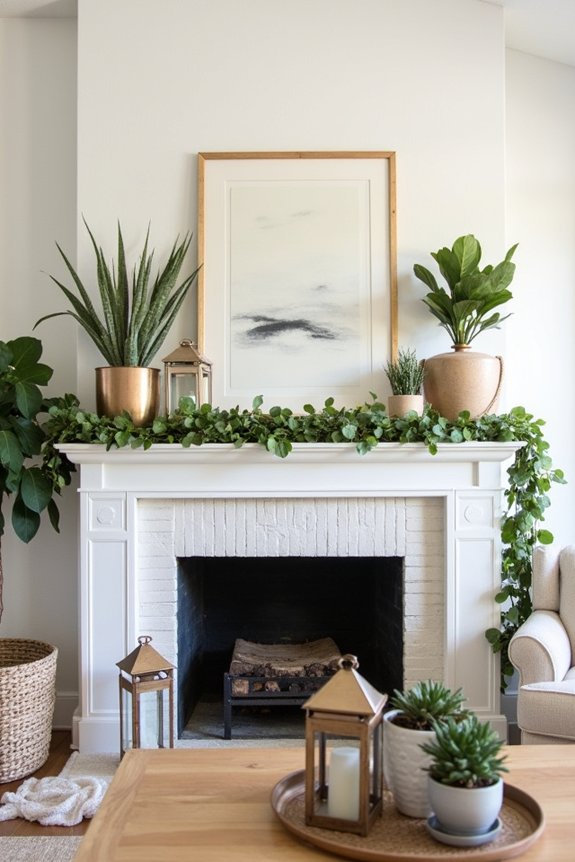
Why wait for a special occasion to change up your mantel? I refresh mine seasonally, and it’s my favorite way to keep things feeling fresh. In spring, I swap in lighter greenery—think eucalyptus and fresh branches layered into tall vases. Summer calls for brighter, airier arrangements. Come fall, I introduce deeper tones with burgundy and gold accents mixed with seasonal foliage. Winter brings evergreen garland and brass candlesticks for warmth.
The beauty of your fireplace mantel is that it’s the perfect canvas for seasonal shifts. I use faux greenery because it lasts longer and survives temperature changes near the fireplace. Rotate your books, update your candleholder heights, and let the seasons inspire your design. You’ll notice how deliberate it looks.