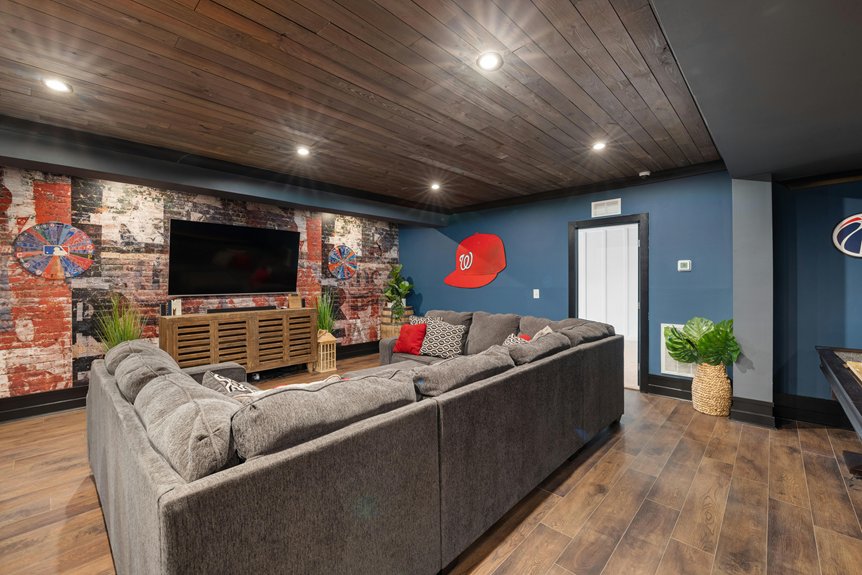
Start with a large sectional (around 100–120 inches) to anchor your space and encourage gathering. Layer an oversized rug (at least 8×10 feet) underneath for warmth and zone definition. Skip cold drywall—add reclaimed walnut paneling or warm paint instead. Paint your ceiling the same color as walls to boost perceived height. Use dimmable lighting at 2700K–3000K for a cozy ambiance. Define separate zones with furniture placement for gaming, TV watching, and socializing. Consider a movable coffee table and gaming chairs on casters for flexible entertainment. Control moisture with a dehumidifier and sealed foundation to protect your investment. The specific layout choices create an inviting gathering space in your basement.
Start With a Sectional for Maximum Comfort and Space
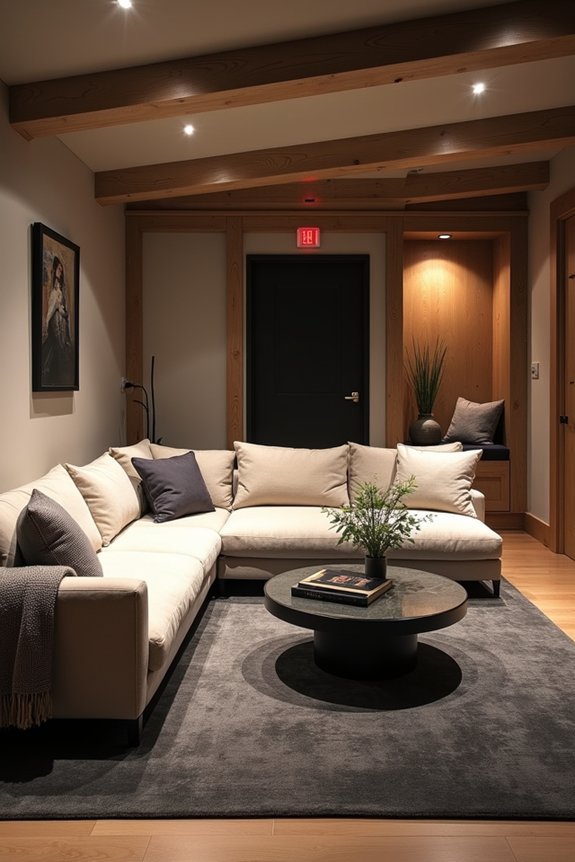
Why does a sectional work so well in basements? A large sectional gives you ample seating without cluttering the room with extra chairs scattered everywhere. When added to a basement, a sectional creates a natural gathering spot that feels welcoming.
A single expansive piece anchors your entertainment zone well. Whether you’re watching movies or hosting game nights, everyone feels connected rather than isolated. Friends tend to linger longer, feeling comfortable and included. The sectional also leaves room for a movable coffee table, which is useful for snacks and gaming access. You’re building a space where people actually want to hang out together—and that’s what basements are really about.
Layer Wall-to-Wall Carpet or Oversized Rugs for Warmth
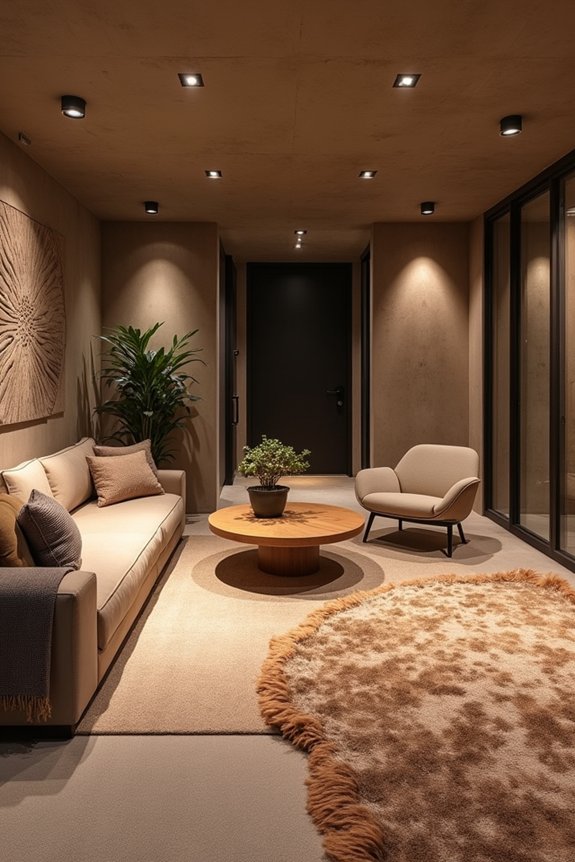
I’ve found that deciding between wall-to-wall carpet and area rugs really depends on your basement’s layout and moisture levels. If your space is fully enclosed and dry, wall-to-wall carpet works well for maximum warmth, but if you’ve got exposed areas or moisture concerns, I’d layer oversized rugs (think 8×10 or larger) on top of existing flooring to trap heat while keeping your layout flexible. My approach combines both—I’ve installed wall-to-wall in my finished zone and then added layered rugs around the sectional to create warm pockets that work well during those cold basement months.
Carpet Versus Area Rugs
When you’re trying to warm up a chilly basement, your flooring choice matters more than you’d think. I’ve found that wall-to-wall carpet creates a cozy foundation, especially in enclosed spaces. It locks in warmth effectively and makes the entire room feel more inviting.
However, if you’ve got an open layout like mine, wall-to-wall isn’t practical. That’s where oversized area rugs come in handy. I layer large rugs over wood or laminate flooring to add comfort where it counts most—around seating areas and gathering spots.
Go big with your rug size. I recommend at least 8×10 feet to visually anchor furniture groups. This creates defined zones that feel organized and welcoming.
For moisture protection, I always choose low-pile, tightly woven rugs. This prevents mold and odor issues while maintaining that comfortable basement atmosphere you’re after.
Maximizing Coziness With Layering
Once you’ve settled on your base flooring, layering becomes your primary tool for comfort. I’ve found that combining wall-to-wall carpet with oversized area rugs makes my basement more welcoming and less cold.
Start with quality carpet as your foundation—it insulates naturally and makes the space feel warmer underfoot. Then, layer a large rug (at least 8×10 feet) on top to anchor your seating area. This creates defined zones while minimizing exposed flooring that radiates cold.
I’ve noticed that multiple rug layers work especially well in open basements with wood or laminate floors. Stack textures strategically around conversation nooks and media zones. When you pair these warm materials with soft lighting and warm wall colors, you’re building a space where people actually want to gather.
Choose Paneling or Paint to Avoid a Storage-Room Feel
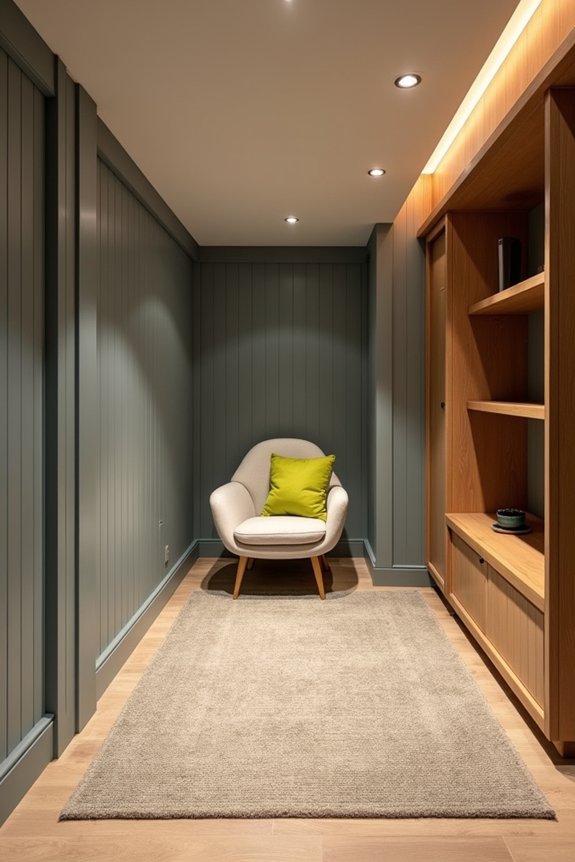
How’d you like to walk downstairs and feel like you’re entering an actual room instead of a storage closet? Your wall choices matter. Wood paneling, especially reclaimed walnut, gives basements texture and warmth right away. When I installed V-groove paneling paired with soft paint, my space felt inviting rather than institutional.
If paneling doesn’t fit your budget or situation, don’t worry. Warm wall colors work well on their own. I’ve painted basements in soft creams, warm grays, and gentle terracottas that changed the atmosphere. Adding textured wallpaper brings personality without major expense.
| Wall Option | Warmth Level | Labor Needed | Cost Range |
|---|---|---|---|
| Reclaimed walnut | High | Moderate | $3-8/sq ft |
| V-groove paneling | High | Moderate | $2-5/sq ft |
| Warm paint | Medium | Low | $0.50-2/sq ft |
| Textured wallpaper | Medium | Low | $1-4/sq ft |
| Shiplap | High | Moderate | $2-6/sq ft |
Paint or Panel Your Ceiling to Increase Perceived Height
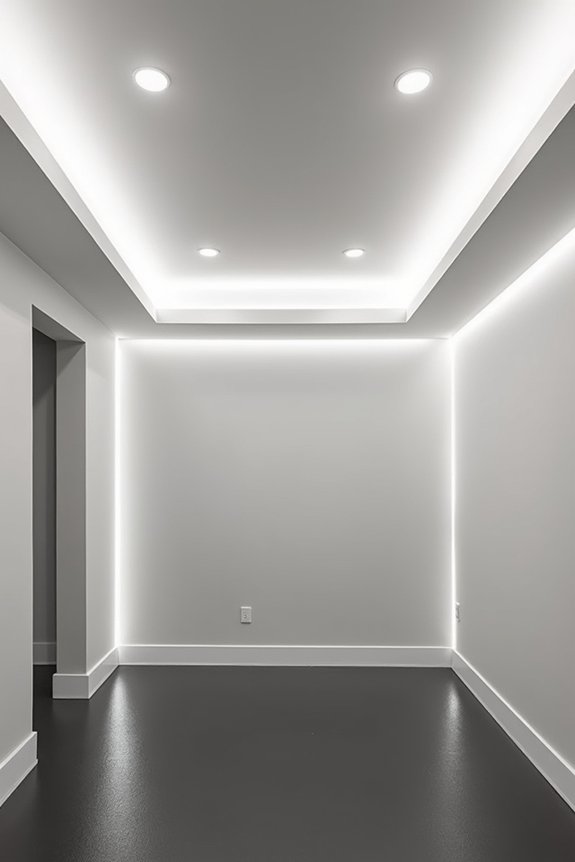
Your walls are looking great, so now let’s tackle what’s above your head. Your ceiling deserves attention too. I’ve found that painting your ceiling the same color as your walls works well—it eliminates that visual stopping point and makes the space feel taller. If you prefer ceiling paneling, it’s pricier but adds texture and warmth that makes basements feel less institutional.
Here’s my honest take: low ceilings need light, warm ceiling color to avoid that cramped storage-room feeling. I always recommend brighter ambient lighting to support this height illusion. Consider exposed ceilings if you’re open to it—they create genuine openness without extra work.
Choose what fits your budget and style. Either approach changes how your basement feels.
Define Multiple Zones for Different Activities and Gatherings
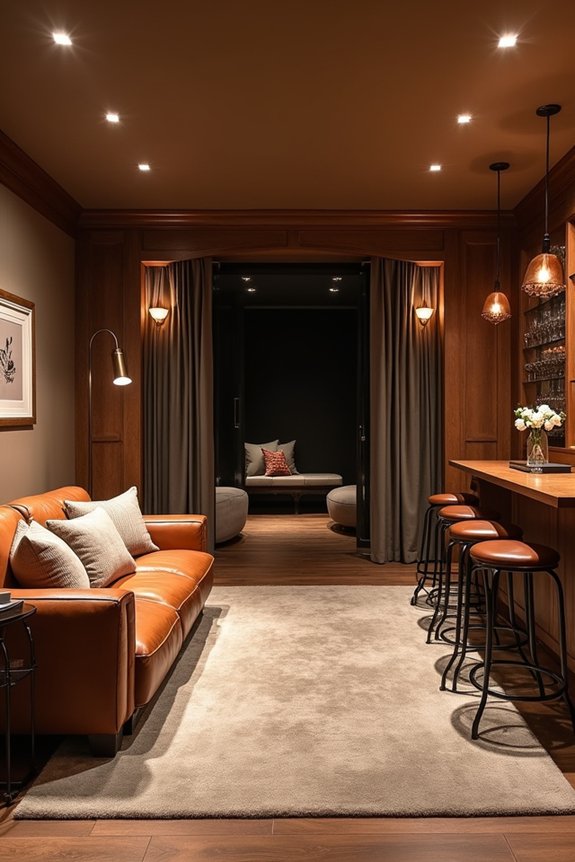
A basement really comes alive when you break it into separate activity zones instead of treating it as one big empty room. Creating distinct basement spaces changes how your family actually uses the area. Start by anchoring everything with a large sectional sofa—it naturally divides zones without fragmenting the room. Place a game table in one corner, a puzzle area nearby, and a bar setup across the space. Use rugs and furniture groupings to visually delineate zones while keeping sightlines clear for the TV. Movable coffee tables work well because you can shift them when activities change. These zones encourage different social interactions, preventing that depressing empty-room feeling. Your basement becomes a genuine gathering place where everyone finds something they enjoy.
Arrange Seating Around Your TV as the Central Focal Point
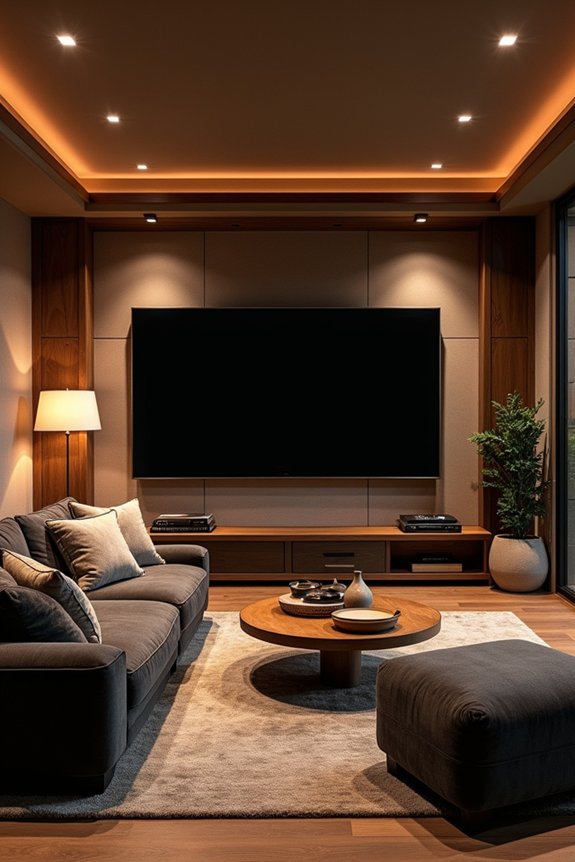
When I redesigned my basement, I centered everything around the TV and noticed how much better movie nights felt—everyone could actually see without craning their necks. I’d recommend going with one large sectional (L-shaped works great in corners) rather than scattering chairs around, since it keeps your seating unified and makes it easy to shift things around for game tournaments or when friends pile in. Position that TV about 8–12 feet away from your seating depending on screen size, and you’ll find the sweet spot where the picture’s comfortable to watch without straining your eyes.
TV-Centric Layout Design
How do you arrange a basement so everyone actually enjoys watching together? A TV-centric layout creates the gathering space your family needs. Position your sectional or large sofa directly facing the screen, ideally 8-10 feet away for comfortable viewing angles. This arrangement lets everyone see without craning necks or shifting positions constantly.
I place my coffee table in front, but I keep it movable for activities or when I need extra floor space. The key is designing your basement entertainment around easy access to the TV area—no obstacles blocking the path from seating to screen.
Use a rug to anchor this zone visually, separating your entertainment space from other activities. This creates definition and signals to everyone where the main activity happens, making your TV-centric layout feel deliberate and welcoming.
Sectional Seating Arrangements
Your sectional sofa is the centerpiece of basement seating—it’s the single piece that’ll anchor your entire TV zone and get everyone to gather there. An L-shaped sectional works well because it naturally creates cozy nooks while keeping sightlines clear to the screen.
| Sectional Style | Best For |
|---|---|
| L-Shaped (8-10 ft) | Large families, gaming zones |
| U-Shaped (12+ ft) | Maximum lounging, movie marathons |
| Curved Sectional (10 ft) | Social interaction, intimate gatherings |
| Modular Pieces (customizable) | Flexible basement family room layouts |
Position your sectional to face the TV directly, leaving 8-12 feet of viewing distance. Keep your coffee table movable so you can shift it when gaming or entertaining. This setup lets you define distinct zones—TV watching, socializing, gaming—without sacrificing that open, connected feeling your basement family room needs.
Install Warm Ambient Lighting Beyond Basic Recessed Cans
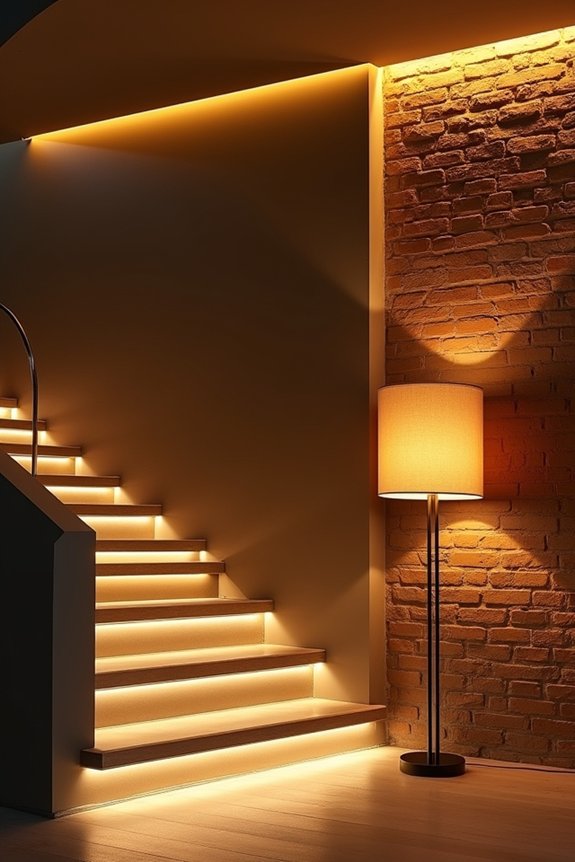
Ever notice how basements with only recessed ceiling lights feel a bit like storage closets? I’ve been there, and adding warm lighting beyond those basic cans makes a real difference. I layer in wall sconces at eye level and table lamps around seating areas. This warm lighting—around 2700K to 3000K—creates that inviting atmosphere where you’ll actually want to spend time. I place floor lamps in corners to eliminate harsh shadows and add depth to the space. For movie nights or board games, I use dimmable fixtures so I can adjust the mood instantly. When friends gather around my sectional, that combination of ambient warmth puts everyone at ease. It’s the difference between a basement people avoid and one they actually want to visit.
Control Moisture and Humidity to Protect Your Investment
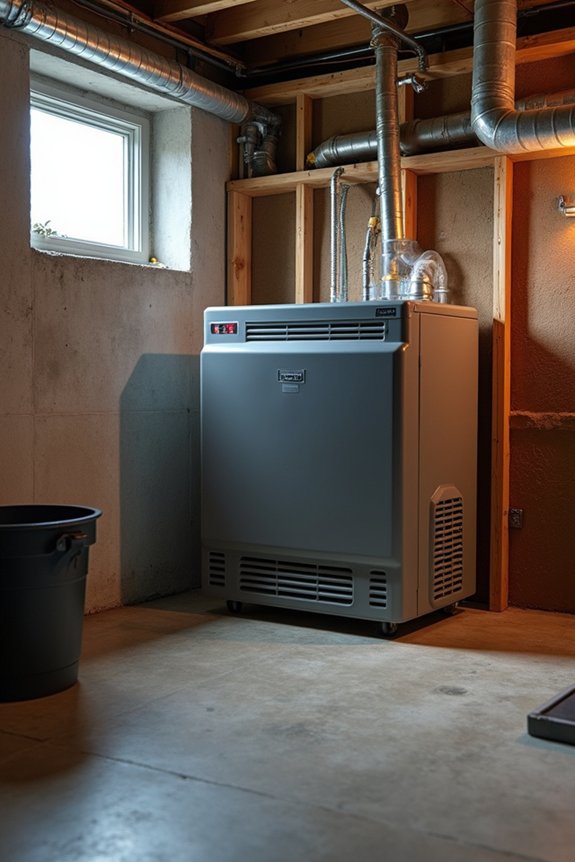
All that beautiful lighting and comfortable seating won’t matter much if moisture creeps in and ruins everything. I’ve learned this the hard way. Basement moisture is your biggest enemy, and controlling it requires a solid plan.
| Strategy | Why It Matters |
|---|---|
| Install dehumidification system | Removes excess water from air |
| Seal foundation cracks | Prevents water infiltration |
| Maintain gutters regularly | Directs water away from foundation |
| Ensure proper air circulation | Prevents mold growth |
| Check sump pump monthly | Protects against flooding |
Start with effective dehumidification—I’d recommend a unit handling 50-70 pints daily for most basements. Waterproof your walls and foundation cracks immediately. Don’t skip gutter maintenance; it’s your first defense. Proper ventilation keeps air moving, preventing that damp feeling. Finally, test your sump pump quarterly. These steps protect your investment and keep your space comfortable year-round.
Select Durable, Cozy Materials That Balance Practicality
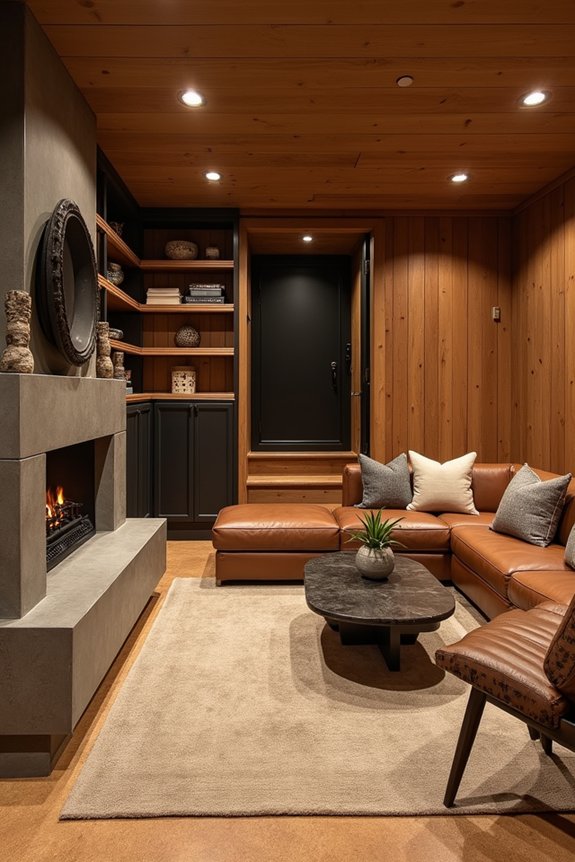
I’ve learned that basement materials need to work harder than upstairs finishes, so I focus on performance fabrics for sofas, stain-resistant area rugs layered over moisture-barrier carpet, and durable LVT flooring that won’t warp in humidity. To add warmth a basement needs, I skip the cold gray drywall and choose textured paneling like shiplap or V-groove in earthy browns and warm taupes—these create real depth and make the space feel inviting instead of cave-like. The trick is picking finishes that handle spills, pet accidents, and moisture without looking institutional; I’ve found that combining practical materials with thoughtful color choices gives me a family-friendly space that’s both beautiful and realistic.
Carpet and Rug Layering
When you’re trying to make a basement feel less like a concrete cave, rugs become your hidden ace. I’ve learned that rug layering creates cold spaces into comfortable areas where your family actually wants to gather.
The practical approach combines moisture-friendly rugs with intentional placement:
- Layer oversized area rugs (at least 8×10 feet) under seating zones to anchor warmth and define spaces
- Choose low-pile, tightly woven options that resist humidity and withstand foot traffic without absorbing moisture
- Mix textures and tones—deep rugs with lighter furniture creates visual contrast that draws people in
In my finished basement, I discovered that moisture-friendly rugs aren’t just practical; they’re necessary. They protect flooring, improve acoustics, and honestly, there’s nothing like sinking your feet into warm carpet after climbing those stairs. That comfort matters more than you’d think.
Paneling for Warmth and Texture
After you’ve anchored your floor with layered rugs, your walls become the next priority in ditching that cold, cave-like feeling. Paneling delivers both warmth and texture in ways plain drywall simply can’t match. Reclaimed walnut paneling creates an inviting atmosphere while standing up to basement moisture—a real advantage. If budget’s tight, V-groove or shiplap with paint works well too. I’ve used both, and they improve the space at a reasonable cost. Paneling doesn’t necessarily cost more; finishing drywall requires serious labor expenses. For moisture-prone areas, choose humidity-resistant options that prevent mildew while maintaining coziness. Warm wall colors or wallpaper work if paneling isn’t feasible. Either way, you’re leaving behind that storage-room vibe for genuine comfort.
Climate-Appropriate Material Selection
Now that your walls have that warm, inviting feel, your material choices need to work as hard as your paneling does. I’ve learned that basement moisture demands durable surfaces that won’t deteriorate or harbor mold. Here’s what I’d recommend:
- Vinyl plank flooring resists moisture beautifully and feels comfortable underfoot in seating areas
- Engineered wood offers warmth without the vulnerability of solid hardwood to humidity
- Laminate in warm tones provides easy cleaning and durability for high-traffic spaces
I always pair these choices with dehumidification and proper ventilation. Skip wall-to-wall carpet unless your basement stays genuinely dry. Large area rugs work better since you can remove them if needed. These practical selections let you create the functional, comfortable basement you’re after while protecting your investment over time.
Add a Game Table, Bar, or Activity Station to Each Zone
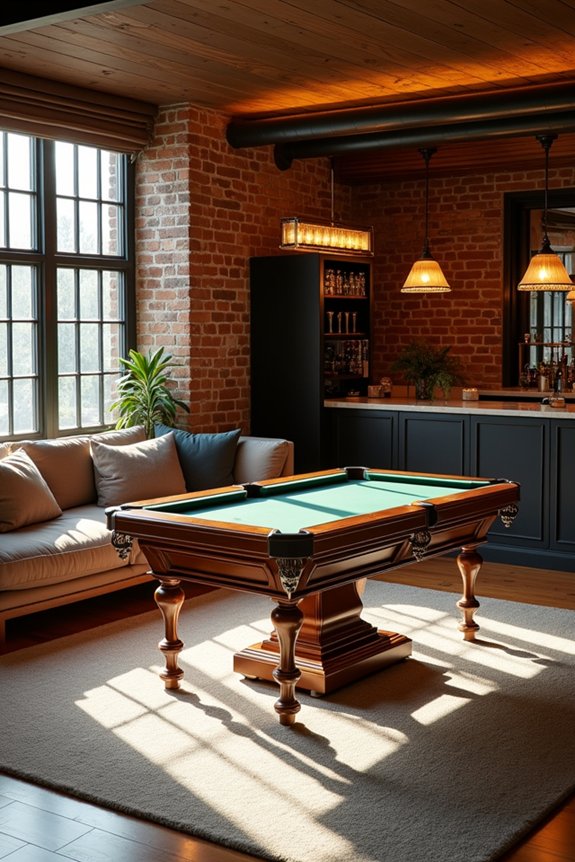
Once you’ve mapped out your zones, it’s time to give each one a real purpose with a dedicated activity station. Adding a game table anchors everything—whether it’s a four-foot card table for board games or a full-sized pool table if you’ve got the space. Position it so you can see the TV from your seat; that flexibility matters when you’re hosting.
If you’re creating an entertainment zone, consider a basement bar. You don’t need anything fancy—a small beverage station with shelving works perfectly. Set up yours with a mini-fridge and a few shelves, creating a natural gathering spot.
Multi-use tables work well too. They double as puzzle stations or crafting surfaces, keeping your space adaptable for whatever your group wants to do next.
Use Rugs and Furniture Placement to Delineate Functional Areas
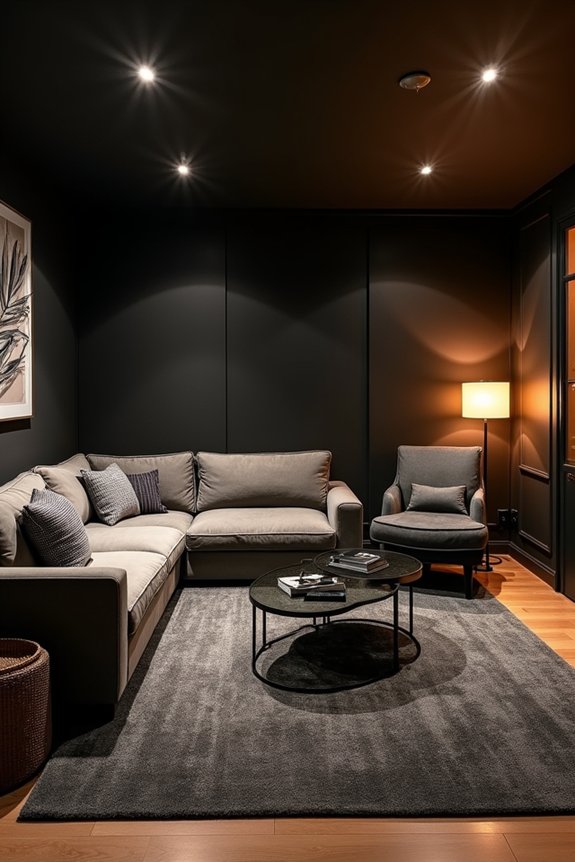
With your activity stations in place, you’ve got the bones of your basement figured out—now it’s time to visually separate those zones so each area serves a clear purpose.
Strategic rug placement and furniture arrangement work together to organize your space. Here’s what defines distinct areas in your basement:
- Choose a large, warm rug (8×10 feet minimum) to anchor your TV seating cluster and add texture that signals this zone’s purpose
- Position a sectional as your centerpiece, maximizing seating while clearly defining the lounge area without needing walls
- Keep your coffee table movable so you can shift it around for gaming chairs or when you need floor space
When I arranged my basement this way, guests immediately understood where to sit, where to play, and where to relax. Your rug placement and furniture arrangement become silent guides, creating clear boundaries through thoughtful design.
Consider Gaming Chairs if Your Layout Allows Flexible Seating
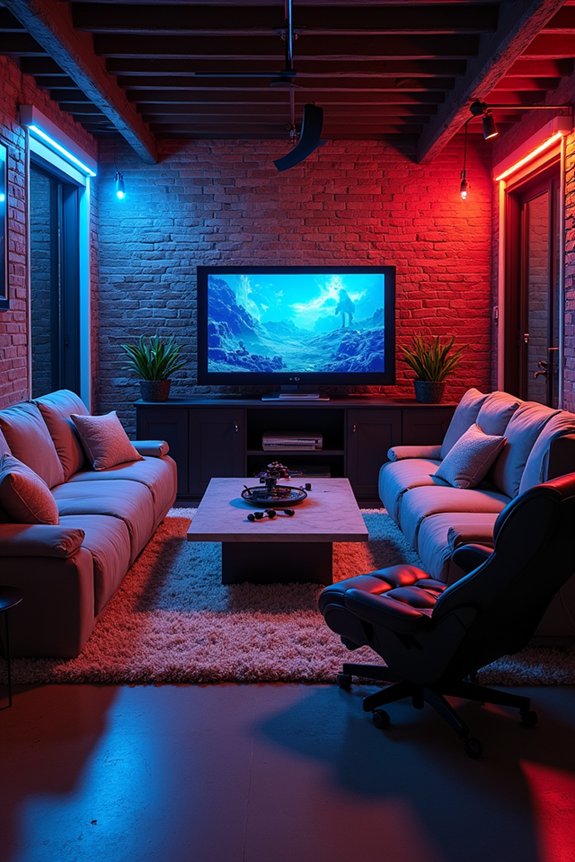
If you’re thinking about adding gaming chairs to your basement, I’d recommend keeping your coffee table on casters or choosing a lightweight design you can easily move when the action heats up. I’ve found that a sturdy gaming chair (typically 26-32 inches wide) paired with a mobile coffee table creates just enough flexibility to shift between movie nights and intense gaming sessions without feeling cramped. The key is allowing your layout adequate space—position chairs to face the TV for viewing, but leave enough open floor space so you can pull them into a tighter circle for board games or rotate them out when you need room to move.
Flexible Seating Arrangement Options
The seating you choose will make or break your basement’s layout, and I’ve learned this the hard way after rearranging my own space more times than I’d like to admit. I discovered that a flexible layout works best when you invest in pieces that adapt to your needs.
Consider these basement seating options:
- A large L-shaped sectional (around 100-120 inches) anchors your space while accommodating guests comfortably
- Gaming chairs on casters let you roll between entertainment zones without permanent placement
- A movable ottoman or coffee table maintains traffic flow between your lounge and game areas
I’ve found that pairing these pieces with a neutral area rug creates definition without blocking movement. This flexible layout lets me host movie nights, gaming sessions, and casual hangouts in one cohesive space.
Coffee Table Mobility Considerations
How much flexibility do you actually need from your coffee table? Mobility matters more than I initially thought. When I added gaming chairs to my basement, I realized a fixed coffee table created obstacles during play sessions. Now I use a lightweight table on casters—it rolls smoothly across my space without scratching the floor.
This mobility lets me reposition the table for board games, snacks, or casual lounging. I can easily shift it aside to clear pathways between seating and the TV area, which keeps traffic flowing naturally. A mobile coffee table also lets me connect my game zone with a nearby bar area without crowding the layout.
Flexibility changes how your basement functions daily.
Gaming-Friendly Layout Planning
When I started planning my basement gaming zone, I realized that standard living room furniture wasn’t going to cut it. I needed a basement layout that actually worked for gaming sessions and social hangouts.
Here’s what I’ve learned works best:
- Position your seating in a semicircle facing the TV, about 8-10 feet away, so everyone sees the screen clearly
- Choose a large sectional (I went with an L-shaped 120-inch) instead of scattered chairs for maximum comfort
- Keep your gaming area flexible by using a lightweight, wheeled coffee table you can push aside
I’ve found that defining your gaming area with a quality rug grounds everything visually. When friends come over, they immediately understand where the action happens. That unified feeling creates an environment where people want to spend time.
Create a Coffee Table Setup That Works for Lounging and Gaming
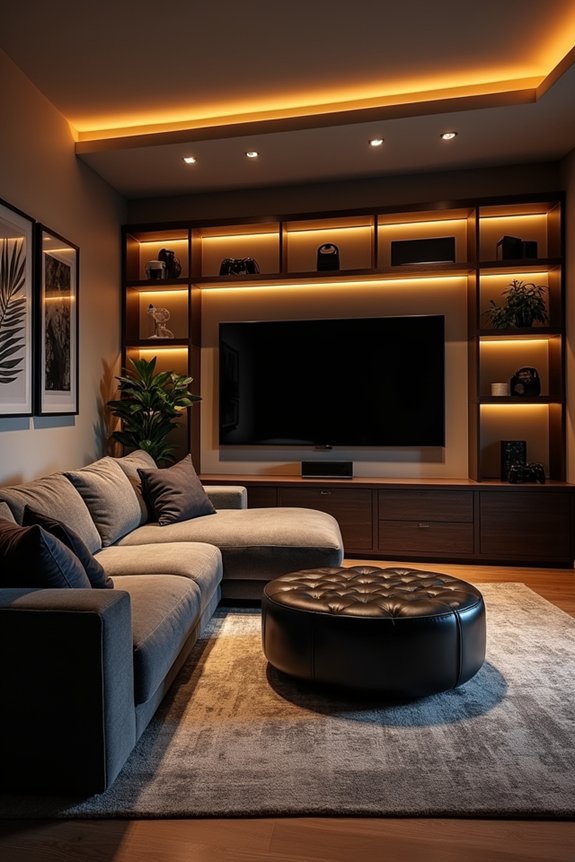
Want your basement to work as hard as you do when you’re hosting game night? Your coffee table plays a key role in making this happen. Choose a sturdy, low-profile table with rounded edges—something that won’t hurt shins during heated matches. Look for one with built-in storage or tray surfaces; keep game pieces, remotes, and drinks organized without clutter.
Make it movable. Push yours aside when you need extra seating or floor space for console gaming. Position your coffee table within arm’s reach of your sectional, but don’t block pathways. A rug underneath anchors everything while improving acoustics in your basement environment. This setup creates a functioning gathering hub where lounging and gaming coexist.
Plan Your Layout Around Comfort, Not Upstairs Design Norms
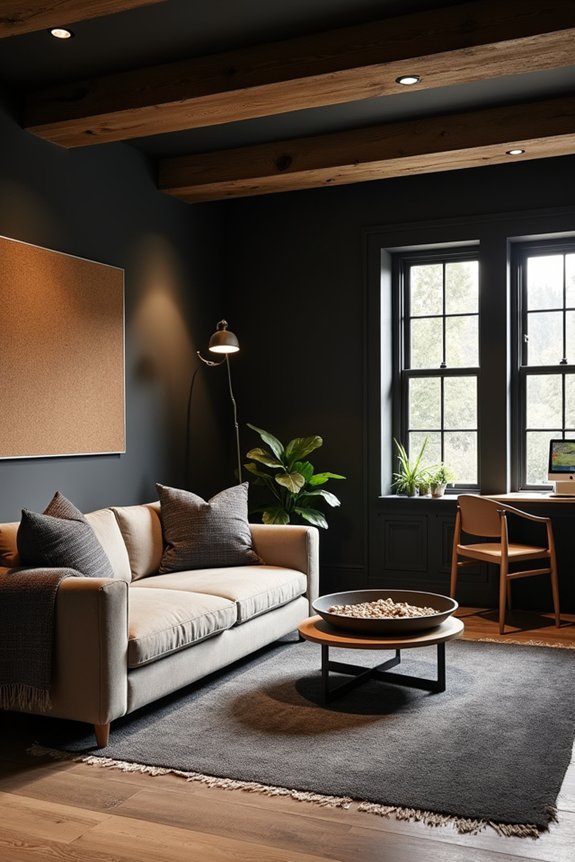
Your coffee table’s in place—now it’s time to think bigger about how you’ll actually use your basement. I learned this the hard way after arranging mine like my upstairs living room. It felt stiff and unwelcoming.
Instead, I built my basement layout around what I actually do down there. A large sectional became my anchor, facing the TV directly. This seating arrangement worked well for how I use the space.
Consider creating functional zones:
- Game area with movable chairs for flexibility
- Bar or beverage station for gathering spots
- Puzzle nook or reading corner for variety
I added a plush rug around my seating to define the space and boost coziness. The layout now flows naturally, supporting movement and conversation. Your basement isn’t your upstairs—it’s your retreat. Design it accordingly.