
I’ve found most fireplace problems boil down to three culprits: a dead pilot light, a tripped safety switch, or a blown fuse.
Start by checking your gas fireplace’s pilot—if it’s out, that’s usually your answer.
Next, test your carbon monoxide detectors and reset any thermal cutoff switches.
Make sure you’ve got power reaching the unit, then verify your thermostat settings are correct.
Clean vents and remove blockages that might be choking airflow.
If these steps don’t work, you’ll identify which issues need professional attention.
Spot Signs Your Fireplace Isn’t Working
Ever walked into your living room expecting a cozy fire, only to find your fireplace refusing to cooperate? I’ve been there, and spotting the problem early saves real headaches.
Ever walked into your living room expecting a cozy fire, only to find your fireplace refusing to cooperate? Spotting the problem early saves real headaches.
First, check your gas fireplace’s pilot light. If it’s out, that’s your culprit. Look for a weak or inconsistent flame—these signal deeper issues. Next, I listen carefully for unusual sounds like rattling or banging, which often mean venting problems.
I also inspect for physical red flags: soot buildup, lingering smells, or smoke creeping into my room. These indicate drafting trouble. Pay attention to moisture, rust, or cracks in the firebox—they need professional attention.
Finally, verify your thermostat’s working, your fan runs properly, and dampers sit correctly. These operational checks catch common oversight issues I’ve encountered countless times.
Check Safety Systems Before You Begin
Before I tackle any fireplace repair, I always make sure the safety systems are working because that keeps my family safe. I’ll walk you through testing your carbon monoxide detector on every level, checking for gas leaks by smelling for that distinctive odor, and understanding when to reset your thermal cutoff switch—all the important checks that come before you touch anything else.
Thermal Cutoff Switch Reset
When your fireplace suddenly stops heating, the thermal cutoff switch might be the culprit—and that’s actually good news because it means your safety system is working. I’ve found this switch near the heating element or control board, and it’s designed to trip when things get too hot.
Here’s what I do: First, let the unit cool completely. Then I locate the reset button or test hole on the thermal cutoff. I press it firmly and wait. Sometimes it resets automatically, which is reassuring.
But here’s the thing—if you’re resetting repeatedly, pay attention to it. I’ve learned that repeated trips signal real problems like airflow restrictions or dust buildup. Schedule an inspection instead. Monitor your fireplace closely after resetting, and you’ll catch issues early.
Carbon Monoxide Detector Testing
Now that you’ve addressed the thermal cutoff switch, it’s time to check your safety systems before you fire up that fireplace again. I always test my carbon monoxide detectors first—it’s the most important safety tip I can share. You’ll want at least one detector outside your bedroom and another on every level of your home. I replace mine every five to seven years, and I test them monthly by pressing that button until they sound. If you’ve got multiple levels, interconnecting your units means they’ll all alarm simultaneously when there’s danger. After any fireplace repair or maintenance, test those detectors again. Catching a problem early prevents dealing with a crisis later. Your family’s safety depends on these small actions today.
Gas Leak Detection Steps
How do you know if your gas fireplace is leaking before you even light it? I’ve learned that catching problems early saves headaches and keeps your home safe.
Before touching anything, I always follow these detection steps:
- Smell the air around your fireplace for rotten egg odors indicating gas escape
- Locate your main gas shutoff valve and confirm it’s fully closed if you suspect leaks
- Apply soapy water to connections and joints, watching for alternating bubbles that reveal leaks
- Inspect the ignition system for loose fittings, cracked hoses, or damaged connectors
- Use a commercial gas detector for precise leak confirmation
If I find anything suspicious, I don’t attempt relighting. Instead, I schedule professional service immediately. This approach keeps my family safe and prevents costly damage.
Identify Your Fireplace Type

Before you troubleshoot anything, I recommend figuring out whether you’re dealing with a gas, electric, or wood-burning fireplace—they each operate differently. Gas fireplaces might have a standing pilot light with a three-position knob (Off, Pilot, On), a key-operated valve, or an electronic ignition system, and knowing which one you’ve got matters. If you’re looking at an electric model, check whether it heats through coils with a blower system or uses a thermostat, since a power supply issue or tripped reset button could be your problem instead of something more complicated.
Gas Fireplace Identification Features
When you’re standing in front of a fireplace that won’t light, the first thing I’d do is figure out what you’re actually working with. Gas fireplaces come in different types, and knowing yours makes troubleshooting way easier.
Here’s what I look for when identifying a standing pilot system:
- A control knob with three distinct positions: Off, Pilot, and On
- A push-button igniter that creates a spark when pressed
- A decorative front panel you can remove to access the pilot assembly
- A small continuously burning flame that ignites your main burner
- Gas valve areas visible once you remove that front panel
Once I spot these features, I know the fireplace is user-relightable. That’s good news because you have options for fixing it yourself.
Electric Fireplace Recognition Methods
If you’ve ruled out a gas fireplace, you’re probably dealing with an electric model—and that’s simpler to troubleshoot. Spotting an electric unit is straightforward once you know what to look for.
| Feature | Gas Fireplace | Electric Fireplace |
|---|---|---|
| Heat Source | Flame combustion | Heating element |
| Venting | Required | None needed |
| Control | Manual or thermostat | Built-in thermostat |
| Pilot Light | Standing pilot system | No pilot required |
| Ignition | Gas-powered | Electric fan/coils |
You won’t find a standing pilot or gas lines on electric models. Instead, you’ll see a heating element, blower fan, and thermostat. The decorative flames aren’t producing actual heat—that comes from the electric coils and fan recirculating warm air. Check your remote or wall controls for heat settings. This setup means fewer parts to worry about when something goes wrong.
Make Sure Your Fireplace Has Power
The most common reason a fireplace won’t turn on is dead simple: it’s not getting power. I’ve learned this the hard way after troubleshooting countless units. Let me walk you through checking your power supply systematically.
Start by testing your outlet with another device—a lamp works great. Then inspect these areas:
- Check the power cord for cuts, fraying, or loose connections
- Test your circuit breaker and reset it if it’s tripped
- Look for blown fuses or tripped reset buttons on built-in switches
- Replace batteries in remote controls or wall switches
- Verify your control panel is receiving power
I always start here because power issues account for most fireplace problems. These safety checks take minutes but save hours of frustration. Once you’ve confirmed steady power flowing through, you’re ready for deeper diagnostics.
Check Your Thermostat and Heat Settings
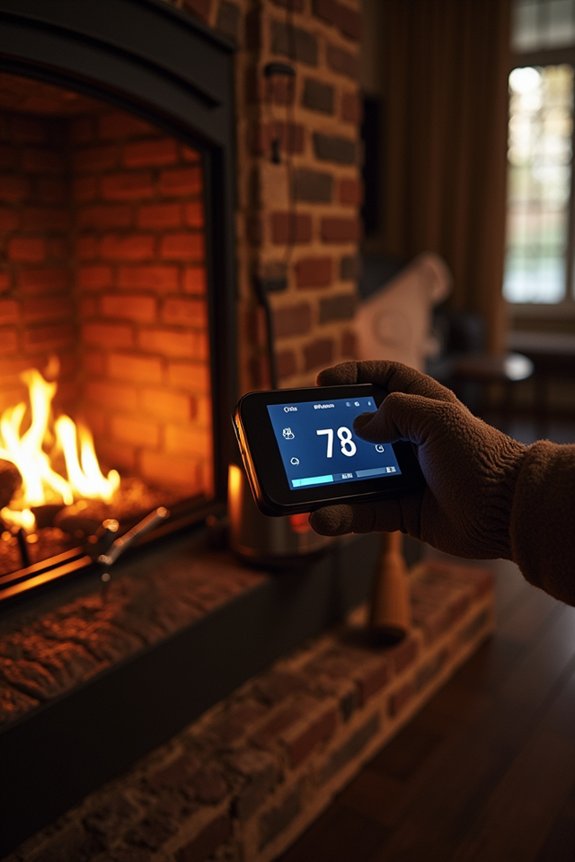
Now that you’ve confirmed your fireplace’s getting power, here’s where many people get stuck: the thermostat settings. I’ve been there—staring at a cold room, wondering why the unit won’t kick on. Your thermostat needs to be in heat mode, not cool or off. Set it about five degrees higher than your current room temperature. This triggers the heating element to engage.
If you’re using a remote control, replace the batteries first. Weak batteries won’t send signals reliably. Check that the signal’s actually reaching your unit by pointing it directly at the receiver.
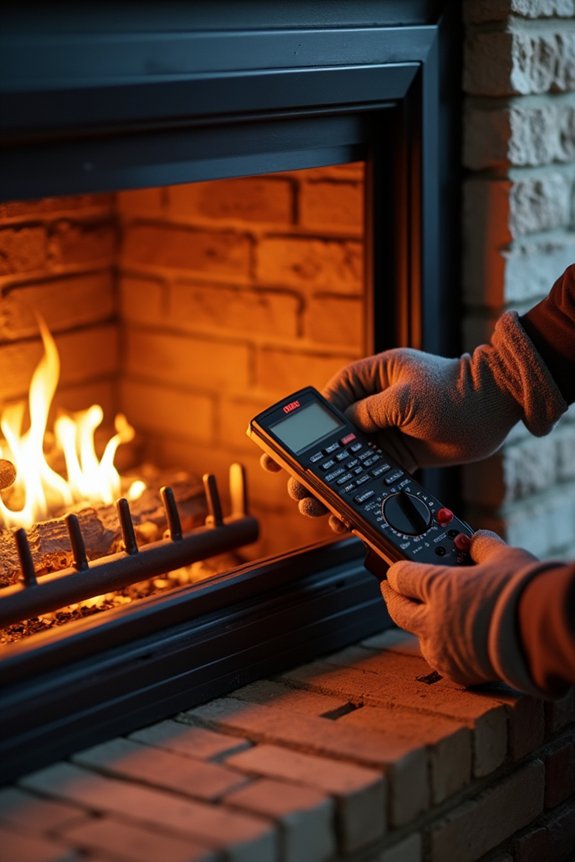
Still nothing? Your thermostat module might be faulty. Test it by checking continuity with a multimeter, or simply replace the module. These small fixes often solve your heating issues completely.
Inspect the Heating Element for Damage
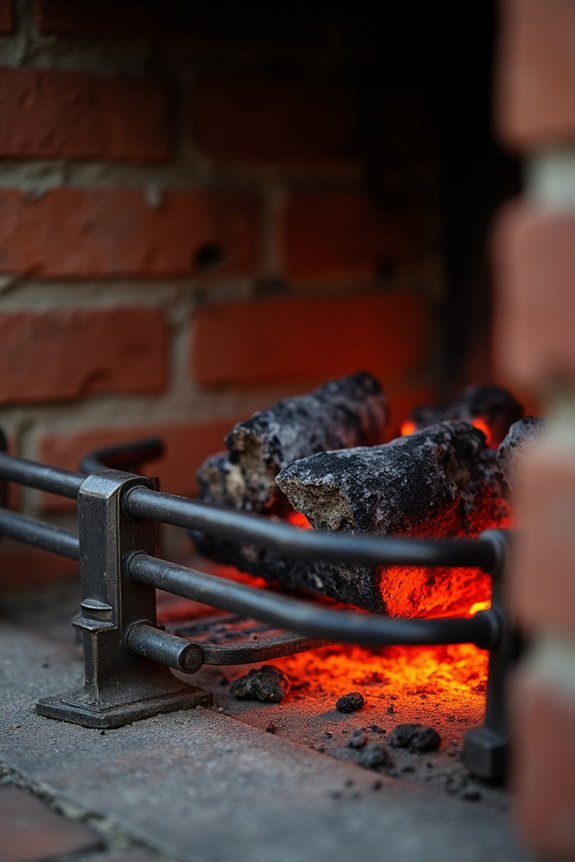
I’ve found that a heating element can fail in several ways, so I check for visible cracks, dark spots, burns, or melted insulation first—these are clear indicators that something’s wrong. After unplugging the unit to stay safe, I grab my multimeter and test the element’s continuity; if it shows infinite resistance, that element’s broken and needs replacing. When I spot damage like charred debris or fused connections around the element, I know it’s time to either replace it myself or call a professional, because trying to work around a damaged element usually just leads to more problems down the road.
Visual Signs Of Damage
Your heating element is the heart of your fireplace, so let’s give it a thorough look—you’ll want to get close and really examine it for trouble signs.
I’ve found that most heating problems start with what you can actually see. Here’s what I check every time:
- Visible breaks, cracks, or dark spots indicating overheating damage
- Frayed wiring connections that cause intermittent heat issues
- Dust and debris buildup reducing efficiency on the coils
- Discoloration, pitting, or corrosion suggesting wear
- Scorching marks showing the element’s been pushed too hard
When I spotted a damaged heating element in my own fireplace, the discoloration was unmistakable. That visual inspection saved me from a bigger problem. Pay attention to what you’re seeing—your eyes catch details that measurements sometimes miss.
Testing Element Continuity
Once you’ve spotted the visual damage, it’s time to confirm whether that heating element’s actually dead or just looking rough—and a multimeter’s your best friend here. First, unplug everything. I learned this the hard way when I nearly shocked myself testing a toaster element. Safety’s non-negotiable.
Set your multimeter to continuity mode. Place one probe on each terminal of the heating element. A good reading means you’ve got a complete electrical path. That’s what you’re hoping for. A dead reading? That tells you the element’s failed and needs replacing.
I’ve tested dozens of elements over the years. When continuity’s lost, patches won’t help. The component needs full replacement. If your element passes this test but still produces no heat, you’re looking at other culprits—thermostat, control board, or wiring issues.
Replacement And Safety Considerations
Now that you’ve confirmed whether your element’s actually broken, it’s time to handle what comes next. Here’s what I’ve learned from dealing with this situation myself:
Safety comes first every single time:
- Never attempt replacement while the unit’s plugged in
- Consult a professional technician for the actual replacement work
- Avoid using your fireplace until repairs are complete
- Keep children and pets away from damaged heating elements
- Document any visible damage with photos for your technician
I’ve seen folks try DIY replacements and regret it badly. The heating element replacement requires specific knowledge about your fireplace model and electrical connections. Your safety matters more than saving money here. A professional knows exactly how to handle your particular unit safely and correctly. Calling a technician beats risking injury or creating bigger problems down the line.
Test Your Blower and Listen for Sounds
How’s your fireplace’s blower sounding these days? I’ve learned that listening closely tells you everything you need to know.
When I turn mine on, I listen for a steady, quiet hum. That’s the sound of everything working properly. But if you hear grinding or squealing, that’s your cue—something’s wrong. I once ignored those sounds, and my bearing failed completely.
No sound at all? Check your power supply and safety switches first. I discovered my limit switch had tripped, leaving the flame on but the blower silent.
Unusual noises at startup usually mean obstructed fan blades or loose connections. I’ve fixed both by cleaning and tightening panels.
Compare what you’re hearing with your manual’s diagnostic information. Some units include specific beeps signaling blower faults. Listen carefully—your fireplace is trying to tell you something.
Check Electrical Connections for Loose Wires
If your blower’s making noise but the fireplace still isn’t working right, the problem might not be the blower itself—it could be hiding in your electrical connections. I’ve found that loose wires cause more fireplace headaches than you’d think. Before you start inspecting anything, power off the unit and unplug it completely—this protects you from shock or shorts.
Here’s what I check:
- Loose or disconnected wires at the control board
- Heating element terminals that need tightening
- Fan connections that’ve come undone
- Damaged insulation, burnt marks, or melted spots along wire runs
- Quick-connect splices and wire nuts that aren’t secure
After reseating connections, restore power and test everything. If problems persist, call a professional technician who can safely diagnose deeper issues.
Reset Your Circuit Breaker or Replace Fuses
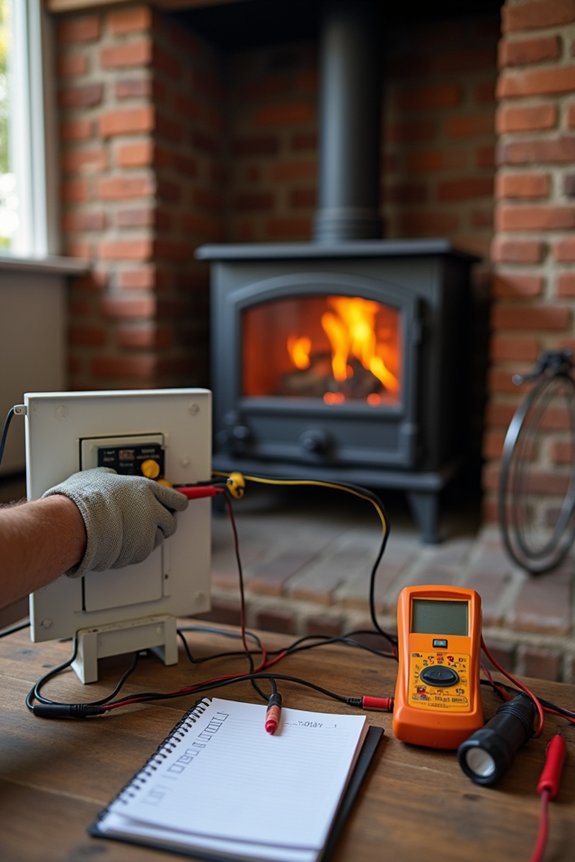
A tripped circuit breaker or blown fuse is often the culprit when your electric fireplace suddenly stops working. Resetting your circuit breaker is the quickest first step. Simply switch it off, wait a few seconds, then turn it back on to restore power.
| Issue | Solution |
|---|---|
| Circuit trips repeatedly | Reduce load or use dedicated circuit |
| Fuse keeps blowing | Check for loose wiring or damaged parts |
| Heating won’t start | Verify breaker’s on position |
| Blower doesn’t run | Test after resetting breaker |
| Flame effect fails | Inspect control board if problem persists |
When replacing fuses, unplug the unit first. Find an identical replacement fuse, then install it correctly to prevent damage. After either reset or replacement, power on your fireplace and verify the heating element, blower, and flame effect work normally. Frequent trips signal deeper issues requiring inspection.
Clean Vents and Remove Blockages
When’s the last time you actually looked inside your fireplace? I learned the hard way that blockages are sneaky culprits behind heating failures. Before touching anything, unplug your unit completely.
Blockages are sneaky culprits behind heating failures. Before touching anything, unplug your unit completely.
Here’s what I do to restore proper airflow:
- Vacuum air vents thoroughly with a soft brush attachment
- Remove visible dust and debris around the fan area
- Open the access panel and inspect for loose wires or obstructions
- Check intake paths aren’t blocked by buildup
- Recheck after cleaning to confirm airflow restoration
Dust accumulation restricts airflow considerably, reducing your heating efficiency. I use a soft brush around the heating element to avoid damage while dislodging stubborn buildup. After cleaning, I always verify no obstructions remain blocking vents. This simple maintenance keeps my fireplace running reliably through winter months.
Identify Problems That Need Professional Help
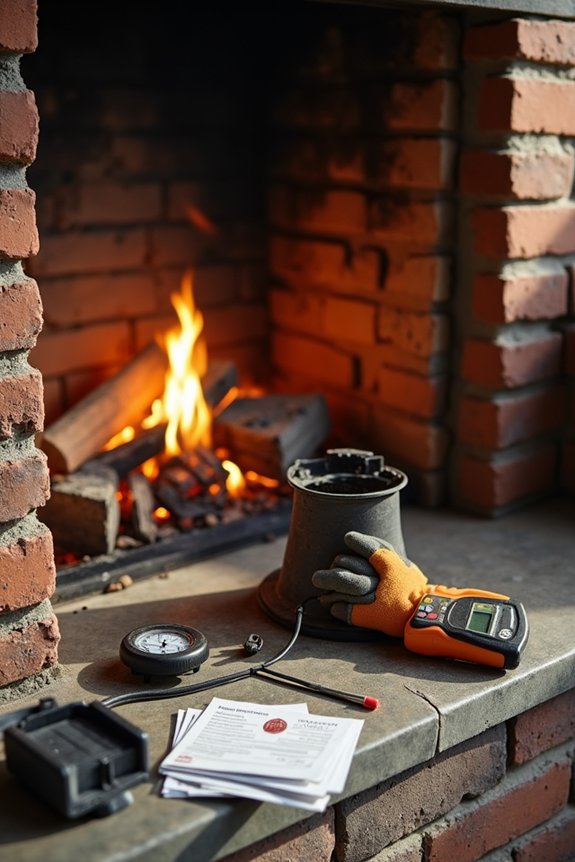
Some fireplace problems go beyond basic cleaning and simple fixes—and that’s when I know it’s time to call in the pros. I’ve learned this the hard way after attempting too many DIY repairs on my own fireplace.
| Warning Sign | What It Means | Action Required |
|---|---|---|
| Gas odors or smoke inside | Dangerous ventilation failure | Call immediately |
| Cracked bricks or mortar | Structural damage spreading | Professional inspection needed |
| Lingering odors after fires | Creosote or moisture issues | Level 2 inspection recommended |
| Damper won’t open or close | Safety mechanism failure | Expert repair required |
When I notice persistent draft problems, failed ignition, or that stubborn smell hanging around after the fire dies down, I don’t hesitate anymore. A certified technician can identify hidden hazards I’d miss, assess creosote buildup, and check flue liners thoroughly. They’ll give me tailored recommendations and schedule future maintenance. Getting professional help isn’t admitting defeat—it’s keeping my family safe.
When to Call a Fireplace Technician
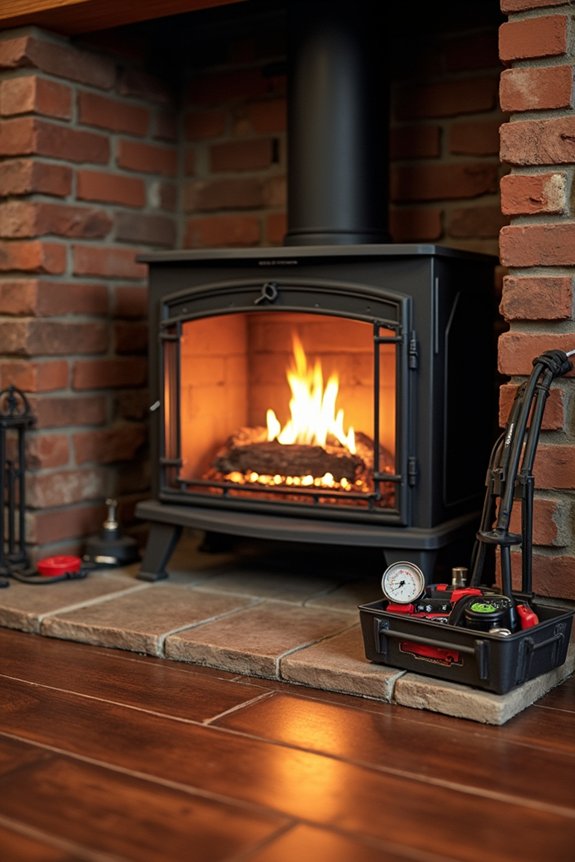
How do you know when you’ve reached the limit of what you can safely fix yourself? Some fireplace problems demand professional help, and recognizing those moments keeps you safe.
You’ll want to call a licensed technician when:
- You smell persistent gas or suspect a gas leak anywhere near your gas fireplaces
- Your igniter, thermostat, or power troubleshooting doesn’t restore operation
- Safety tests fail or you’re unsure about venting systems
- Recurring problems happen even after your DIY fixes
- You own an older fireplace or haven’t used it in years
A professional fireplace inspection catches hidden hazards you might miss on your own. For standing pilot systems or fuel concerns, technicians inspect the pilot assembly and flame sensor properly. Professional maintenance prevents costly disasters down the road.
Prevent Future Breakdowns With Routine Care
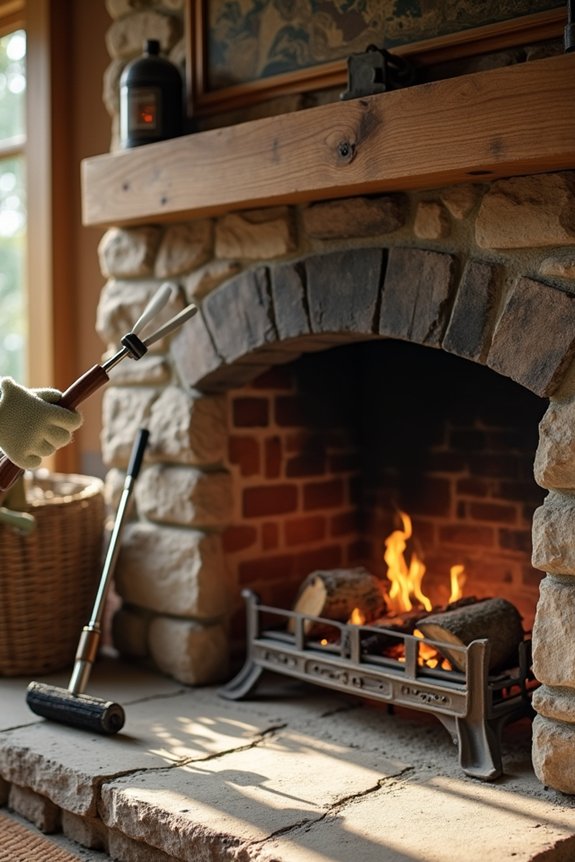
After you’ve fixed your fireplace or had a technician handle the repairs, the real work begins—keeping it running smoothly so you don’t face the same headaches again. I’ve learned that a solid maintenance schedule is your best friend. I vacuum the vents and fan area every month, which takes maybe ten minutes. I also schedule professional inspections every other year—that’s when I catch loose components before they become problems. You’ll want to unplug before cleaning and gently wipe the heating element. Following your manufacturer’s guidance on damper and cap cleaning prevents most issues I’ve encountered. This routine care keeps fireplace safety a priority while saving you money over time. Regular upkeep protects your home through every maintenance cycle.