Yes, your fireplace can damage your TV if heat rises directly toward the screen. I’ve seen flickering and component failure from excessive heat exposure. You’ll want at least 48 inches between the firebox and TV, though 3-4 feet is safer. A mantel positioned 12 inches below your TV acts as a natural heat shield. Using a full-motion mount lets you angle the screen away during fires. Monitor temperatures with a thermometer to stay under 95°F. The good news? Proper setup prevents damage entirely, and there’s much more to discover about getting this right.
Can a Fireplace Actually Damage Your TV?
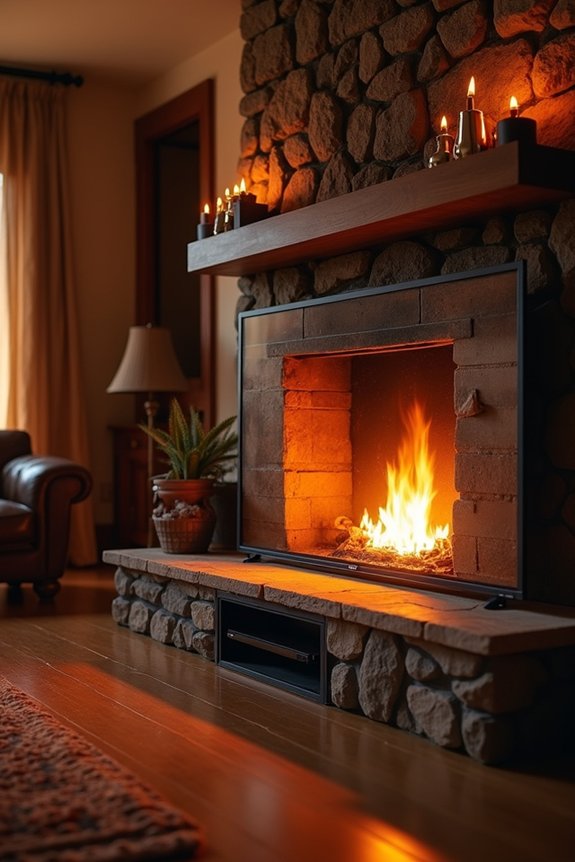
Yes, a fireplace can damage your TV, but it doesn’t have to. I’ve seen firsthand how fireplace heat can warp components and shorten your TV’s lifespan. The culprit? Excessive heat rising directly toward your mounted screen.
You’ll need to understand TV clearances and fireplace heat dynamics to protect your investment. Most manufacturers recommend at least 48 inches between the firebox and your TV. Heat deflection matters tremendously here. I watched a friend’s TV flicker and fail after just two seasons because he ignored these guidelines.
Gas fireplaces pose fewer risks than wood-burning ones, yet both require proper protection. Installing a quality mantel or heat shield redirects dangerous warmth away from electronics. When you follow manufacturer specifications and plan strategically, your TV stays safe and performs well for years.
How Heat From Your Fireplace Affects Electronics
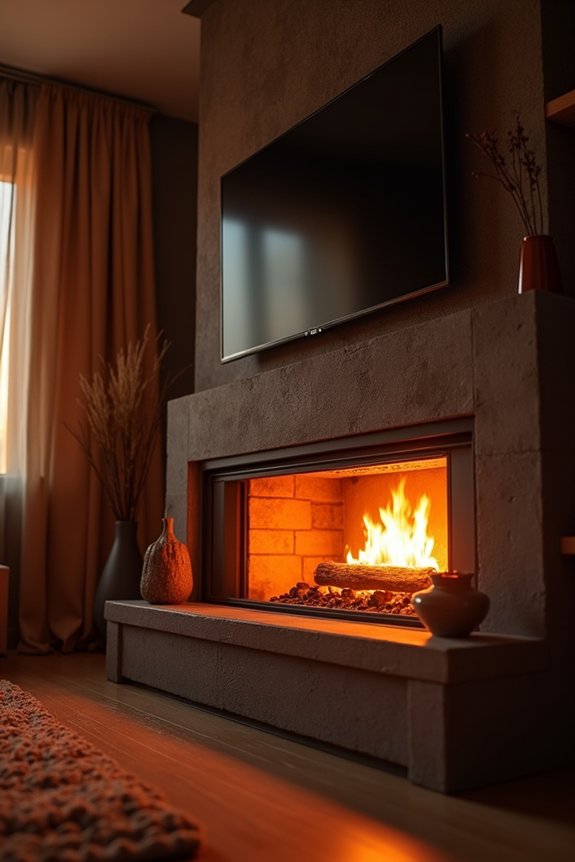
Heat from your fireplace can seriously stress your TV’s internal components—I’ve seen screens flicker and electronics fail when they’re exposed to sustained temperatures above 90-100°F. You’ll want to manage the temperature around your television by maintaining at least 3-4 feet of clearance from the fireplace, using a mantel to redirect heat upward, and monitoring the area with a simple thermometer. Thermal protection strategies like full-motion mounts that let you angle the TV away during fires, or heat-deflecting screens, can protect your electronics over time.
Heat Damage Risks To Electronics
Why’s your TV picture getting fuzzy, or worse, why’d your friend’s set stop working altogether after mounting it above his fireplace? I’ve seen it happen. High heat damages internal components like capacitors and circuits. Your TV’s not designed to handle sustained temperatures above 95°F. When you ignore manufacturer clearances—typically 12 to 18 inches minimum—heat protection fails. I learned this the hard way watching a neighbor’s screen flicker before dying completely. The culprit? Inadequate heat deflection combined with poor ventilation behind the TV. You need proper clearances and heat protection measures like mantels that shield from radiant energy. Following both fireplace and TV manufacturer guidelines is necessary for preventing costly damage and keeping your investment safe.
Temperature Management Around Televisions
Once you’ve got your TV mounted above that fireplace, the real challenge begins—keeping it cool. I’ve learned that fireplace heat clearance matters more than you’d think. You’ll want at least 12 inches between your TV and the mantel’s top surface, though aiming for 18 inches if possible is better. Heat deflection systems—like metal shields or angled mantels—redirect warmth away from your screen effectively. I’ve seen friends skip this step and regret it when their TVs started acting weird. Your TV mounting distance should position the screen far enough that you’re not feeling intense heat radiating upward. Respecting these boundaries protects your electronics.
Thermal Protection Strategies And Solutions
If you’re serious about keeping your TV safe above a fireplace, you’ve got to think beyond just spacing it high enough. I’ve learned that real thermal protection requires a multi-layered approach to manage heat exposure effectively.
Here’s what works:
- Install a mantel that deflects radiant heat away from your TV and electronics
- Use vertical-movement mounts to lower your TV when the fireplace is running
- Maintain proper mounting clearance of at least 12 inches above the mantel opening
- Choose heat-aware brackets designed specifically for fireplace installations
Your fireplace type matters too. Wood-burning fireplaces generate different heat patterns than gas units, so protection strategies vary. I’d recommend consulting a WE LOVE FIRE expert who can verify your specific setup, confirm materials handle the temperatures, and verify installation heights prevent damage. That expert guidance provides you with confidence in your setup.
Safe TV Distance From Your Fireplace
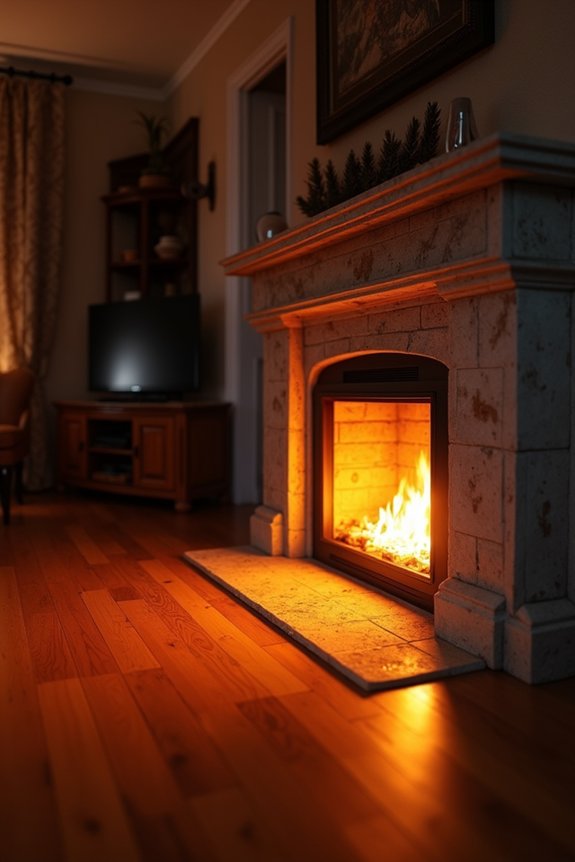
I’ve found that the sweet spot for mounting your TV above a fireplace is keeping it 8–10 inches away, though 12 inches works even better if your fireplace pumps out serious heat. You can use a heat shield or mantel to redirect warmth, or go with a full-motion mount that lets you lower the TV to eye level when you’re watching and raise it back up afterward, which gives you the best combination of safety and comfort.
Recommended Distance Guidelines
The sweet spot for keeping your TV safe from fireplace heat is actually pretty straightforward: aim for 8 to 10 inches of clearance, though I’d honestly go for 12 inches if you’ve got the room. Here’s what I’ve learned from watching friends make this decision:
- 8-10 inches works as your baseline distance for most fireplaces
- Heat output matters—higher output means you need more clearance to reduce heat exposure
- Mantel or alcove placement can deflect warmth away, giving you flexibility
- Be generous with clearances when uncertain about your fireplace’s heat level
I always tell people: if you’re unsure, go bigger. Your TV’s longevity matters more than squeezing it closer. A full-motion mount lets you adjust positioning easily, protecting both your investment and viewing comfort.
Heat Shield Protection Methods
Now that you’ve got your distance down, here’s something practical: using actual barriers between your fireplace and TV.
A TV heat shield works well here. I’ve seen mantels with built-in deflectors redirect rising heat away from your screen. You’ll want to check your TV manufacturer’s clearance requirements; most need at least 12 inches of protection.
Consider your mounting height too. I installed a full-motion mount that lets me lower the TV during fireplace use, keeping it further from rising heat. Some friends prefer alcove designs that naturally funnel warmth away.
The key? Match your fireplace manual’s heat output with your TV’s tolerance. That combination tells you exactly what barrier style works best for your setup.
Mounting Height And Clearance
How high you mount your TV above the fireplace matters more than you’d think. I’ve learned this the hard way, watching friends struggle with heat damage that could’ve been prevented.
Here’s what I recommend for safe TV mounting:
- Maintain 8–10 inches minimum between your TV and fireplace opening, with 12 inches being ideal
- Use heat-deflecting mantels or protective framing to redirect flames and heat away from electronics
- Consider your fireplace type—open fireplaces need generous heat clearance compared to enclosed models
- Install vertical-movement mounts so you can lower your TV during heating, creating extra distance when needed
The distance really depends on your fire’s heat output and shape. Higher mounting with mantel protection keeps your TV safer while preserving those comfortable viewing angles you want.
Choosing the Right Mount to Protect Your TV
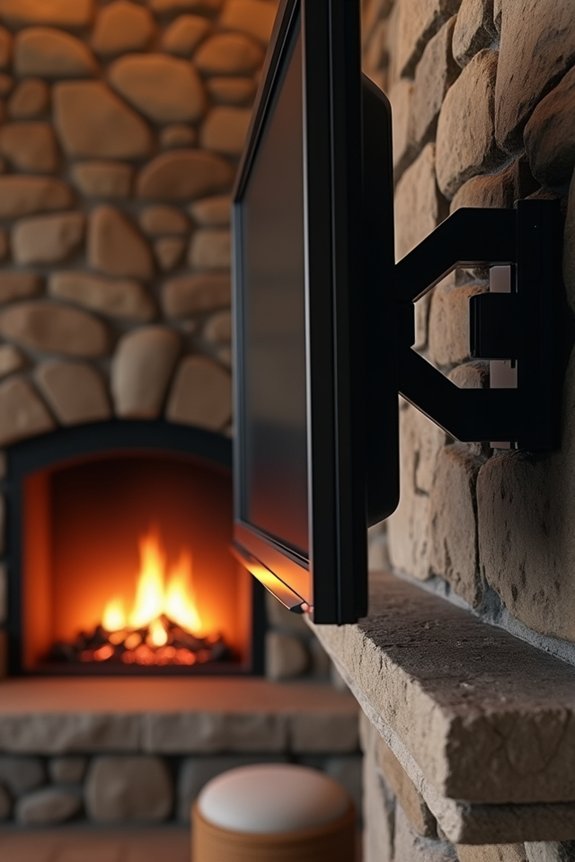
If you’re serious about keeping your TV safe above a fireplace, here’s what I’ve learned: the mount you choose matters just as much as the fireplace itself. I’d recommend investing in a full-motion mount with heat-aware design. These mounts let you pull your TV down to eye level for viewing, then push it back up away from rising heat. Look for models that maintain proper clearance—I typically see 12-16 inches recommended between your TV’s bottom and the fireplace opening. The vertical adjustment feature positions your TV in front of the fire, reducing direct heat exposure considerably. Before purchasing, always verify your specific fireplace’s heat output and consult an installer about clearance requirements for your exact TV model and setup.
How Mantels Shield Your TV From Fireplace Heat
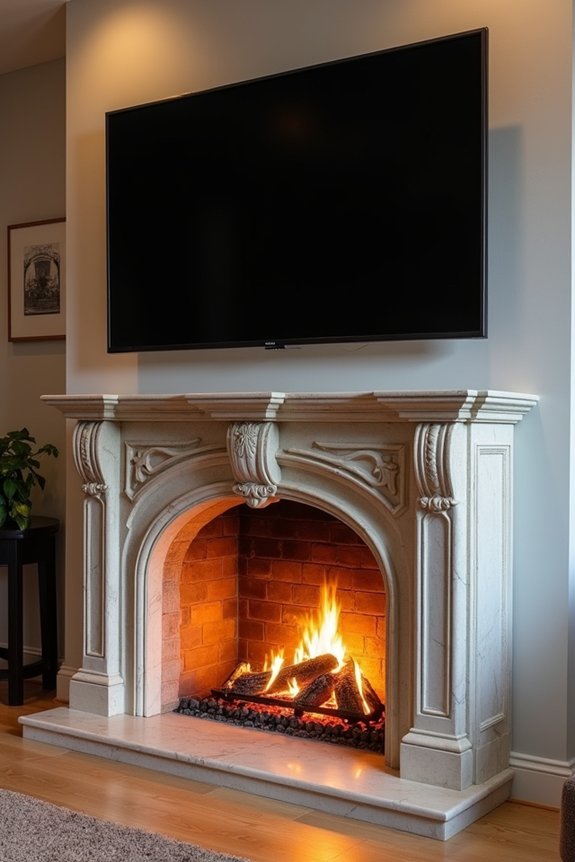
Ever wonder why some people keep their TVs safe above fireplaces while others end up with damaged screens? I’ve learned that a well-designed mantel acts as your TV’s best friend by deflecting radiant heat away from expensive electronics.
Here’s what makes mantels such effective heat shields:
- Material matters: Choose dense materials like stone or brick that absorb and dissipate heat better than wood
- Depth creates breathing room: Position your mantel at least 12 inches below the TV for proper airflow
- Heat clearance counts: Follow manufacturer guidelines—typically 36 inches minimum from fireplace opening
- Combined protection works: Pair your mantel with a heat-deflecting mounting system for added defense
I’ve seen friends protect their TVs successfully by respecting these principles. Your mantel isn’t just decorative—it’s protective infrastructure that keeps temperatures within safe operating ranges. That’s the benefit you want in your entertainment space.
Full-Motion Mounts Eliminate Neck Strain and Heat Concerns
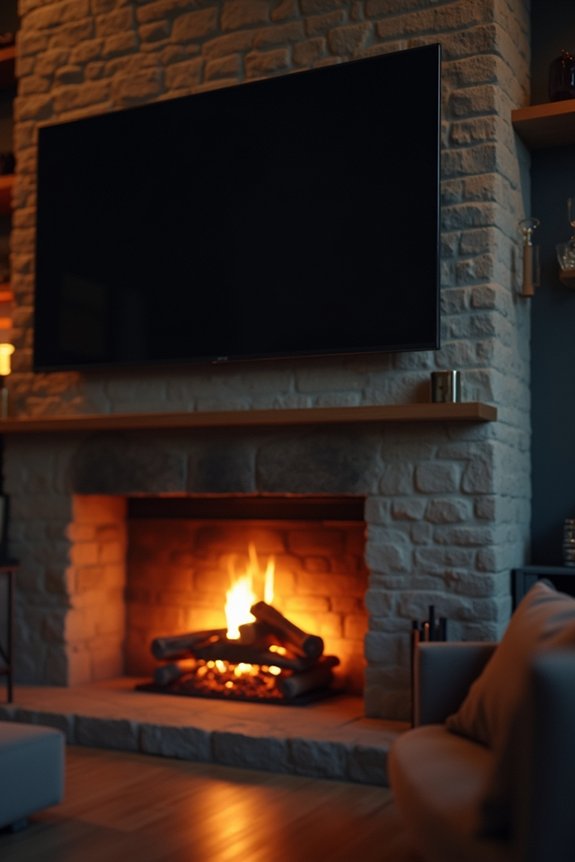
I’ve found that full-motion mounts, especially pulldown models, solve two problems at once: they let you lower your TV to eye level so you’re not craning your neck upward, and they let you position the screen away from the fireplace heat when you’re not watching. When I installed one in my living room, I could pull the 55-inch TV down about 12-18 inches during viewing, which kept my neck comfortable and moved it safely back up when the fire was going. This vertical flexibility means you get the best viewing angle without the heat damage, giving you a setup that actually works for both comfort and protecting your equipment.
Vertical Movement Solves Viewing Angles
One of the best solutions I’ve found for mounting a TV above a fireplace is a full-motion mount with vertical movement—it genuinely improves the viewing experience. Instead of craning my neck upward, I can lower the screen to eye level for comfortable viewing, then raise it when I’m done. This flexibility solves the viewing angles problem that plagued me initially.
Here’s what makes vertical movement so effective:
- Eliminates neck strain by positioning your screen directly ahead
- Reduces heat exposure through adjustable height and distance control
- Improves picture quality with straight-on viewing instead of upward angles
- Keeps your TV safer while maintaining convenient repositioning
The articulating feature lets me maintain direct sightlines without sacrificing heat clearance or TV mounting stability. I’ve noticed the difference immediately—no more distortion, no more discomfort, just better viewing angles every single time.
Heat Protection Through Proper Positioning
How much heat protection can you really get from positioning your TV strategically above a fireplace? I’ve learned that mounting height matters. When I installed my full-motion mount about 12 inches above the mantel, I noticed the heat that rises from flames barely reaches the TV. The mantel itself acts as a natural shield, blocking direct heat exposure. What really helped? Using my full-motion mount to pull the TV forward when the fireplace runs. This simple repositioning reduces heat concentration on the screen. You’re not just solving neck strain anymore—you’re actively protecting your investment. That combination of proper mounting height and strategic positioning gives you both comfort and peace of mind while enjoying your fireplace.
Why Image Quality Doesn’t Suffer Above a Fireplace
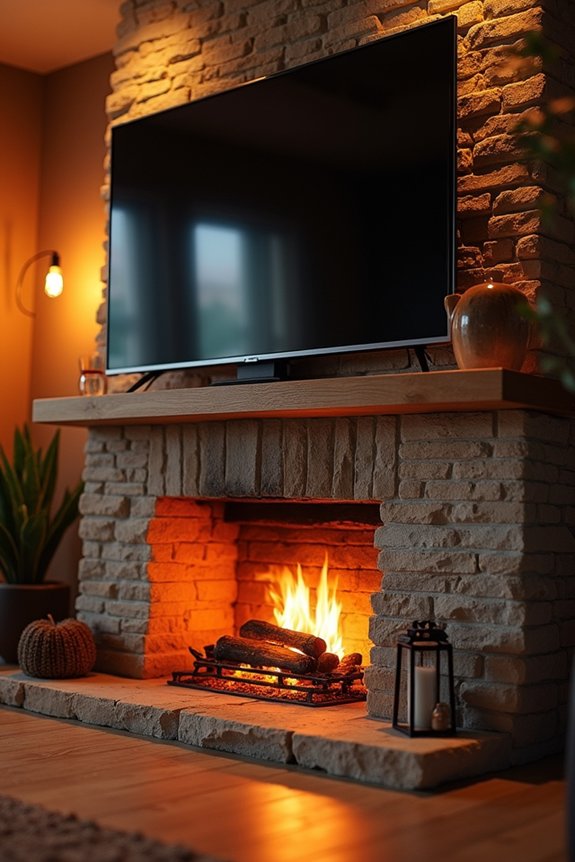
You might think mounting your TV above a fireplace automatically means accepting a fuzzy, washed-out picture—but modern mount technology offers practical solutions.
I’ve learned that direct, straight-on viewing makes a real difference. Here’s what actually works:
- Full-motion mounts lower your TV to eye level, eliminating brightness loss from steep angles
- Tilting capabilities redirect glare downward, minimizing washed-out images even when mounted higher
- Heat deflection shields protect your TV while keeping the picture clear
- Central alignment provides unobstructed viewing from your favorite seat
The key is positioning your TV for optimal viewing comfort. When you’re looking directly at the screen—not upward—image quality stays sharp and vibrant. I’ve mounted TVs above fireplaces successfully by choosing mounts with sufficient extension and tilt. Your picture doesn’t suffer; it performs well.
Step-by-Step Installation Checklist for Fireplace and TV Safety
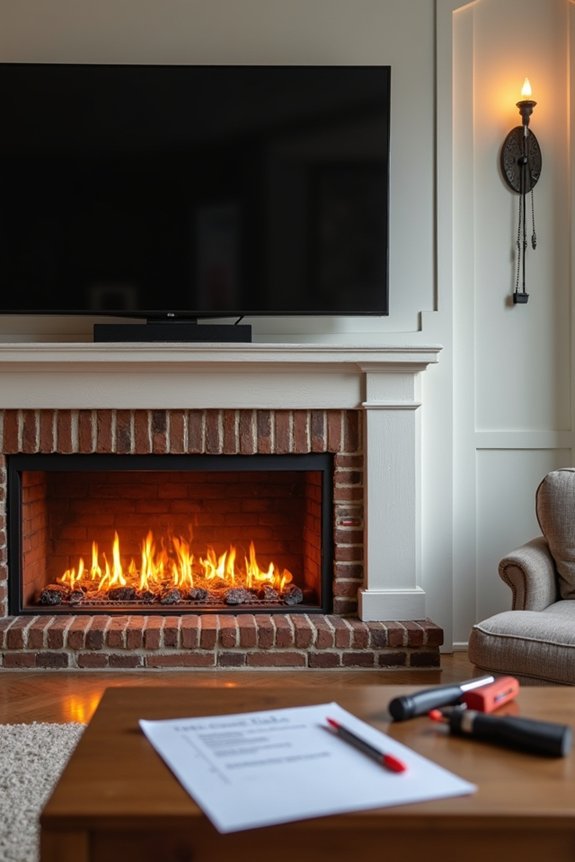
When I’m about to mount a TV above a fireplace, I’ve learned that skipping the planning phase almost always leads to problems—so let’s start there. First, I grab both manuals—the fireplace and TV—to understand their specific heat protection requirements. I verify clearances with a WE LOVE FIRE expert, confirming my setup meets manufacturer guidelines. Next, I choose a full-motion mount that lets me angle the TV away from heat during viewing. I measure distances carefully, confirming the TV sits at safe clearance above the fireplace opening. Then I plan my entertainment unit, avoiding plastic materials that might warp. Finally, I get a detailed quote from a dealer, share photos of my planned setup, and verify every protection measure before powering on. This thoroughness protects my investment.
Recognizing Heat Damage: Warning Signs and Corrective Actions
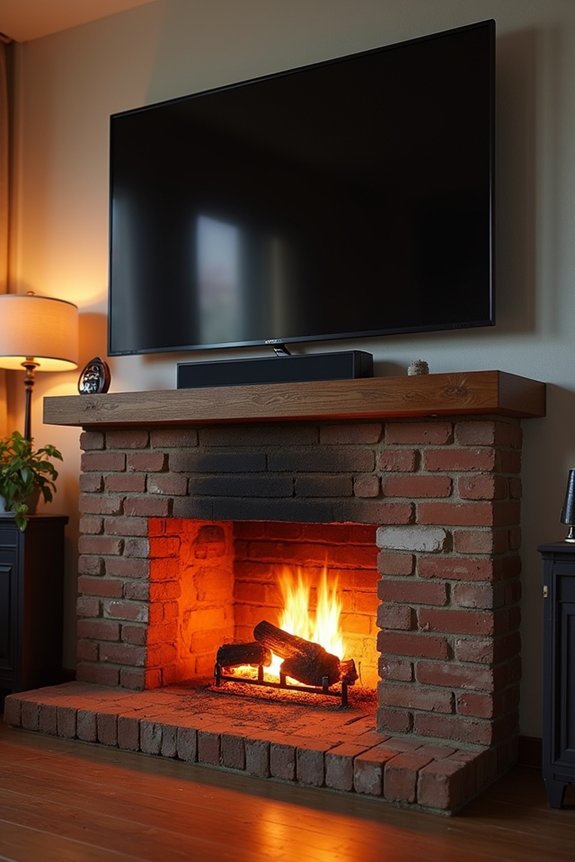
What’s actually happening inside your TV when it’s mounted above an active fireplace? Heat creeps into sensitive components, gradually degrading performance. I’ve learned to spot trouble early by watching for these warning signs:
Heat creeps into sensitive TV components when mounted above fireplaces, gradually degrading performance over time.
- Discoloration on the TV bezel or unusual fan noise during operation
- Image instability, reduced brightness, or color shifting when fire runs at high output
- Warping or loosening of mounting hardware and wall materials
Here’s what I do when I notice these issues. First, I implement a heat-management strategy like installing a heat-deflecting mantel or adjusting mounting clearance. Moving the TV away from direct heat exposure works too. Regular inspections of your setup catch problems before they worsen, keeping your investment safe.
Planning Your Fireplace-TV Layout for Safety and Aesthetics
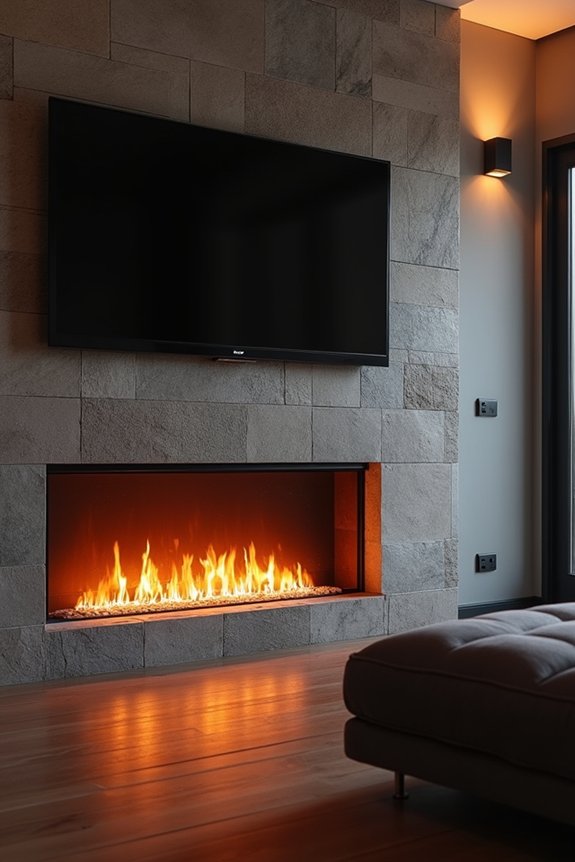
How do I actually arrange a fireplace and TV together without one ruining the other? This requires thoughtful planning around fireplace clearances and TV mounting safety.
I mount the TV at least 8–12 inches above the fireplace opening to prevent heat damage. A heat deflection mantel redirects radiant heat away effectively. I also consider my fireplace type—wood-burning produces more heat than gas models, requiring extra clearance.
| Layout Element | Recommendation | Why It Matters |
|---|---|---|
| TV Height | 8–12 inches minimum | Clears direct heat exposure |
| Heat Deflection | Mantel or alcove | Redirects radiant warmth |
| Mount Type | Full-motion tilting | Reduces viewing strain safely |
| Fireplace Type | Verify heat output | Gas vs. wood differs greatly |
| Expert Consultation | WE LOVE FIRE dealer | Confirms your specific setup |
Full-motion mounts let me lower the TV toward eye level after confirming heat safety. I always verify both manufacturer specifications before finalizing placement.