
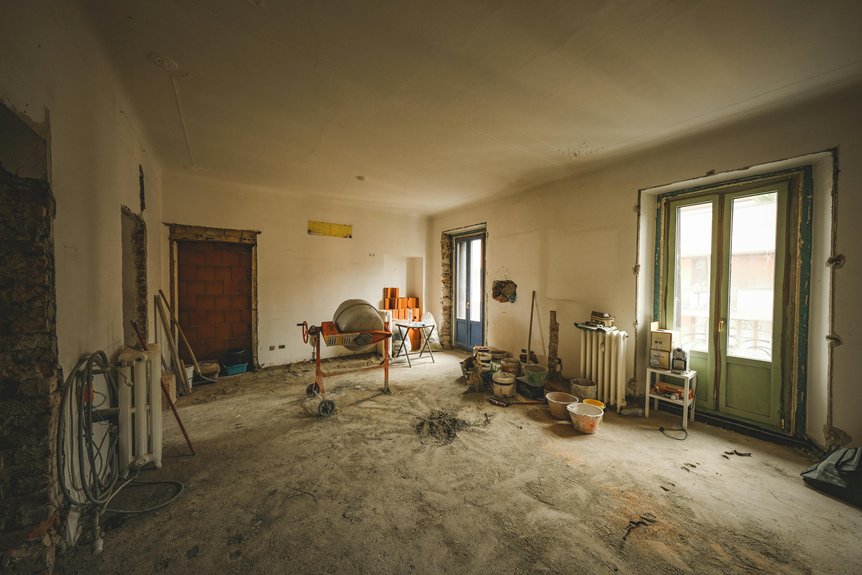
Your fireplace needs attention if you’re seeing outdated brick, brass doors, or a cracked mantel. Poor heating performance and constant creosote buildup signal bigger issues. Check your firebox for cracks, test that damper, and honestly assess whether you need cosmetic updates ($1,000–$3,000) or a full teardown ($5,000–$10,000+).
Gas, wood, or electric each have tradeoffs worth considering. The right choice depends on your lifestyle and maintenance tolerance, so let’s explore what actually works best for your situation.
Identify Signs Your Fireplace Needs Remodeling
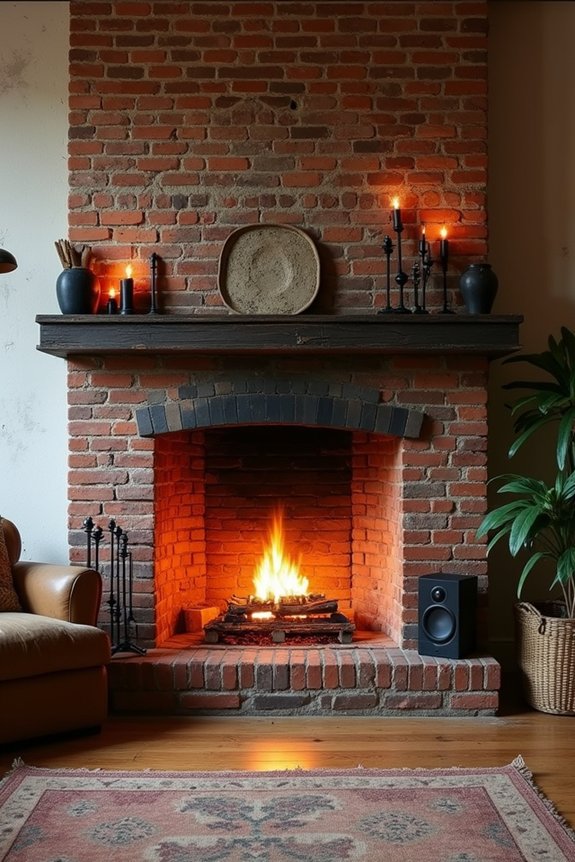
When’s the last time you actually looked at the back of your fireplace? I discovered mine needed serious attention once the contractor exposed the unit during inspection. You’ll spot signs like outdated brick, brass doors, or a dated mantle—these suggest a remodel could refresh your space. But here’s what matters most: does your wood-burning unit function inconsistently? Mine required constant creosote management, which signaled efficiency and safety concerns I couldn’t ignore. Frequent cleaning and poor performance indicate remodeling might improve both. I found that gathering model numbers and installation manuals before walls close up saved me headaches later. Whether you’re considering a freestanding unit or gas insert, understanding your fireplace’s condition now determines your best path forward.
Decide: Demolish or Refurbish Your Fireplace?
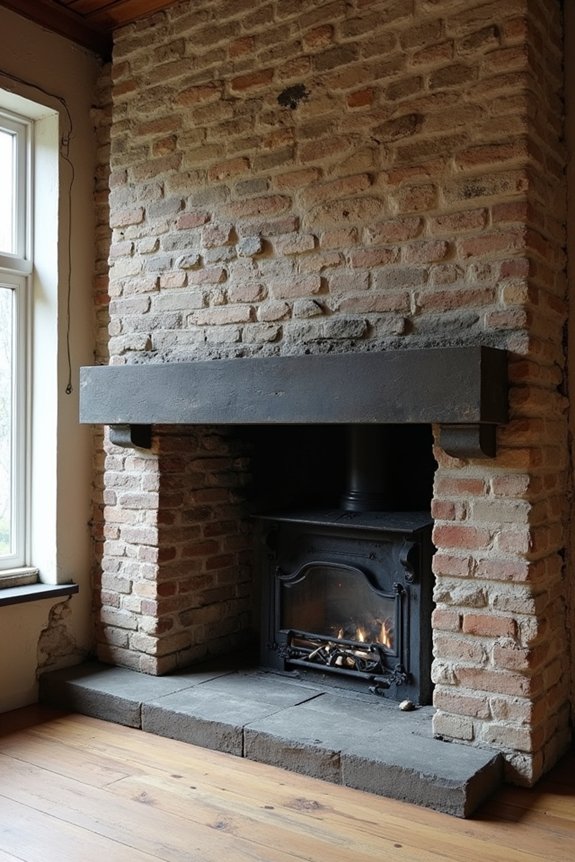
Now comes the tough part—figuring out whether you’re looking at a demolition or just a refresh. I’ve learned that evaluating your current structure honestly is important, because a fireplace with solid bones might only need new tile, paint, and maybe a sleek mantel, while one with cracking mortar or a tilting chimney requires a full teardown. Your scope and budget should guide you too; if you’re changing the footprint or dealing with structural issues, demolition’s your answer, but if you’re mainly updating the style to match your new kitchen cabinets or paint colors, refurbishing saves you thousands and keeps things simple.
Assessing Your Current Structure
Before you swing a sledgehammer, you’ll want to figure out whether tearing down your fireplace makes sense or if a refresh will do the job. I’d start by examining your fireplace structure closely. Check the firebox for cracks or damage, inspect your chimney for deterioration, and test that your damper opens and closes smoothly. A safety assessment is important here—these components work together to keep your home safe. I’ve seen homeowners discover hidden structural issues during inspections that changed their entire plan. Look at your installation manual if you’ve got it. This tells you what you’re actually working with and what updates meet current safety codes. Understanding your foundation determines whether refurbishing works or demolition is necessary.
Weighing Cost and Scope
How do you know if you’re looking at a quick cosmetic fix or a full-blown teardown project? I’ve found that understanding your budget and vision matters significantly. Refurbishment—think fresh paint, new tiles, or a stylish mantle—costs considerably less and works great when you love your fireplace’s bones. Demolition makes sense for extensive projects where you need structural changes or complete redesigns. Here’s my honest take: refacing typically runs $1,000–$3,000, while demolition and rebuilding can hit $5,000–$10,000 or more. The scope really determines everything. I always ask myself: Am I updating the style, or am I redesigning the entire room? That question guides whether I’m refurbishing or demolishing. Both approaches create excellent results when they match your actual needs and wallet.
Choose Your Fireplace Burn Method: Gas, Wood, or Electric
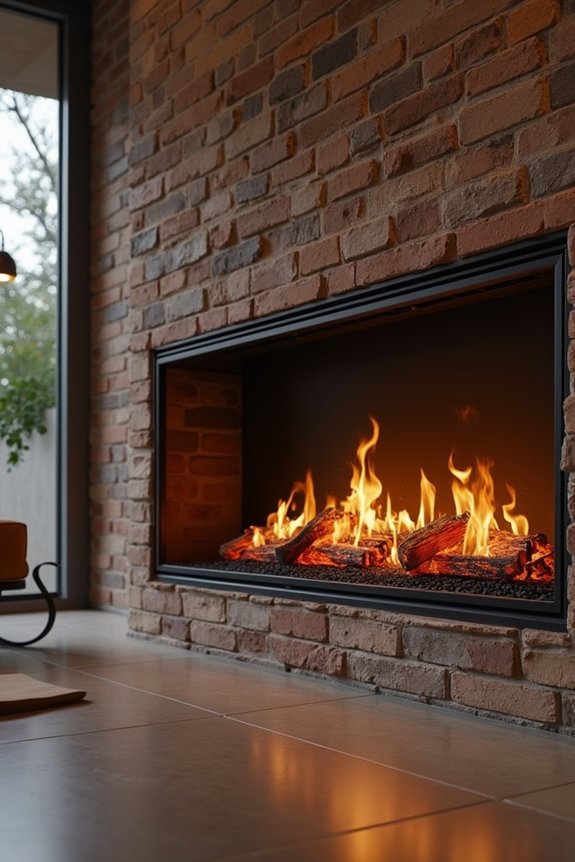
Now that you’ve decided whether to demo or refresh, it’s time to pick your fireplace’s fuel source—and this choice shapes everything from your monthly bills to how often you’ll be cleaning. If you’re juggling work and kids, gas fireplaces give you warmth with remote control convenience and hardly any upkeep, while wood-burning options deliver that authentic crackling ambiance but demand regular chimney inspections and creosote management. Electric fireplaces? They’re your best option if you’ve got tight spaces or can’t install venting—they’re modern, easy to set up, and those faux flames look quite convincing these days.
Gas Fireplaces: Convenience Meets Efficiency
Why do so many homeowners I’ve talked to choose gas over wood when they’re remodeling? The answer’s simple: convenience meets efficiency. You’ll get reliable heat without the hassle of stacking wood or cleaning creosote buildup. I’ve watched friends appreciate remote controls that let them adjust warmth instantly from their couch. Gas fireplaces work well as inserts, upgrading existing wood setups while preserving your home’s character. Direct Vent options handle ventilation seamlessly, and you’ll notice fewer maintenance headaches compared to traditional wood burning. During remodels, I’ve seen families choose gas specifically because it improves indoor air quality while delivering consistent warmth. These units fit various architectural styles, making them practical solutions for modernizing your space.
Wood-Burning: Classic Comfort and Ambiance
If you’re drawn to that unmistakable crackle and smoky scent, a wood-burning fireplace delivers something gas and electric options simply can’t match. I’ve watched friends gather around theirs, mesmerized by authentic flames dancing in the hearth.
Here’s what you need to know before committing: wood-burning requires serious maintenance. You’ll manage creosote buildup, schedule annual chimney safety inspections, and clean ash regularly. I learned this the hard way when neglecting inspections cost me thousands in repairs.
For your fireplace remodel, verify proper clearances and check chimney integrity with professionals. Local codes matter—don’t skip this step. Operating costs run higher than gas due to fuel and upkeep, but that cozy feeling? Well worth it for those who love the ritual.
Electric Options: Modern and Space-Friendly
When space is tight or you’re renting an apartment, an electric fireplace might be exactly what you’re looking for. I’ve found that these modern units work well in spaces without requiring venting, chimneys, or complicated installation. They’re practical for modernization projects because they fit into your existing décor.
Here’s what makes electric fireplaces space-saving options:
- Wall-mounted units that hang like flat-screen TVs, freeing up floor space
- Recessed inserts fitting into existing fireplace openings or tight wall cavities
- Portable models you can move between rooms as needed
- No chimney or gas lines required for installation
The installation process is straightforward—most plug directly into standard outlets. You’ll enjoy realistic LED flames, adjustable heat settings, and zero maintenance. I appreciate how they let me control warmth independently from the visual effect, perfect for a comfortable ambiance without energy waste.
Right-Size Your Fireplace to the Space
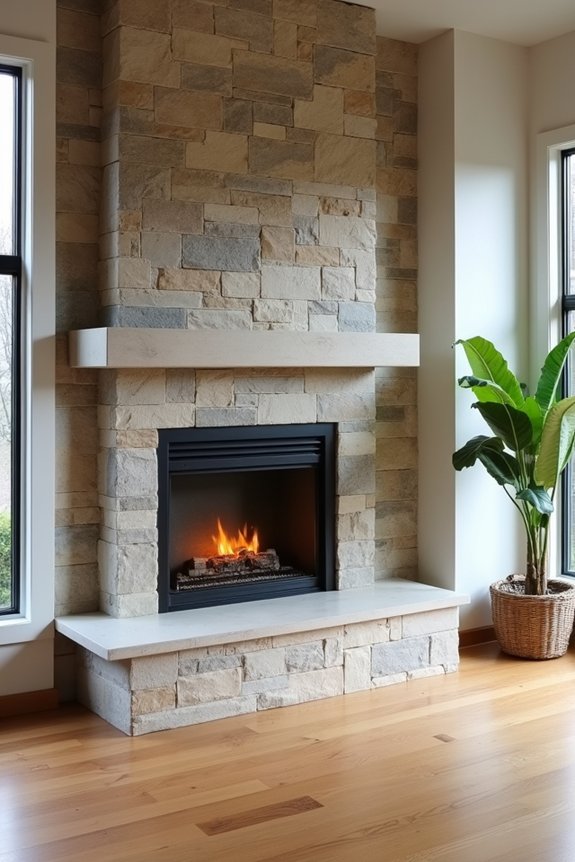
How’s your fireplace fitting into your room these days? I’ve learned that fireplace size really matters for your space’s balance. When I helped my sister assess her living room, we realized her fireplace overwhelmed the 12-by-14 space, making everything feel cramped.
The key is finding room proportion that works. A fireplace should typically occupy 25-30% of your wall width. You don’t need major structural considerations if you’re just considering cosmetic upgrades—think new tile, paint, or mantels instead. These changes improve appearance without expensive construction costs.
But if your fireplace genuinely misses the mark dimensionally, resizing involves serious structural considerations and higher expenses. I’d recommend measuring your wall, checking furniture placement, and honestly evaluating whether you need actual rebuilding or just refreshing what’s already there.
Select Fireplace Materials, Surrounds, and Finishes
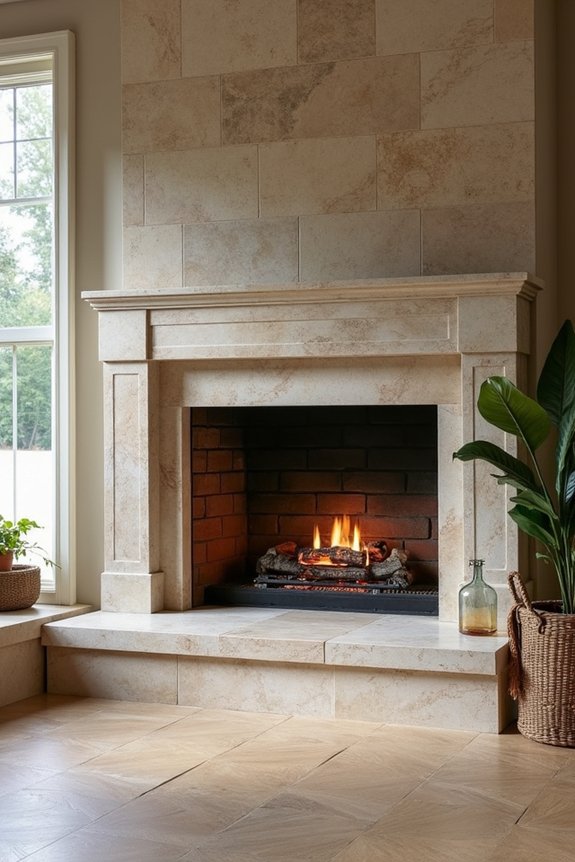
Once you’ve sized your fireplace right, the real fun begins—picking the materials and finishes that’ll make it work. I’ve watched homeowners choose surrounds that match their style and lifestyle. Here’s what I’d consider:
- Brick for that classic, warm feel—it handles heat beautifully but needs regular cleaning
- Stone like stacked ledge options for textured, high-end looks, though they’re heavier and pricier
- Porcelain tile for sleek, modern aesthetics with easier maintenance than natural materials
- Mantels in wood or stone that define your fireplace’s character and ground the whole design
Your mantel choice especially matters—it influences whether you’re DIYing or hiring pros. I’ve learned that mixing materials often works best. A brick surround with a simple wood mantel creates balance. Think about what fits your home’s vibe and your maintenance comfort level.
When to Call a Pro vs. DIY Your Fireplace Installation

Should you grab your tools or pick up the phone? I’ve learned that fireplace remodels demand honest assessment. Cosmetic updates—new surrounds or finishes—you can handle yourself. But here’s where I always pause: structural changes, venting modifications, or converting from wood to gas require professional installation. I learned this the hard way.
When you’re changing how your fireplace vents or moving it behind a wall, hire a licensed contractor. Code compliance and safety concerns aren’t worth shortcuts. Gas connections need expertise. Chimney work, damper issues, and clearance specifications involve too many variables.
I contact professionals when I’m unsure. Getting quotes costs nothing. Your family’s safety matters more than saving money on fireplace remodels.