

I’ve tested fireplaces across every budget, and I’ve learned the best fit depends on your fuel preference, space size, and wallet.
Planika leads premium options with water-vapor technology starting around $4,600, while Heat & Glo and Napoleon offer solid gas and wood models for mid-range budgets.
Kozy Heat and Regency provide reliable value without cutting corners.
Gas heats efficiently, electric installs easily, and wood brings traditional charm.
Your dealer choice matters as much as the brand itself—they’ll handle permits and warranties that protect your investment long-term, so stick around to discover which option matches your specific needs.
Best Fireplace Brands for 2026: How to Compare
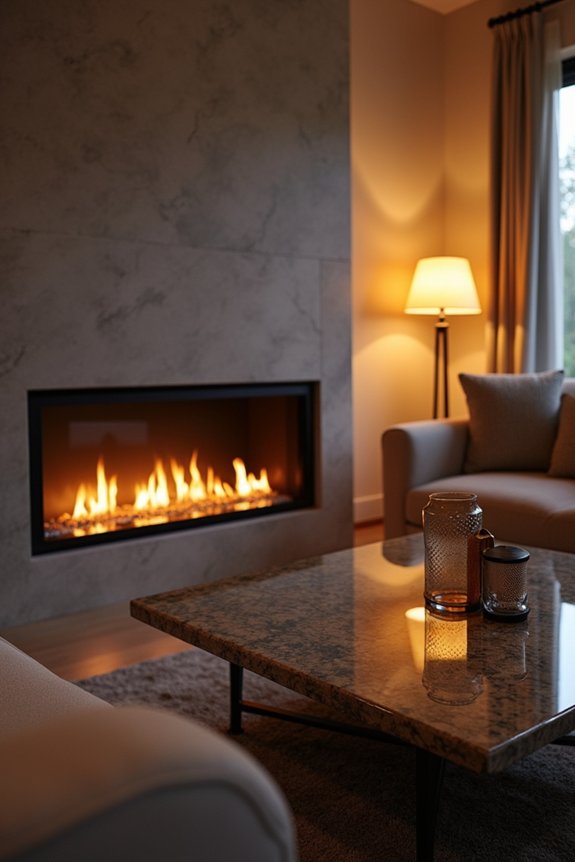
How do you even start comparing fireplace brands when there are so many out there? I’ve found it helps to focus on a few key things. First, decide what technology fits your home—gas fireplaces offer convenience, while electric fireplaces work anywhere without venting. Inserts are perfect if you’ve got an existing fireplace. Next, consider dealer support. Brands like Heat & Glo and Napoleon stand behind their products with solid customer service. Think about your budget too. Premium options exist, but mid-range fireplace brands deliver real value. I always ask myself: what’s my space, what’s my lifestyle, and who’ll help me if something goes wrong? That framework makes choosing between fireplace brands way easier.
Planika: Premium Water-Vapor and Ethanol Fireplaces
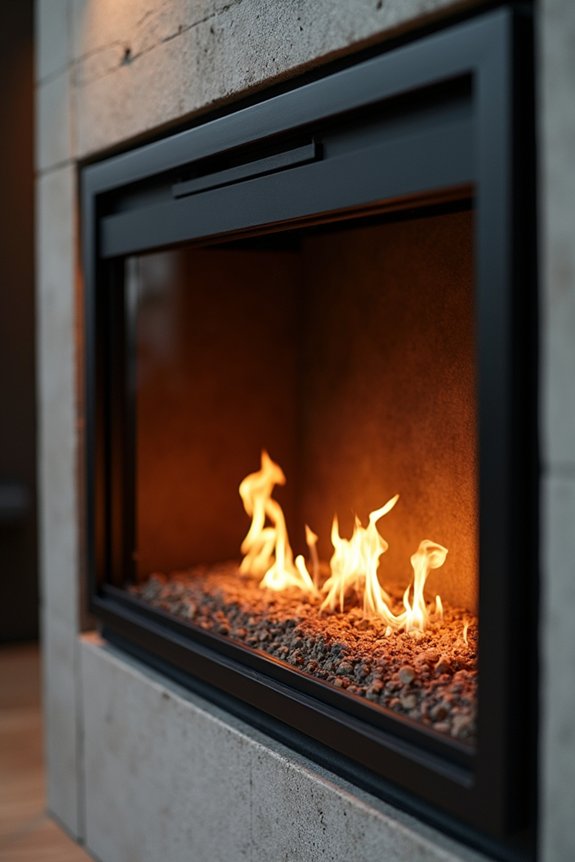
I’ve found that Planika stands out when you’re looking for fireplace technology that goes beyond the typical options—their water-vapor line ranges from 500 to 2000 inserts (220 W to 880 W), so you’ve got choices whether you want something modest or substantial. If you’re considering ethanol burners, their FLA4 series with BEV automation gives you solid automation features at different price points: the 590 Burner runs $4,600, the 990 costs $7,215, and if you’re ready to invest, the 2490 goes for $18,450. What I appreciate most is that whether you’re drawn to their outdoor gas models like the Galaxy 1150 (reaching 34,480 BTU/h starting at $3,200) or their outdoor ethanol options like the Porto ($2,100), you’re getting engineered quality that handles both aesthetic and performance well.
Water-Vapor Technology and Pricing
When you’re shopping for a fireplace that doesn’t need a chimney or constant venting, Planika’s water-vapour technology and ethanol options are worth considering. Their Water-Vapour Line is a solid choice for 2026. The Cool Flame series ranges from the 500 Pro to 2000 Pro inserts, delivering 220 to 880 watts of output. What stands out is the flexibility—you’re not locked into one setup. Their Water-Vapour Pro versions skip inner tanks entirely, letting you run continuous feed without interruption. Pricing remains accessible. You’re investing in a fireplace that looks beautiful while staying practical. That combination of Planika’s water-vapour technology with straightforward pricing makes finding your perfect match straightforward.
Ethanol Burners and Automation
Planika’s ethanol burners bring serious automation to the table—and I mean the kind that actually simplifies your life instead of complicating it. Their BEV technology lets you control everything through touch displays and a mobile app. You get six adjustable flame levels, automatic refilling, and integrated smart fireplace management. I’ve watched friends hesitate about high-tech fireplaces, then realize how straightforward this ecosystem actually is.
| Model | Price | Output |
|---|---|---|
| 590 Burner | $4,600 | Standard automation |
| 1490 Burner | $11,200 | Enhanced features |
| 2490 Burner | $18,450 | Premium control |
The automation piece honestly changes how you own one. You’re joining a group that values both minimalist design and genuine convenience. That’s the Planika difference—premium ethanol burners that work *with* you.
Heat & Glo and Napoleon: Leading Gas and Wood Brands
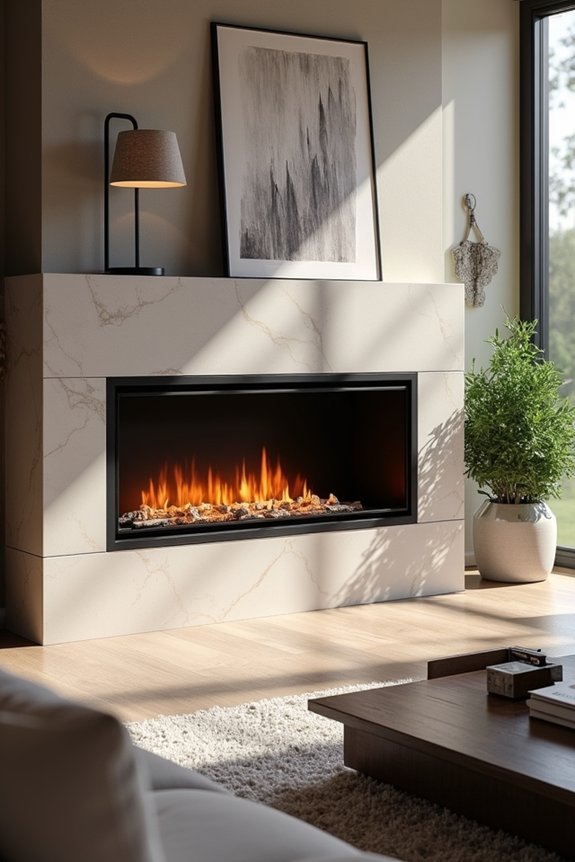
How do you pick between two fireplace powerhouses that’ve both earned serious trust in the industry? Heat & Glo and Napoleon are the brands I’d trust with my own home.
Heat & Glo, backed by Hearth & Home Technologies, offers gas fireplaces, wood-burning units, and electric options that work well in any space. I’ve seen their inserts update old fireplaces with real improvements.
Napoleon, the Canadian manufacturer based in Ontario, brings that same quality to gas and wood-burning fireplaces with pricing that feels fair. Their engineering impresses me every time.
Both brands deliver reliability and style without forcing you to choose between performance and budget. Whether you’re drawn to gas convenience or wood’s authentic warmth, you’re joining folks who’ve already chosen quality.
Majestic and Harman: Specialized Fireplace Brands for Wood and Pellets
If you’re serious about wood or pellet heat, Majestic and Harman deserve your attention. Both brands are part of Hearth & Home Technologies (HHT), and they’ve carved out distinct niches that matter.
Majestic specializes in gas fireplaces and wood inserts engineered specifically for the U.S. market. Their lineup includes models like the Jasper and Ruby, designed for straightforward installation and reliable performance.
| Brand | Specialty |
|---|---|
| Majestic | Gas fireplaces, wood inserts |
| Harman | Pellet stoves, pellet inserts |
| Majestic | Easy installation focus |
| Harman | High efficiency emphasis |
| Both | EPA compliance, dealer networks |
Harman, meanwhile, focuses exclusively on pellet appliances—think the P43 stove or P42i-TC insert. They’re known for exceptional efficiency and low emissions. I’ve found that joining either brand’s dealer network means genuine support when you need it.
Kozy Heat and Regency: Trusted Mid-Range Fireplace Brands
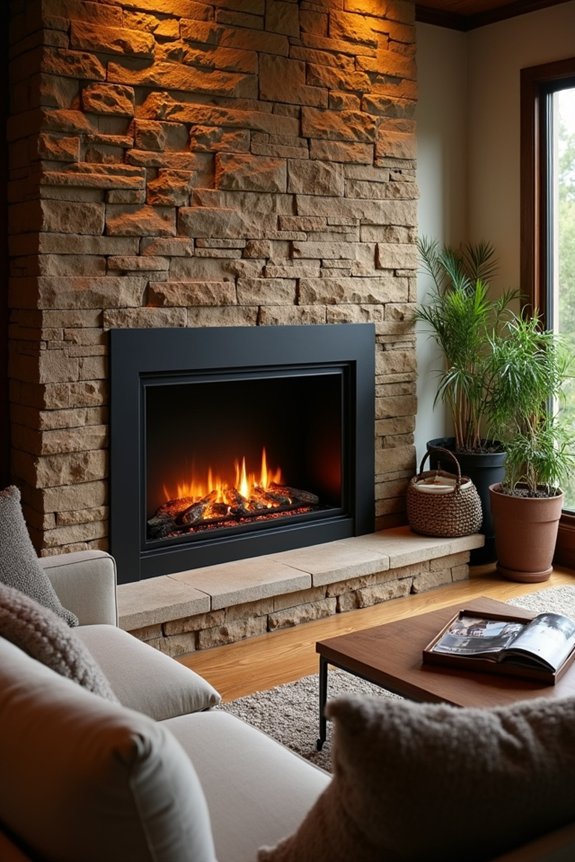
When you’re looking for solid fireplace options at reasonable cost, Kozy Heat and Regency deserve serious consideration. I’ve found both brands deliver genuine quality without the premium price tag that specialty manufacturers charge.
Kozy Heat, based in Minnesota, manufactures gas fireplaces, gas inserts, freestanding stoves, and electric fireplaces designed for practical installation. Their mid-range lineup fits well within typical homeowner budgets while maintaining reliable performance.
Regency focuses on gas and wood-burning models, offering traditional and contemporary styles that work well in retrofit openings and new builds. Both companies handle in-house engineering and production, meaning they control quality directly and back their products with solid warranties.
Whether you need gas fireplaces or electric alternatives, you’re getting honest craftsmanship here. These brands understand what homeowners like us actually want.
Choose Your Fireplace: Gas vs. Electric vs. Wood
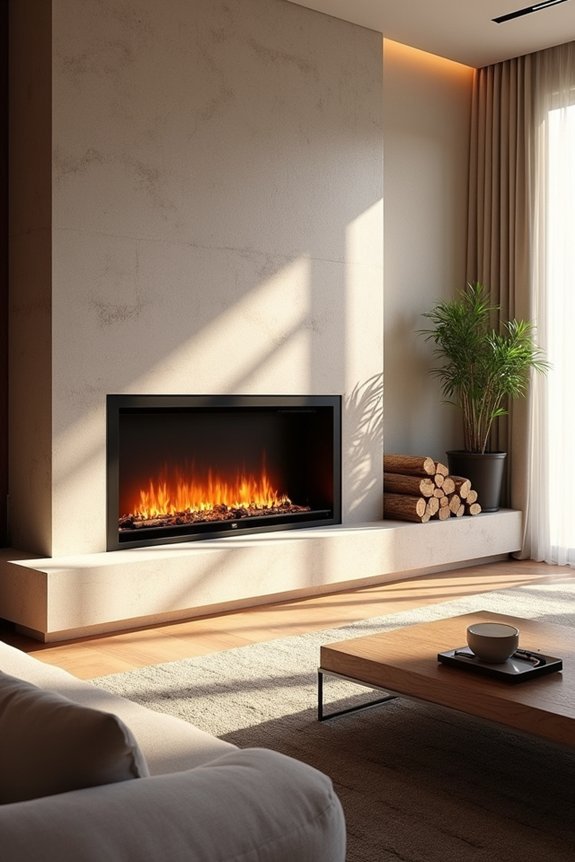
Once you’ve narrowed down your brand options—like Kozy Heat and Regency—you’ll face another big decision: what fuel type actually works best for your home.
Gas fireplaces deliver realistic flames with vented or vent-free options, heating 400–1,000 square feet efficiently. Gas inserts like Majestic Ruby 30 fit existing openings, though installation runs $6,400–$8,600 and requires a Level 2 chimney inspection.
Electric fireplaces offer versatile finishes and smart features—think app control on Touchstone Sideline—with 4,600–5,200 BTUs of heat output. They’re wall-mount friendly and require minimal installation.
Wood fireplaces provide traditional charm with high-efficiency models from Harman. They’ve got the broadest heating capacities, sometimes exceeding 30,000 BTUs.
Your choice depends on your space, budget, and what heating capacity you actually need. Each fuel type brings something different to the table.
Find a Dealer and Schedule Your Installation
How do you actually get from choosing a fireplace to having one that works safely in your home? I’ve learned that finding the right dealer is important. I locate authorized dealers through manufacturer websites—they’ll protect your warranty and stand behind their work. Next, I schedule a professional in-home consultation. This person assesses my venting, clearance, and gas line requirements before I commit. I always gather detailed quotes breaking down the stove price, installation labor, venting materials, and any structural work needed. I confirm warranty terms covering both parts and service. Building a budget buffer for permits and accessories helps me avoid surprises. This approach made my installation straightforward.