
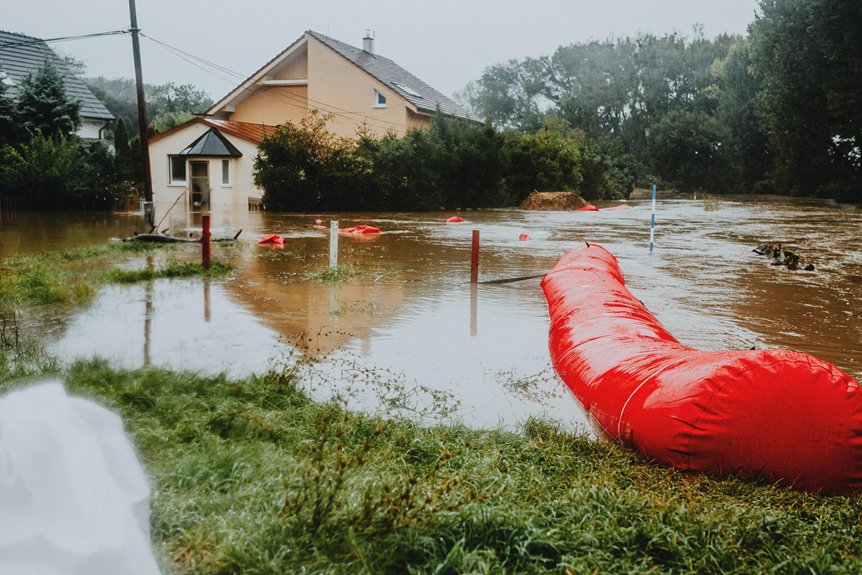
First, shut off your home’s power to avoid electrical shocks—don’t enter if your breaker’s downstairs.
Next, find where water’s coming from, whether it’s a burst pipe or foundation crack, and stop it using a valve or pump.
Document everything with dated photos before removing water, then use fans and a dehumidifier to keep humidity below 50% and prevent mold.
Clean surfaces with soap and water, monitor daily for mold growth, and contact your insurance agent right away with your photos and receipts.
Understanding what caused the flooding helps you prevent it from happening again—there’s plenty more to know about protecting your basement.
Shut Off Power and Check for Electrical Dangers
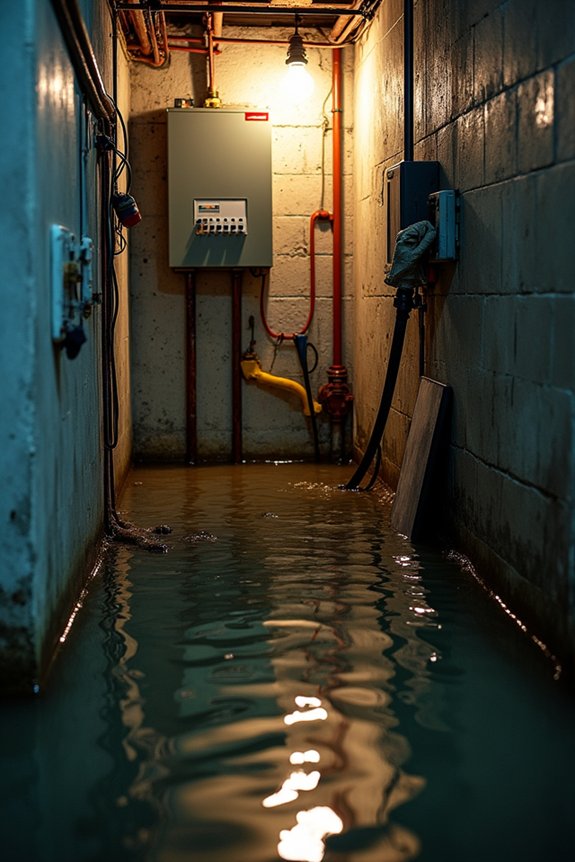
Why’s the first thing you should do when you spot standing water in your basement? Shut off the power immediately. I’ve learned this lesson the hard way—electricity and water don’t mix, and the combination creates serious electrical hazards.
Your safety depends on acting fast. If your circuit breaker’s in the basement, don’t go down there. Call an electrician instead. When it’s located elsewhere, turn off power to your entire home before entering.
Here’s what I always remember: flooded electrical equipment, cords, and outlets stay dangerous even when water levels drop. Never touch them. After you’ve shut off power and assessed the situation, have a qualified electrician inspect everything before any water removal begins.
This step prevents injury and protects your home during water damage restoration.
Stop the Water Source and Document Everything
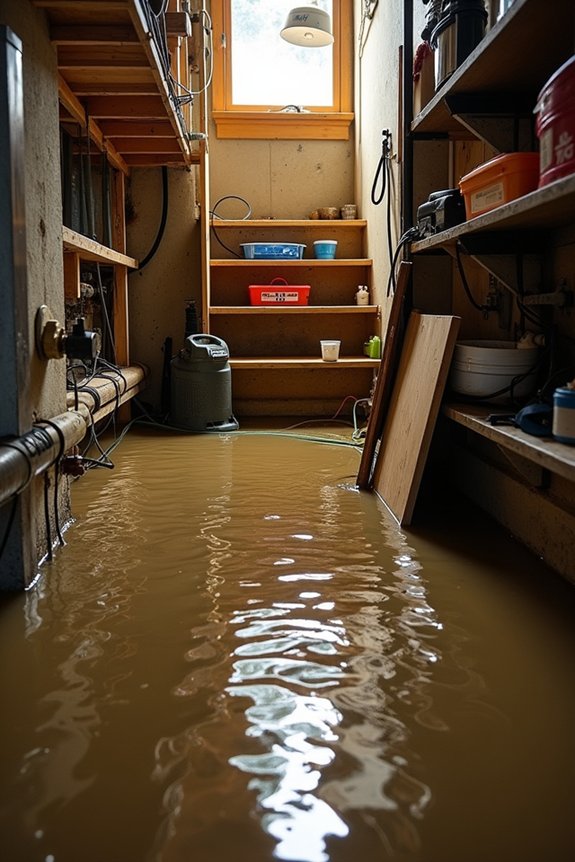
First, I’d stop that water before anything else—find where it’s coming from, whether that’s a burst pipe, sump pump failure, or foundation crack, and use a utility pump or wet/dry vacuum if it’s manageable, but call a pro if you’re unsure or the water’s contaminated. Next, grab your phone and start photographing everything: water levels on the walls, soaked furniture, any cracks or structural damage—these photos matter for your insurance claim and honestly saved me thousands when our basement flooded from a failed sump pump. Once you’ve got good documentation and you’re certain it’s safe to move around, you can start clearing out important items, but don’t rush into areas with standing water since that nasty stuff breeds mold and bacteria fast.
Locate and Stop Flooding
Once you notice water pooling in your basement, your first move is locating where it’s coming from—and I mean really pinpointing it, not just guessing. I’ve found that following the water upward usually works best. Check for cracks in walls, burst pipes, or window leaks. Once you’ve spotted the source, stop the water flow immediately using a valve shutoff or utility pump for larger amounts. Before removing anything, shut off power to prevent shocks during cleanup. If the water looks contaminated or you’re unsure about its source, call a professional for water mitigation and source control. Then grab your phone and document everything with timestamped photos—initial flooding, your actions, and progress. This documentation protects you and helps begin mold prevention through prompt water removal.
Document Damage With Photos
Photography is your best friend right now—and I can’t stress this enough because I’ve seen too many insurance claims get denied simply because folks didn’t have solid proof. Grab your phone and document everything stage-by-stage, starting before water removal even begins. Photograph the water depth, damaged items, and any visible sources of basement flooding. Capture close-ups of stains, cracks, and mold-prone surfaces—these details matter for your insurance claims. Take dated photos throughout the entire process: safety assessments, water removal, and drying phases. Don’t forget emptied rooms showing what you salvaged versus what you couldn’t save. These time-stamped images become your evidence, protecting you when you need it most.
Safety Before Water Removal
Before you think about removing a single drop of water, stop and find where it’s coming from—then shut it off. I’ve learned this the hard way. Call a plumber or emergency services if you can’t locate the source yourself.
Next, don’t enter your basement until you’ve completed a safety assessment. Electrical hazards are real dangers here. Turn off circuit breakers to the basement if you can reach them safely, or have an electrician shut off power to your entire home. I always err on the side of caution with electricity.
Avoid contact with floodwater completely—it’s often contaminated and especially dangerous around furnaces, boilers, and water heaters. Your basement safety depends on these steps. Take them seriously before any water removal begins.
Remove Standing Water Quickly to Prevent Mold
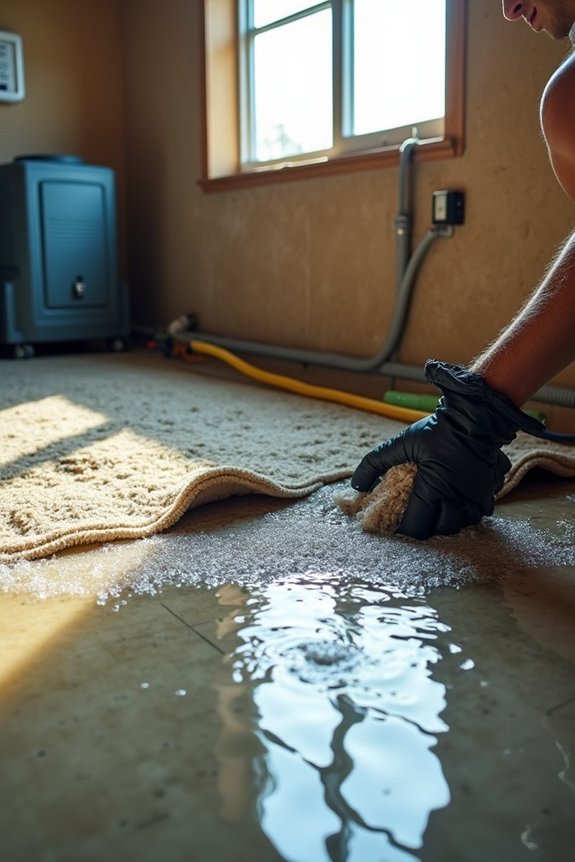
How quickly can you get that water out of your basement? Speed matters here, and I’ve learned this the hard way. Standing water becomes a mold breeding ground within hours, so you’ll want to act immediately.
Here’s what I recommend:
- Rent a wet/dry vacuum or sump pump—they’re effective tools for removing large volumes fast
- Follow up with mops and towels to eliminate moisture pockets that hide trouble
- Run fans, industrial blowers, and a dehumidifier continuously to accelerate your drying process
The water removal phase sets the tone for your entire recovery. I always document everything with photos for insurance claims and to track progress. Open windows only if outdoor conditions are drier than your basement. Otherwise, stick with mechanical drying methods. Take action now, and know that many others have faced and recovered from water damage.
Dry Your Flooded Basement With Fans and Dehumidifiers
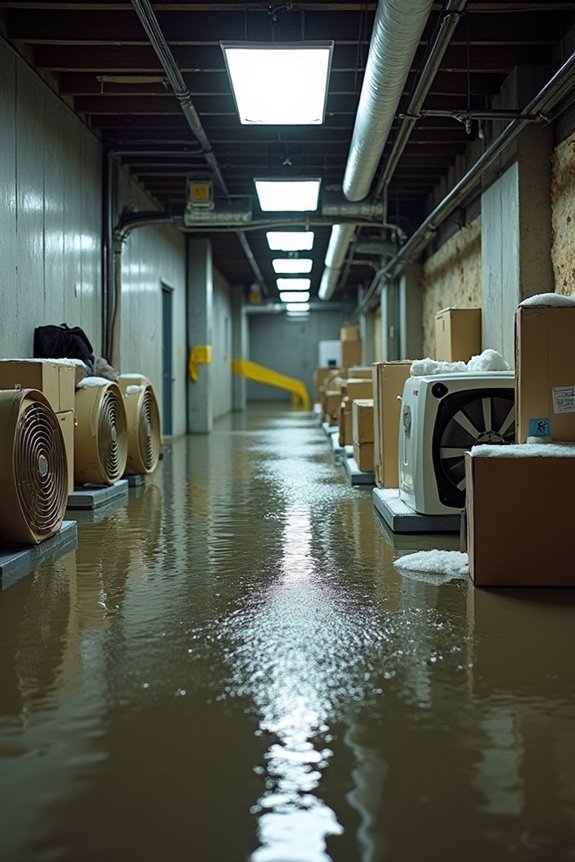
Once you’ve pumped out the standing water, fans are your best friend—position them to push air from the wet areas toward open windows or exterior vents, creating cross-ventilation that speeds up the drying process. You’ll want to grab a dehumidifier too and aim for relative humidity below 50%, which is the threshold where mold begins to lose its grip. Check moisture levels every single day with a simple moisture meter (they’re cheap, around $20), and keep those fans and dehumidifier running until there’s no visible dampness left and that musty smell is completely gone—sometimes that takes a week or more depending on how soaked everything got.
Air Circulation With Fans
Getting air moving through your basement is your hidden edge after you’ve pumped out the standing water. I’ve learned that fans aren’t just nice to have—they’re necessary for preventing mold and speeding up drying.
Here’s what I recommend:
- Position industrial blowers to create cross-ventilation, pushing moist air toward open windows or exterior doors
- Run fans continuously for several days, rotating their direction every few hours to reach all corners
- Combine fans with dehumidifiers to capture moisture the fans stir up, reducing mold risk significantly
Keep doors and windows partially open when weather permits. I typically place fans low on walls where moisture lingers most. Monitor how quickly dampness decreases—you’ll notice improvements within 24-48 hours. This approach speeds up your basement drying timeline and protects everything you’re working hard to salvage.
Dehumidifier Placement and Usage
Where you place your dehumidifier affects how fast your basement dries out. Positioning it centrally or near the dampest area maximizes airflow and moisture control. For larger spaces, I recommend commercial-grade, high-capacity units placed away from walls—this lets air circulate properly around the equipment.
Here’s what I do: I run my dehumidifier continuously until humidity drops to 40–50%, which significantly reduces mold prevention concerns. I also connect a drain hose to my unit rather than emptying the reservoir constantly. Pairing the dehumidifier with multiple fans speeds up drying of walls and floors. This combination tackles moisture control effectively, and basements show noticeable improvement when this approach is followed consistently.
Moisture Removal Timeline
How long does it actually take to dry out a flooded basement? I’ve learned the hard way that there’s no quick fix here. Your baseline timeline depends on several factors, and I’ll walk you through what to expect.
Here’s what you’re looking at:
- Days 1–2: Remove standing water, then run fans and industrial blowers for cross-ventilation
- Days 3–5: Pair fans with a dehumidifier set to 30–50% humidity while physically wiping moisture from walls
- Days 6–7+: Monitor humidity levels daily; if they stay above 60%, increase dehumidification to prevent mold
I typically see drying take 5–7 days when you’re diligent. Use dry mops on surfaces first—this speeds everything up. Keep checking for mildew daily. Staying consistent with your dehumidifier and fans is what makes the difference.
Clean, Sanitize, and Inspect for Mold Growth
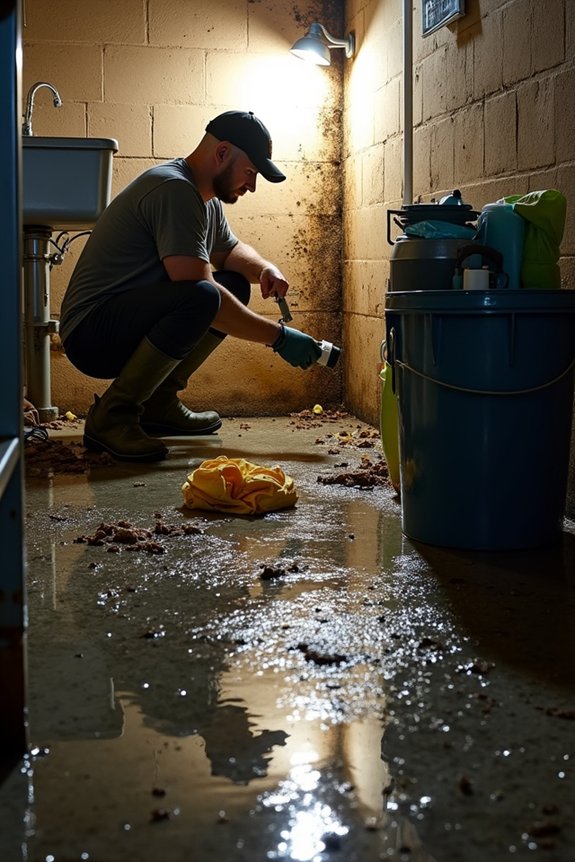
Once the standing water’s gone, the real work begins—because moisture and mold go hand in hand. I’ve learned that cleaning surfaces with soap and warm water is your first step, followed by daily monitoring for any mold growth in your basement.
| Task | Timeline |
|---|---|
| Remove standing water | Day 1 |
| Initial cleaning | Days 1-2 |
| Apply bleach solution | As needed |
| Monitor for mold | Daily |
If you spot visible mold, apply a diluted bleach solution while wearing appropriate PPE. Run dehumidifiers and fans simultaneously—this is important—to lower humidity levels and prevent mold development. Use HEPA air purifiers to reduce mold spores circulating through your space. When extensive mold appears, consulting third-party restoration professionals for antimicrobial application and mold remediation provides you with confidence that your flooding damage receives proper treatment.
Report the Damage to Your Insurance Company
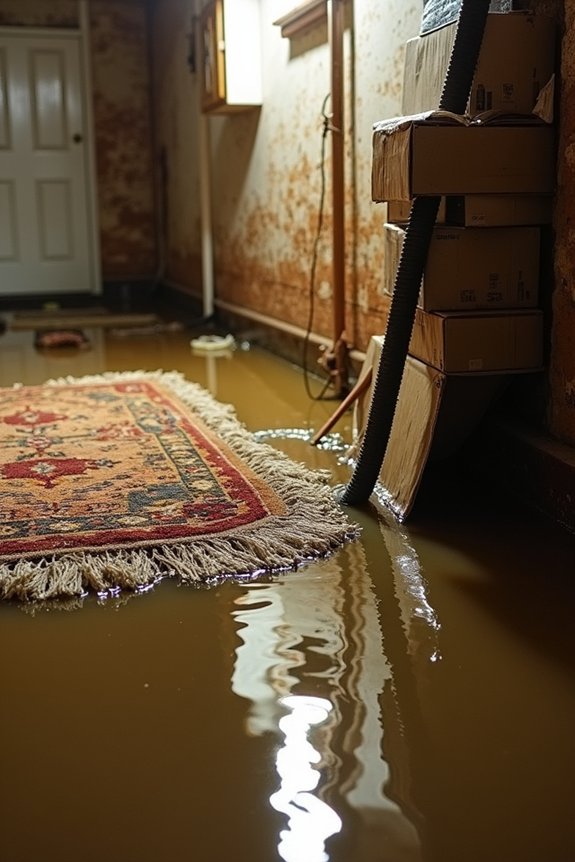
After you’ve tackled the water removal and cleaning, there’s one critical step I can’t stress enough: getting your insurance company in the loop as soon as possible.
I learned this the hard way. Here’s what I wish I’d done immediately:
- Document everything with dated photos showing the flooded basement, damaged items, and cleanup progress—this protects your claim
- Contact your agent within the deadline to start your claim and understand exactly what coverage you have
- Gather all receipts and contractor invoices to prove your expenses and support replacement costs
Call your insurer right away. Ask about coverage for water damage, mold remediation, and temporary living expenses. Provide a detailed list of damaged items with estimated replacement costs. Keep meticulous records of all communications. Professional assessment reports strengthen your documentation significantly. This isn’t bureaucratic busywork—it’s protecting yourself when you need it most.
Find Out Why Your Basement Flooded
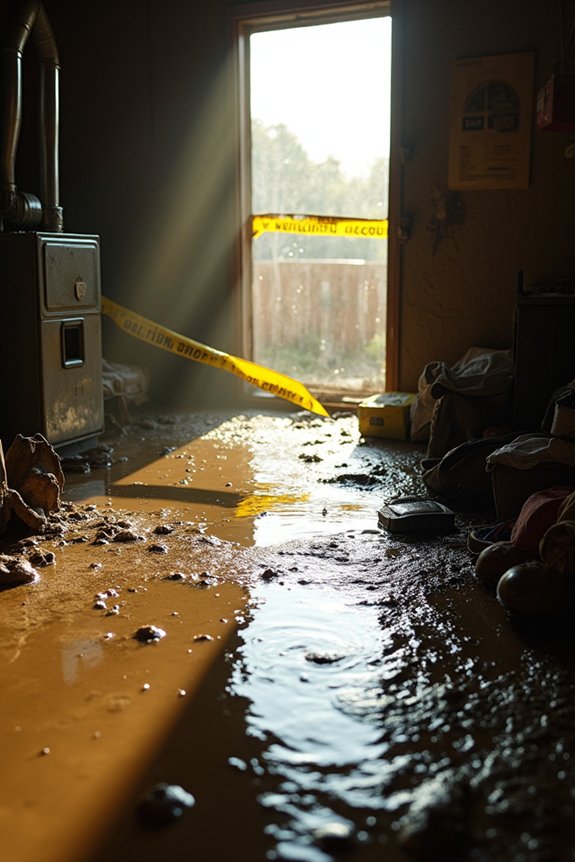
Why’d your basement flood in the first place? Finding the root cause helps you prevent future disasters. Basement flooding stems from several culprits: burst pipes, water heater leaks, drain backups, foundation cracks, or sump pump failures. Weather-related flooding happens when saturated soil pressure overwhelms your foundation, especially after heavy rainfall. Check for standing water location—near pipes suggests leaks, while perimeter pooling indicates foundation issues. Look for moisture intrusion signs like damp walls or calcification. Assess water cause by inspecting gutters, downspouts, and window wells. I recommend calling a professional if you’re uncertain. Understanding why it happened guides your repair strategy and insurance claim. This knowledge protects your home moving forward.