
I always start by picking a wall with natural focus—like behind my bed or fireplace—avoiding walls cluttered with details. Test your color samples under both morning and evening light; this matters more than you’d think.
Then decide: paint’s quickest and most affordable, panels add architectural depth, or texture creates dimension. Measure twice, cut once, and use a level religiously. Prime and paint with two coats for professional results. The right choice depends on what works best for your specific space.
Choose the Right Accent Wall to Maximize Visual Impact
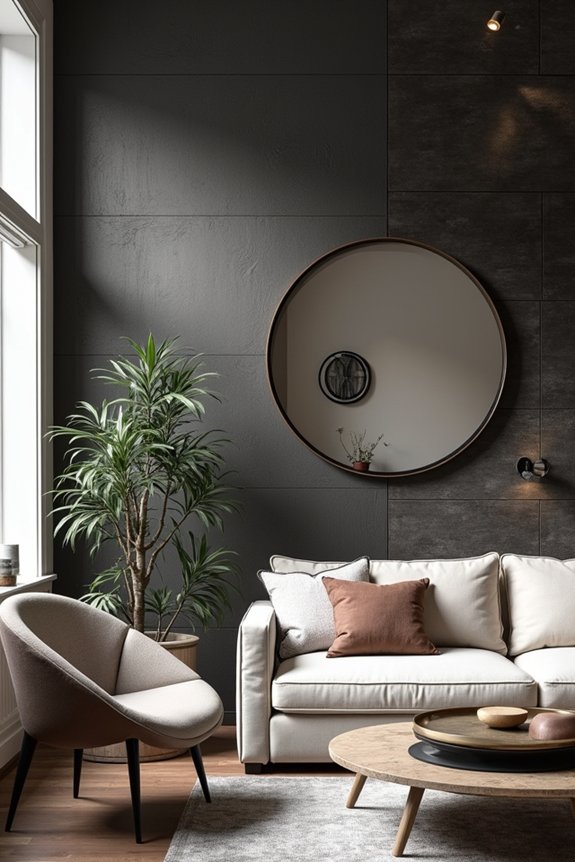
Where should you place your accent wall for the biggest visual payoff? Choosing the right wall matters. I recommend targeting a fireplace, gallery wall, or the wall behind your bed—these naturally draw eyes immediately. Look for walls with minimal architectural detail so your wall color doesn’t compete with existing features. In my open-concept living room, I painted the wall opposite the entrance, creating a focal point that anchors the entire space. This strategy works especially well for high-ceiling areas where you need visual grounding. Before committing, I coordinate my accent wall carefully with existing art, textiles, and nearby elements. Testing samples under different lighting conditions—natural morning light versus evening artificial light—helps your chosen hue read beautifully and achieve the visual impact you’re seeking.
Compare Treatment Options: Paint, Panels, and Texture-Which Fits Your Space?
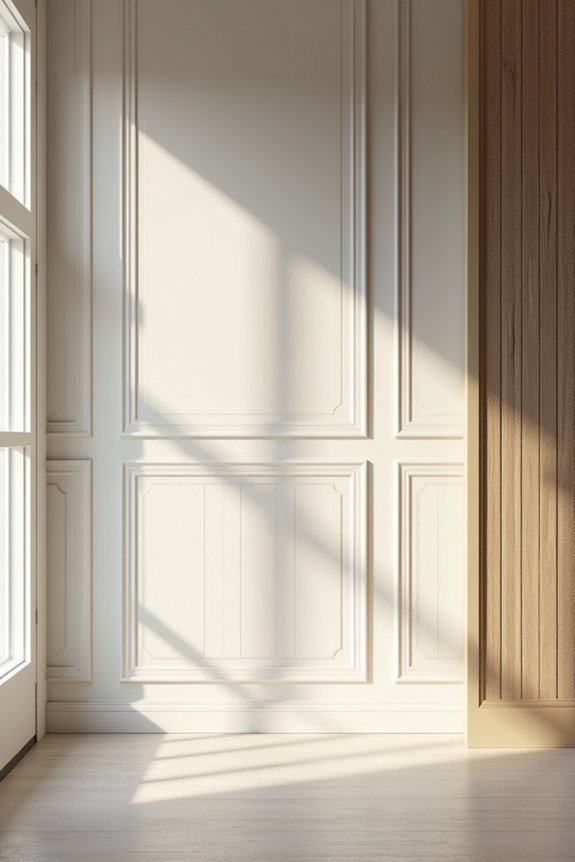
How you treat your accent wall matters just as much as which wall you choose. I’ve tested all three approaches, and each affects a room differently.
Paint offers simplicity—one gallon covers two coats on most walls. Panels create architectural depth with framing and shelving options. Texture adds dimension through plaster, wallpaper, or faux finishes.
Consider these factors when deciding:
- Your room’s lighting affects how color and texture read
- Paint suits bold color strategies on tight budgets
- Panels integrate lighting and match existing cabinetry well
- Texture requires primer and specialized adhesives but delivers visual impact
I’ve seen paint change spaces quickly, while panels improved rooms I thought were finished. Your choice depends on your room’s purpose and existing décor. Think about what feeling you’re after—that guides everything.
Map Your Accent Wall Design and Gather Materials
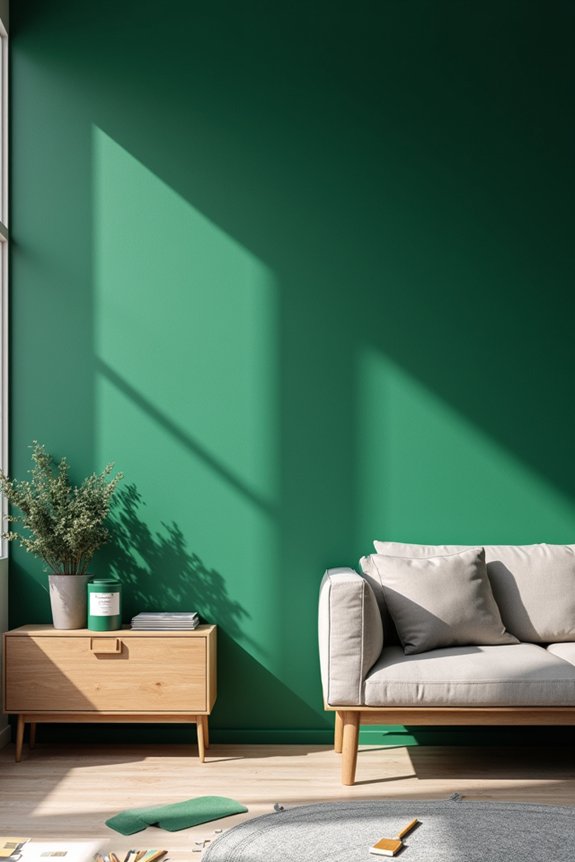
Once you’ve settled on paint, panels, or texture, it’s time to actually plan what you’re building. I grab graph paper and sketch my accent wall layout, marking where panels or moulding will sit. This prevents costly mistakes during installation. I photograph my wall and print it out, then draw directly on the photo to visualize spacing. I’ve learned the hard way that removing baseboards or crown moulding beforehand makes everything flush and professional-looking.
Before you start, gather all materials: adhesives, cutting tools, texture compounds, and paint. Check manufacturer instructions carefully—they’ll specify safety gear and proper application techniques. I keep everything organized in one spot, which saves frustration later. Having materials ready means your installation flows smoothly from cutting pieces through final finishing touches.
Install Your Wall Treatment (Treatment-Specific Steps)
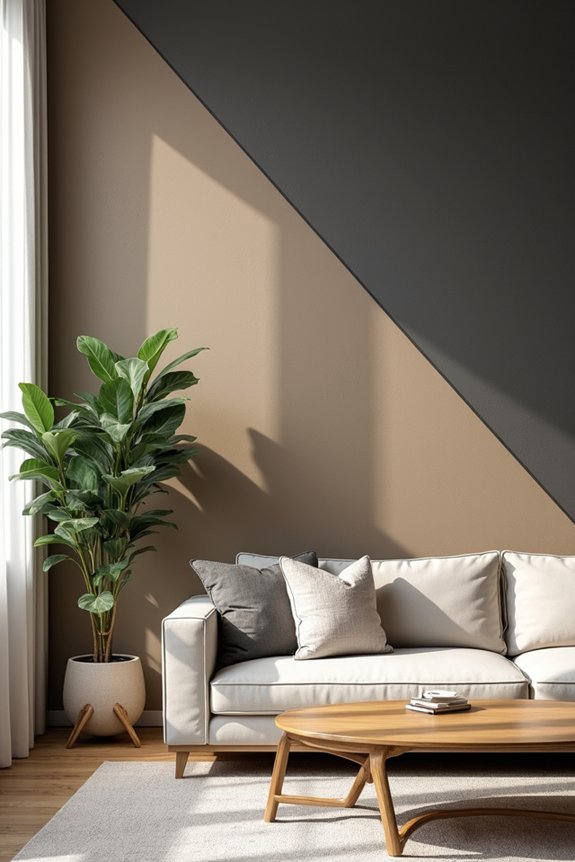
Now comes the part where your careful planning actually becomes real—and I’ll admit, this is where I get excited and nervous at the same time. Here’s what I’ve learned from my accent wall projects:
- Cut pieces precisely using your plan design measurements
- Use your level and square to verify perfect alignment before fastening
- Install panels with your nailer, setting depth so fasteners sit just below the surface
- Double-check everything before moving forward
I always dry-fit my pieces first. It’s saved me from expensive mistakes. Once everything’s positioned correctly, I nail or adhesive the panels according to my plan design. The nailer makes larger panels manageable—I couldn’t do this without it. After installation, priming and painting complete your accent wall. You’re almost there now.
Caulk, Prime, and Paint Your Finished Accent Wall
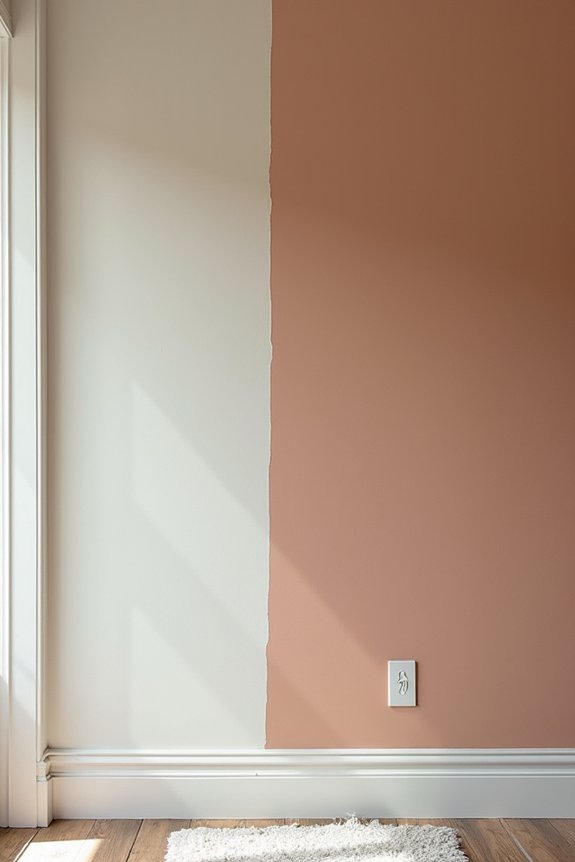
What’s the difference between an accent wall that looks professionally finished and one that looks amateur? The final steps. I’ve learned that caulk and prime are important.
Start by using paintable caulk to seal any joints between panels or mouldings. Smooth it with a caulk tool before it dries—this creates that clean edge we’re after. Fill nail holes next, then let everything dry completely.
Now comes priming. I always prime the entire finished surface first. This step improves adhesion and delivers even color coverage, especially on textured surfaces. For large flat areas, I spray on primer-sealer instead of brushing.
Finally, apply two coats of your chosen paint color. The first coat seals; the second coat gives you that polished look you’re going for.