
First, sketch your design on paper and measure your wall width—mine was 160 inches, so I used a 63-inch center box with 48-inch sides. Then grab finger-jointed pine molding, calculate total length needed, and add 10% for waste.
Next, cut pieces at 45-degree angles using a miter saw, install horizontal pieces first with a finish nailer, and drive nails into studs. Finally, caulk all gaps, fill nail holes with putty, sand smooth, prime, and paint. Pay attention to getting those crisp, professional corners just right.
Step 1: Design, Choose Materials, and Measure Your Wall
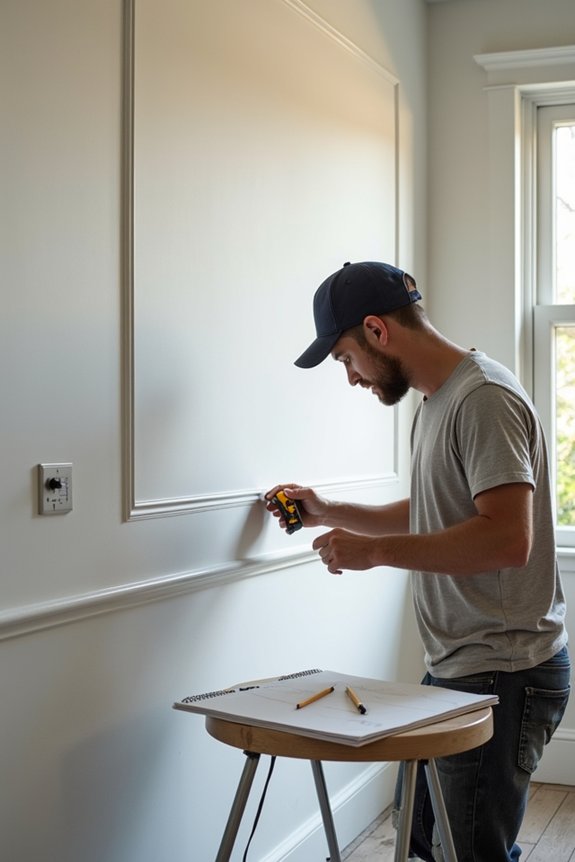
Plan before you install molding. Start by sketching your wall molding design on paper before cutting anything. This keeps your boxes aligned with the ceiling line and produces the pattern you want.
Sketch your wall molding design on paper first to keep boxes aligned with the ceiling and achieve your desired pattern.
Measure your wall width carefully—mine was 160 inches. Then determine your box sizes: I used a 63-inch center box with 48-inch side boxes, repeating this three-main-box pattern with smaller boxes filling gaps.
Next, select your materials. I chose a traditional 9/16 x 1 9/16 finger jointed pine profile for its clean look and affordability.
Calculate your total molding length needed, then add 10% for waste. Choosing 8, 10, or 12-foot lengths minimizes leftover materials and fits your measurements better.
Step 2: Cut and Install Moulding With Proper Tools
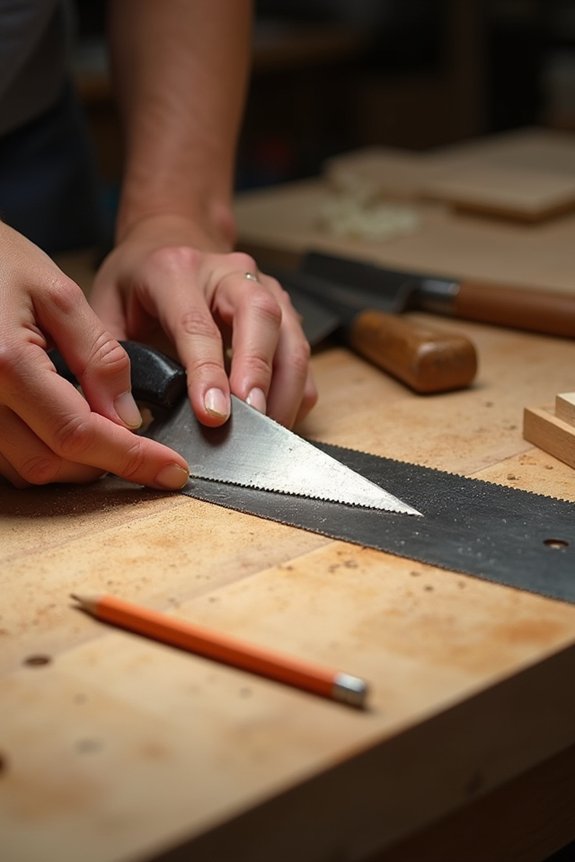
Now comes the practical part—converting those measurements into actual wall boxes. I’ll cut four equal-length pieces for each section, trimming the ends at 45-degree angles for a polished appearance. Before installing anything, I lightly sand the cut moulding with fine-grit sandpaper to eliminate splinters that’ll snag your fingers later.
| Step | Tool | Material | Purpose |
|---|---|---|---|
| Cutting | Miter saw | Moulding | 45-degree angles |
| Sanding | Fine-grit paper | Cut edges | Remove splinters |
| Installing | Finish nailer | 1″ brad nails | Secure to studs |
| Leveling | Level | Horizontal pieces | Proper alignment |
| Finishing | Caulk gun | Caulk | Edge sealing |
I install horizontal pieces first, marking with a level and positioning them 3 inches from the baseboard. Using my finish nailer with 18-gauge nails, I drive them directly into studs—never just drywall. Then I tackle vertical pieces before caulking edges and filling nail holes with spackling.
Step 3: Caulk, Fill, and Paint to Seal Everything
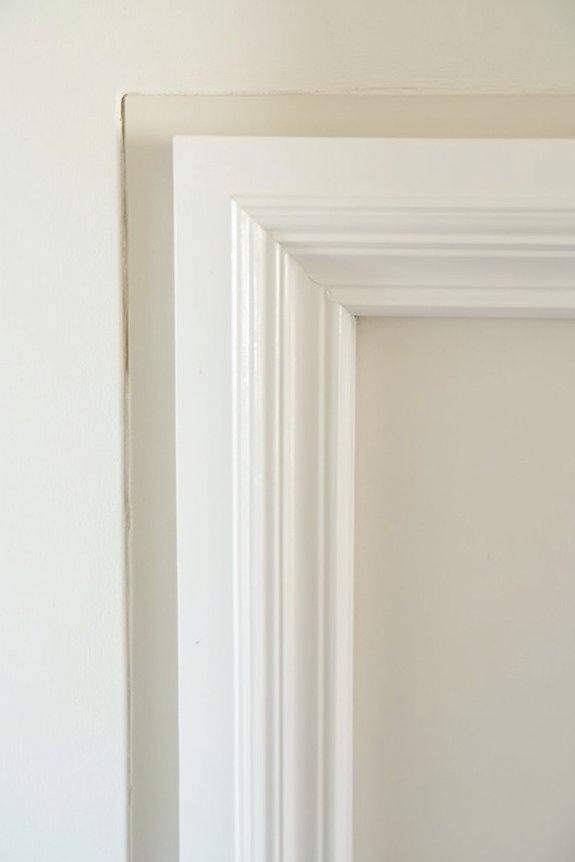
With your moulding nailed securely in place, the finish work is what’ll make everything look truly professional. I caulk all edges between trim and wall first—this hides gaps and creates that seamless transition you’re after. Next, I fill every nail hole with wood putty, let it dry completely, then sand it smooth. Rushing this step shows in the final result.
Now comes paint. I always apply primer to raw wood first; it prevents tannins from bleeding through. Then I paint with my wall color—Benjamin Moore’s Simply White works beautifully—in eggshell sheen, usually two coats. Finally, I touch up surrounding walls as needed. This last detail completes your project and delivers a polished outcome.