

I’ve found that statement lighting works well above cabinets. Twenty-four to twenty-eight inch sconces create drama and draw eyes upward, especially when they contrast sharply with your walls. Pair them with a bold backsplash color—deep navy or charcoal works beautifully—and add curated collections in odd numbers for visual interest. Layer in plants, woven textures, and architectural trim like crown molding to anchor everything together. When these elements work in harmony, that blank space becomes a sophisticated feature of your kitchen, and there’s much more you can explore.
Statement Lighting Above Your Cabinets
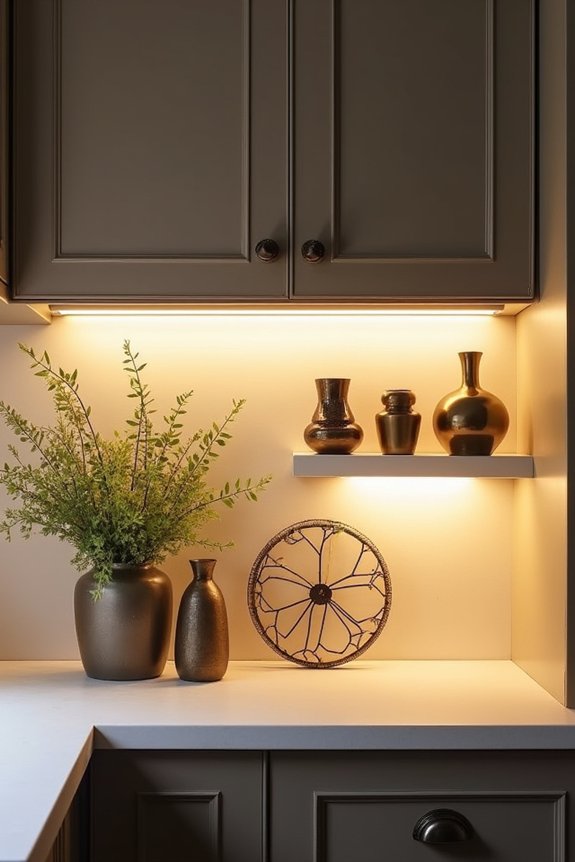
Why settle for empty space above your kitchen cabinets when lighting can use those surfaces effectively?
Oversized swing-arm sconces create dramatic lighting that draws your eye upward. Choose finishes that contrast sharply with your wall and cabinet colors—this pop makes your decor above cabinets more noticeable. When I flanked my upper cabinets with gallery-like sconces, those architectural lines became clearly intentional.
Statement lighting works best when it’s bold. I recommend 24-28 inch sconces spaced evenly along the cabinet length. The contrast between your fixtures and background matters for creating a focal point. Look at how Stacy Zarin Goldberg positions her fixtures—that’s the scaling to follow.
This dramatic lighting approach turns overlooked space into an architectural highlight that anchors your entire kitchen’s mood.
Design With Backsplash or Bold Color
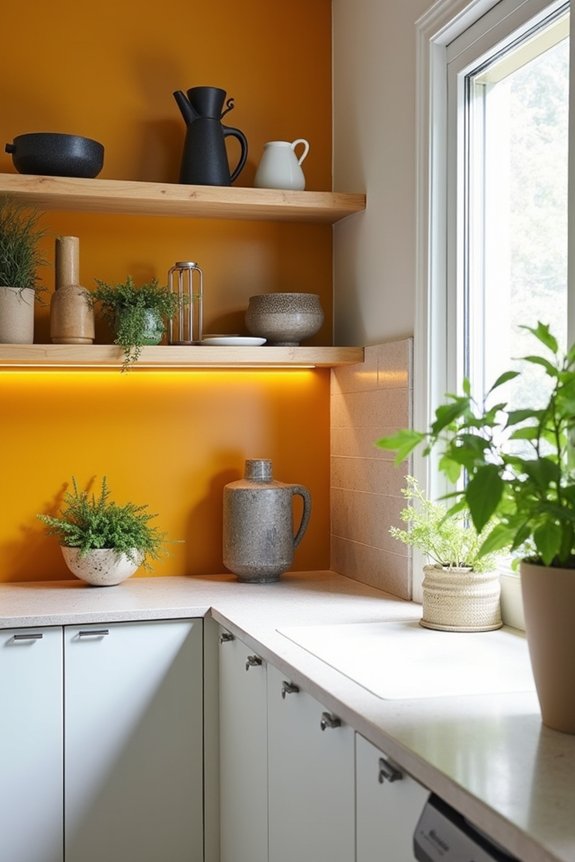
While statement lighting draws the eye upward, what you paint or tile above your cabinets matters just as much. I’ve found that extending your backsplash creates a seamless visual line connecting cabinets and ceiling. This unified approach makes your space above cabinets feel deliberate rather than overlooked.
A bold color like deep charcoal or navy adds visual interest as a focal point. I paired moody walls with white cabinetry, and it changed how the kitchen felt—more sophisticated and grounded. You’re drawing the eye upward while adding depth.
The key? Coordinate your bold color with existing hardware, trim, and backsplash extension to maintain a cohesive space. Avoid clashing undertones by comparing samples directly against your cabinets. When done thoughtfully, this approach makes every inch count.
Curate Collections on Cabinet Tops
How you arrange objects above your cabinets matters more than you’d think. I’ve learned that odd-number grouping—displaying three vases or five framed art pieces—creates natural visual interest that even numbers simply can’t match. Your curated collections deserve spacing that allows room to see each piece clearly.
I group my vintage signs and greenery using a cohesive color palette that mirrors my cabinetry’s warm wood tones. This unity makes the space above cabinets look deliberate rather than cluttered. I vary heights by using stands or stacked books beneath pieces, drawing the eye upward gracefully.
Adding lighting above cabinets made a real difference for me. LED strips illuminate my decor without harshness, creating depth and warmth. Seasonal swaps keep things fresh—I rotate heirloom pieces and prints monthly, maintaining cohesion while changing my kitchen’s appearance.
Layer in Plants and Woven Texture
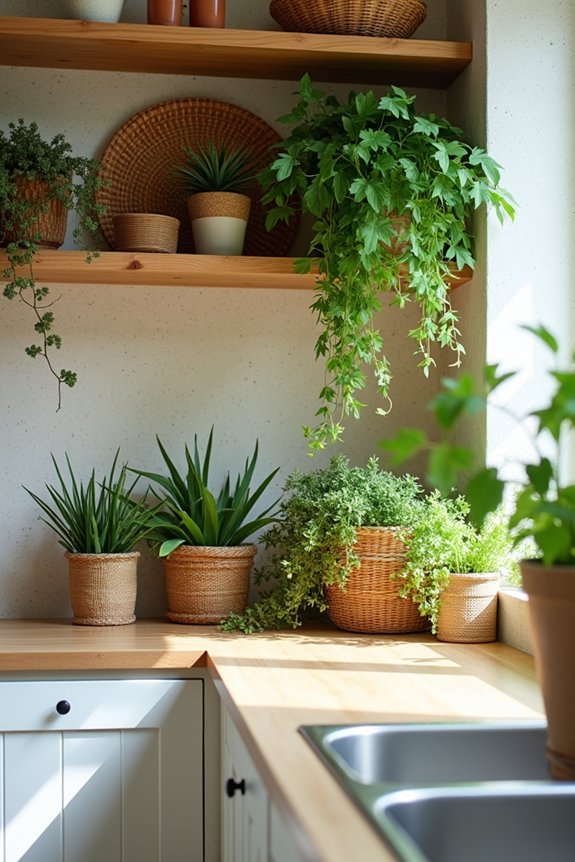
Plants and woven textures work well in that blank space above your cabinets. Layering greenery with woven baskets creates warmth that flat cabinet fronts need. Group plants in odd numbers—three or five—at varying heights to build a vignette that draws your eye upward naturally. Low-maintenance succulents or faux plants work especially well for high ceilings where watering becomes a hassle. Dark woven baskets paired with trailing light-colored plants create visual depth and contrast. Balance organic textures—think rattan accents and woven elements—alongside your foliage to soften hard lines. This approach softens your kitchen’s upper zone while keeping maintenance realistic for busy households.
Frame the Space With Architectural Trim
Once you’ve got your plants and textures layered in, consider what frames that whole upper zone. Architectural trim creates the perfect boundary between your space above your cabinets and the wall itself. Crown molding or simple trim painted in a bold color—like deep navy or rich charcoal—adds sophistication to your kitchen.
The trim does more than look refined; it anchors your display items and creates consistency with your kitchen hardware. When you add lighting fixtures that echo that same metallic or dark finish, everything feels coordinated and deliberate. The contrast between the trim’s color and your cabinets’ tone makes the whole arrangement stand out. This framing strategy turns decorative storage into architectural interest, giving your kitchen polish and personality.