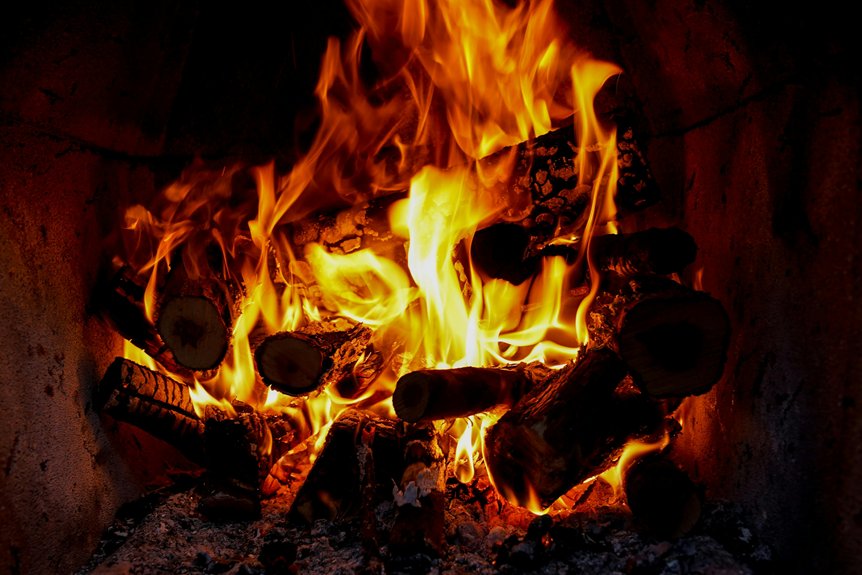
Water vapor fireplaces use an ultrasonic transducer that vibrates tap water into ultra-fine mist particles—just a few microns wide. Colored LED lights then illuminate this mist from different angles, creating realistic orange, red, and yellow flame effects. A rotating refractive panel adds depth and flicker, making everything look like genuine flames dancing. You’re basically watching light play tricks on mist rather than actual fire.
The benefits include no heat, smoke, or mess to deal with, plus you control the flame speed, density, and height remotely. There’s quite a bit more to understand about getting the most from yours.
What Is a Water Vapor Fireplace?
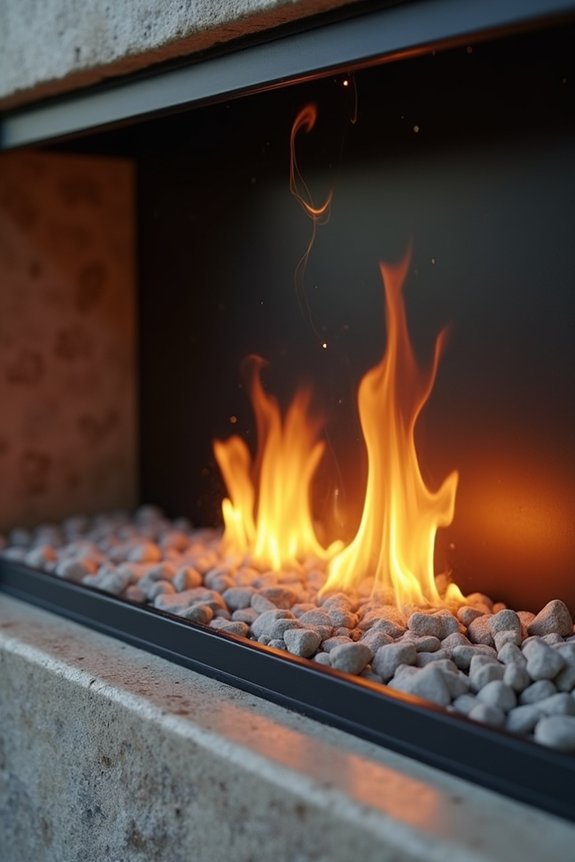
Creating the ambiance of a real fireplace without the heat or mess—that’s what a water vapor fireplace does, and it’s genuinely clever. Here’s how it works: an ultrasonic transducer converts tap water into ultra-fine mist, which gets propelled through specially designed ducts. Colored LED lighting then illuminates this mist, creating flame-like visuals that look quite realistic. You control the flame speed, density, and height to match your preference.
What makes this decorative fireplace special? There’s no heating, no chimney needed, and no combustion happening. The flames stay cold and safe to touch. Guests often lean in, not expecting to avoid getting burned. Plus, it’s environmentally friendly—using only water with negligible emissions. You might notice slight humidity improvement in dry rooms too. Installation is straightforward: just add tap water and you’re done.
How Ultrasonic Mist Technology Creates the Flame Effect
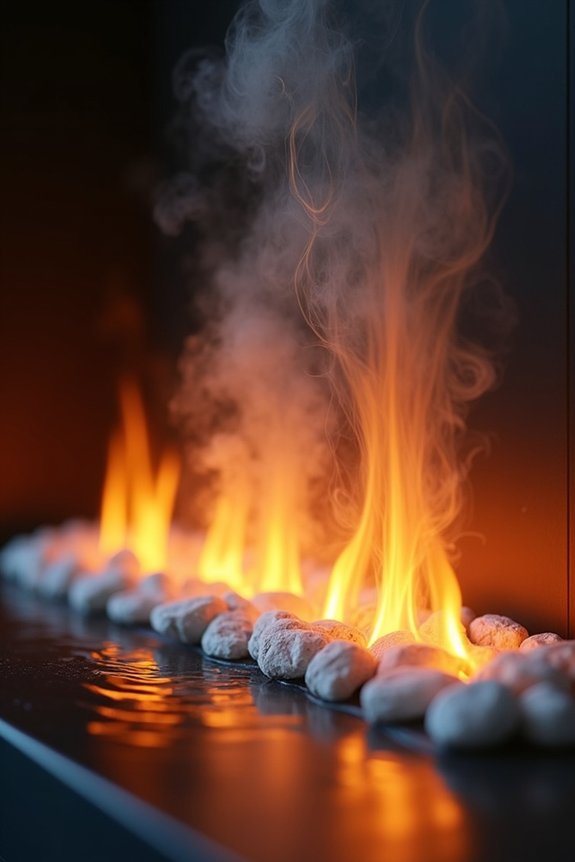
The foundation of that realistic flame you’re seeing actually starts with something invisible—sound waves. A transducer vibrates water at ultrasonic frequencies, creating airless mist particles just a few microns in size. Think of it like this: you’re breaking water into impossibly tiny droplets that float through specially designed ducts.
Here’s what happens next. LEDs illuminate this water vapor from different angles, casting light that dances across the mist. A rotating panel refracts that light, shaping and coloring the vapor to mimic flickering flames. The visual flames look alive—no actual fire needed.
The best part? You control everything. You’ll adjust the flame effect’s density, height, and speed through your decorative fireplace’s settings. This customization lets you create exactly the ambiance you want, whether you’re after a gentle glow or dramatic visual impact.
LED Lighting and Dynamic Flame Visuals Explained
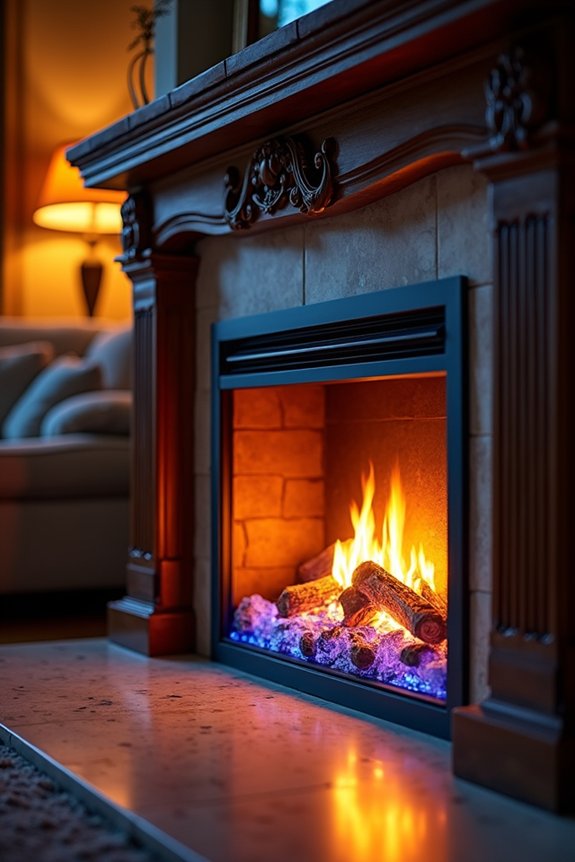
How do those flames actually look so real? I’ll let you in on what’s happening behind the scenes.
Your decorative fireplace uses a clever combination of technologies working together:
- LED lighting with color cycling creates authentic orange, red, and yellow hues that shift naturally
- Refractive panels bounce and distort light, generating that mesmerizing depth and flicker you’d see in real flames
- Mist or fluid mixing with LED illumination produces dynamic, dancing visuals that feel genuinely alive
- Holographic displays project high-definition flame imagery for realistic effects
Here’s what works well: the flame effects operate independently from heat. You can enjoy those beautiful dynamic visuals while your heater stays off, or run both together. The optical lens technology focuses light precisely, while the refractive panel does the heavy lifting for authentic movement. It’s solid engineering that creates something beautiful without actual fire.
Water Vapor Fireplace Safety and Installation Requirements

Water vapor fireplaces bring a different safety profile to the table—one that makes them easier to live with than traditional decorative units. The cool-to-touch components mean you’re not worried about burns around kids or pets. The ultrasonic transducer creates fine mist without any heating function, so there’s no combustion risk. Installation requirements are simple: just tap water and basic setup. The safety shut-off feature automatically stops operation when needed. Remote control or app options let you adjust LED flame effects from anywhere. This maintenance-light humidification firepiece demands minimal upkeep. Dry operation means no residue cleanup. You’re getting genuine flame visuals without the traditional hassles that come with real fire.
Best Rooms and Limitations for Water Vapor Fireplaces
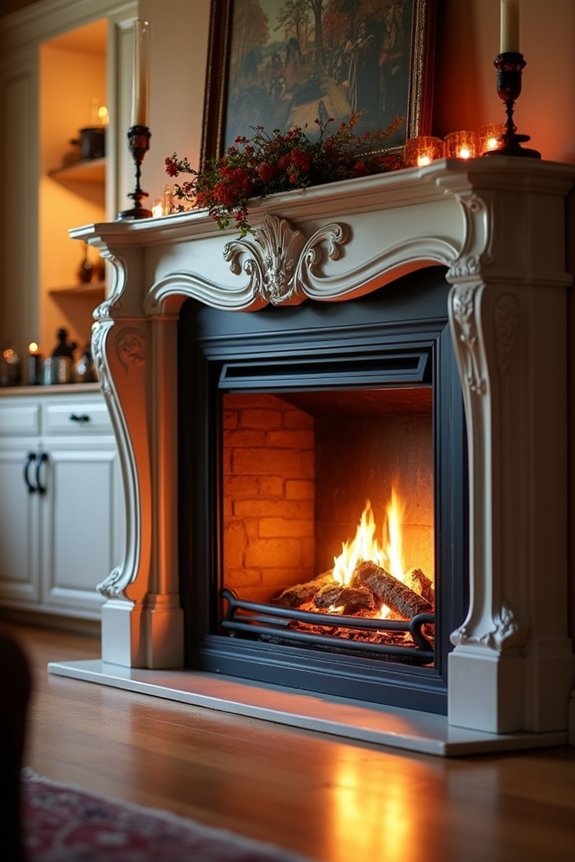
Where should you actually put one of these things in your home?
I’ve found water vapor fireplaces work best in spaces where humidity control isn’t critical. Here’s what I’d consider:
- Living rooms with good ventilation where the 3D flame effect performs well
- Bedrooms in dry climates where humidity addition actually helps
- Dens or offices where remote/app control fits your lifestyle
- Entertainment spaces ready for home automation integration
The ultrasonic transducers create ultra-fine mist that dissipates naturally, so avoid bathrooms or kitchens. You’ll want rooms without strict moisture requirements since these decorative fireplaces add slight humidification. Their LED illumination looks good against darker walls, and dry-operation safety means you’re not fighting condensation issues. I’d skip nurseries and spaces needing precise humidity. The no heating aspect makes them suitable anywhere you want ambiance without temperature changes.