
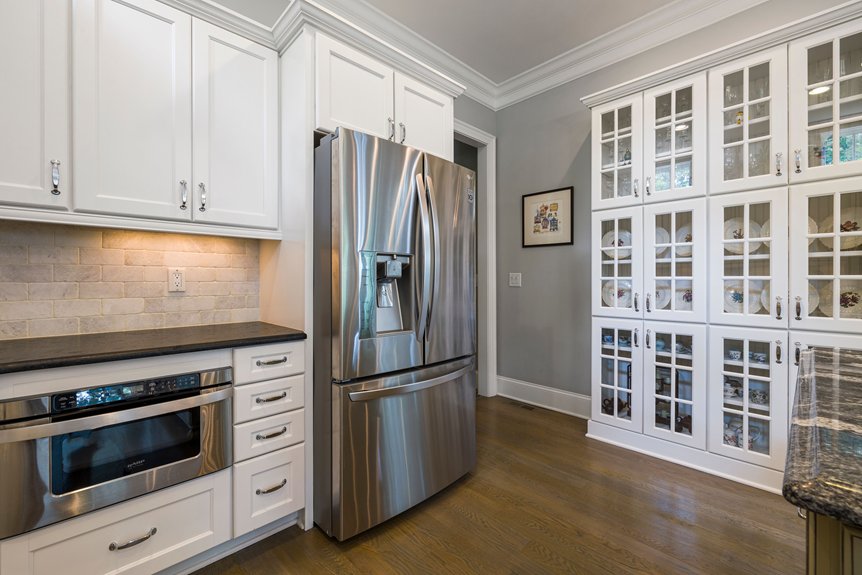
I’ve watched kitchen remodels spiral from $50,000 to $80,000 because of five preventable mistakes.
You skip remeasuring and end up with 1/8-inch gaps that add thousands to your costs.
You DIY installation instead of hiring pros, causing alignment problems.
You pick cheap cabinets to save money, then pay double in repairs within two years.
You design layouts without testing workflow, forcing expensive mid-project changes.
And you underestimate timelines—expecting six weeks when you need four to five months.
Each mistake compounds the others, but getting these fundamentals right upfront saves serious money.
I’ll show you exactly how.
Measure Twice, Order Once: Why Precision Prevents Costly Reworks
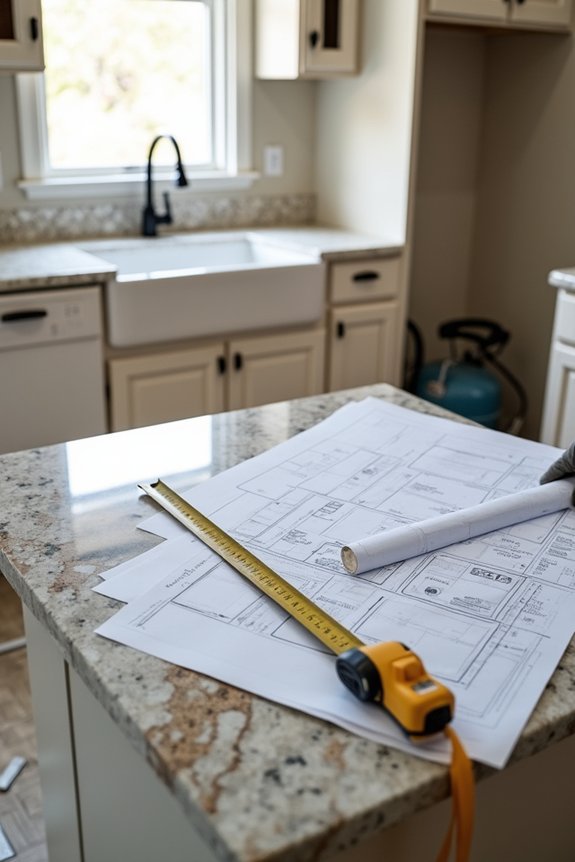
Why do so many kitchen remodels spiral over budget? I’ve learned the hard way that measuring accuracy matters. When I skipped re-measuring before cabinet ordering, I ended up 1/8 inch short—sounds tiny, right? Wrong. My drawer wouldn’t close properly, and my appliance swung into the counter edge. That mistake cost me thousands in rework.
Here’s what I do now: I measure twice, then have a professional verify everything. Even small errors cascade into door clearance issues and workflow disruptions. Before ordering custom cabinets, I remeasure every dimension. This simple step avoids costly reorders and fabrication delays.
Taking time upfront for measuring accuracy gives you real budget control. You’ll skip the mid-project surprises that drain wallets. Precision prevents reworks that hurt both your timeline and finances.
When Cabinet Installation Requires a Pro (Not a DIY Project)
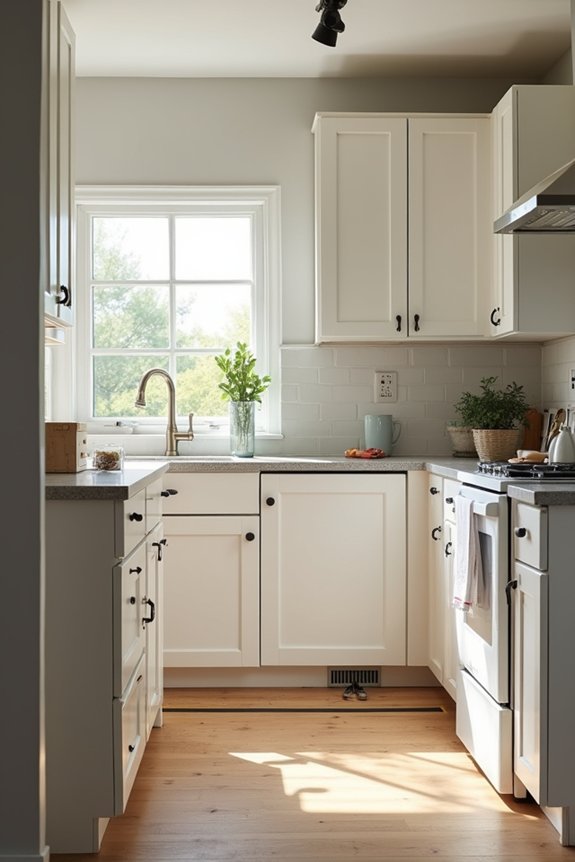
So you’ve nailed your measurements—great work. Now here’s the truth: cabinet installation is where things get tricky. I’ve watched friends spend thousands fixing misaligned doors and binding drawers that could’ve been prevented.
Professional carpentry isn’t just about screwing cabinets to walls. It’s about alignment challenges that require:
- Shimming to correct uneven surfaces and walls
- Using plumb lines and levels for perfect positioning
- Coordinating with electrical and plumbing rough-ins
- Handling weight distribution on frameless versus face-frame units
Pros know how to space cabinets flush against walls, keeping gaps consistent as your home settles. They’ll confirm toe-kick clearance and prevent hardware failure from improper mounting. Honestly, skipping this step usually costs more in reworks than hiring someone upfront. Your future self will thank you.
Storage and Workflow: Design the Layout Before Choosing Materials
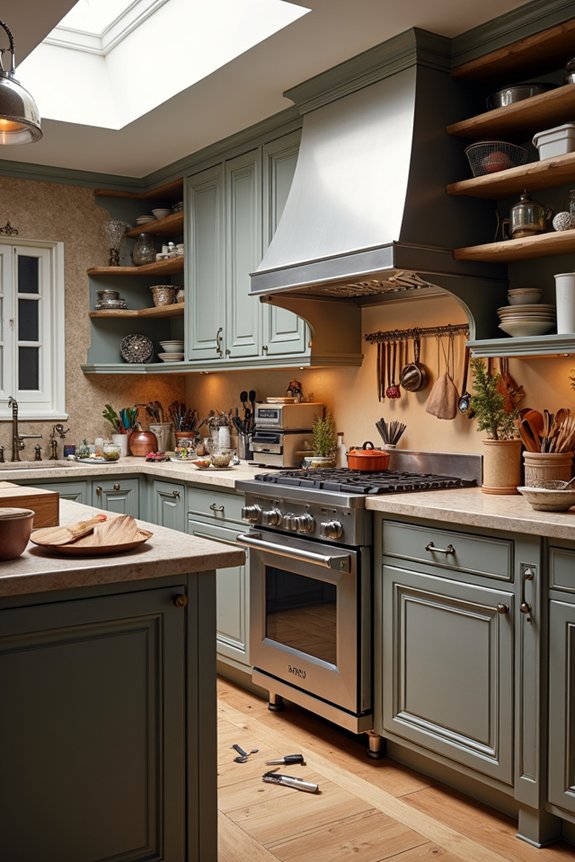
Plan your layout before you spend a dime on cabinets or countertops. I watched my neighbor buy gorgeous cabinetry that didn’t fit her workflow, and she regretted it immediately.
Start by mapping your work triangle—cooktop, fridge, sink—keeping distances between 4–5 feet each. Then identify your storage needs: tall pantry cabinets, drawer bases, roll-outs positioned along your cooking sequence. Plan traffic paths too; you’ll want 40 inches clearance around islands.
Walk through your layout with another person. Does movement feel natural? Can you reach everything comfortably? This simple test catches mismatches between appliance footprints and wall space before materials arrive. Design first, shop second. Your budget will benefit from this approach.
Cheap Cabinets, Expensive Repairs: Why Material Quality Protects Budget
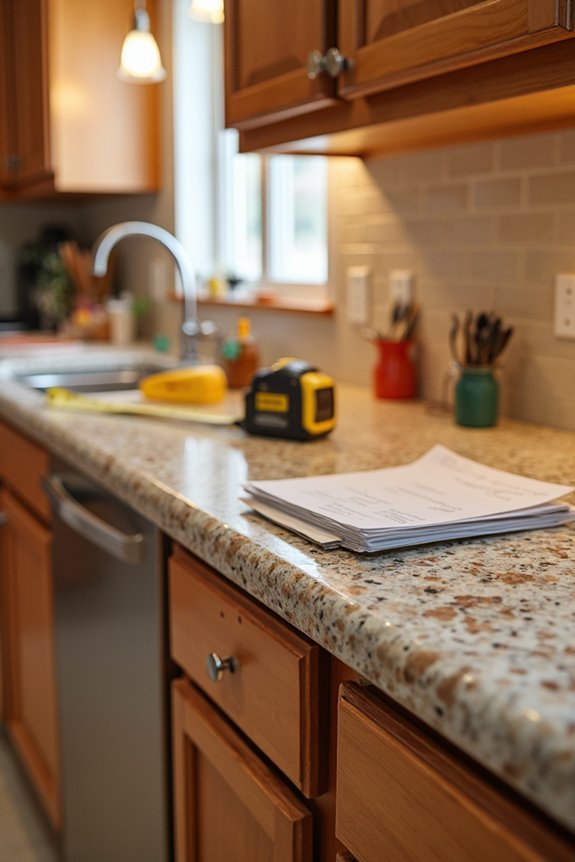
When I first renovated my kitchen five years ago, I made the classic mistake of going with budget cabinets to save $3,000 upfront. I thought I was being smart. I wasn’t.
Here’s what happened with my low-quality cabinetry:
- Doors warped within two years, requiring expensive replacements
- Hinges failed repeatedly, draining my wallet on repairs
- Cheap materials hid poor construction, causing installation nightmares
- Chipping veneer made everything look tired by year three
I’ve learned that material durability matters tremendously. Quality cabinetry protects your investment long-term, preventing budget overruns that cheap shortcuts create. My neighbor invested in solid wood cabinets initially costing more, yet she’s avoided my repair cycle entirely.
Don’t repeat my mistake. Choosing better-quality cabinets upfront saves you thousands in hidden costs down the road.
Timeline Reality: Plan for 3–5 Months, Not Weeks
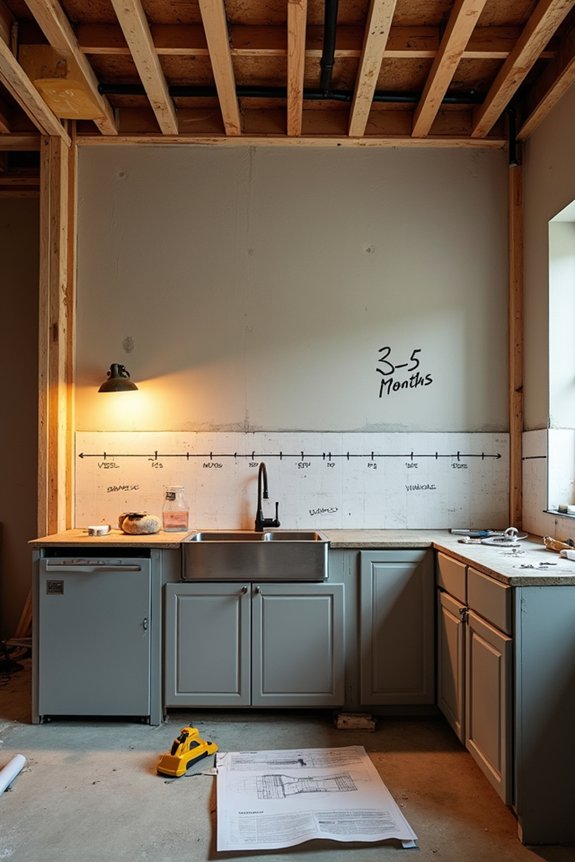
How many times have I heard someone say their kitchen remodel will be “done in six weeks”? I’ve learned that timeline is everything when protecting your budget. A realistic 3–5 month schedule prevents costly delays that drain money fast. Here’s why: cabinet lead times alone run 7–10 days for unassembled, 14–18 days for assembled units. Then come inspections, material backorders, and subcontractor scheduling hiccups. I’ve watched projects stretch beyond estimates because people didn’t plan for these disruptions. When you rush, you’re scrambling for expensive rush fees and making hasty decisions you’ll regret. I recommend building a detailed timeline that coordinates design choices, material orders, and contractor availability upfront. That breathing room saves your budget and your sanity.