
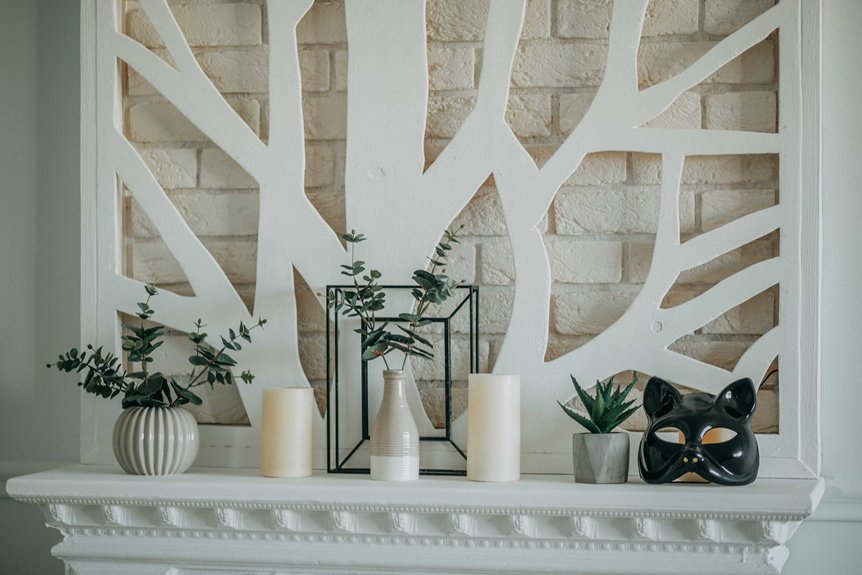
I’ve learned that an intentional mantel starts with one strong anchor—like a 36-inch mirror or large artwork—that guides everything else. From there, I layer in candlesticks at varying heights (8-14 inches), mix textures like metal with soft greenery, and arrange items asymmetrically so it feels warm, not stiff. The key? Leaving at least 30% empty space. I used to fill every inch; now I stop when balance feels right. These seven decisions take a cluttered shelf into something that whispers instead of shouts—and each one builds on specific techniques worth exploring further.
Tip 1: Choose a Strong Anchor to Ground Your Arrangement
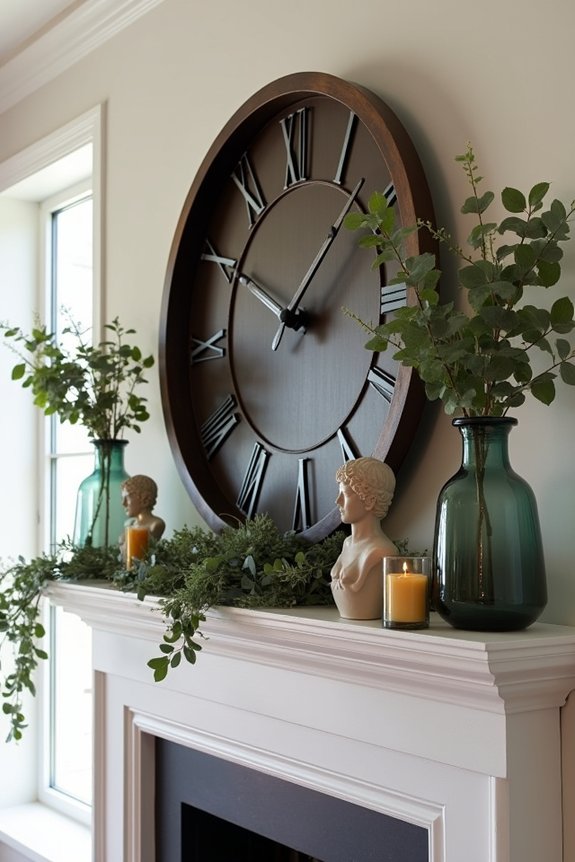
When I first started styling mantels, I’d throw things up there and hope they’d work together—spoiler alert, they didn’t. Everything felt scattered and chaotic. That’s when I learned the power of choosing a strong anchor.
Your anchor is the focal point that makes everything else click into place. I typically use an oversized mirror, large artwork, or substantial wreath—something that naturally draws your eye upward. This piece grounds your entire mantel decor and sets the stage for balance.
When I selected a 36-inch mirror for my living room mantel, suddenly the space had clear direction and purpose. That single anchor established height reference and determined how I’d layer complementary items around it. Everything afterward—candlesticks, small plants, books—found their proper spot because I had that visual starting point.
Your anchor creates harmony across your whole arrangement.
Tip 2: Build Height With Stacked Objects and Candlesticks
Why does a mantel sometimes feel dull and lifeless? Often it’s because everything sits flat on the surface. I’ve discovered that building height changes the entire appearance.
I start by using candlesticks of varying heights—typically 8 to 14 inches—placing them asymmetrically across the mantel display. Then I stack books horizontally or vertically beside them, which adds unexpected dimension. A single tall vase or sculpture positioned near the center provides visual stability.
The key is creating vertical balance without overcrowding. I lean a large frame at the back to add height naturally. When I pair stacked books with candlesticks in a cohesive color palette, the arrangement comes together with purpose and warmth.
Tip 3: Layer Textures and Materials for Visual Depth
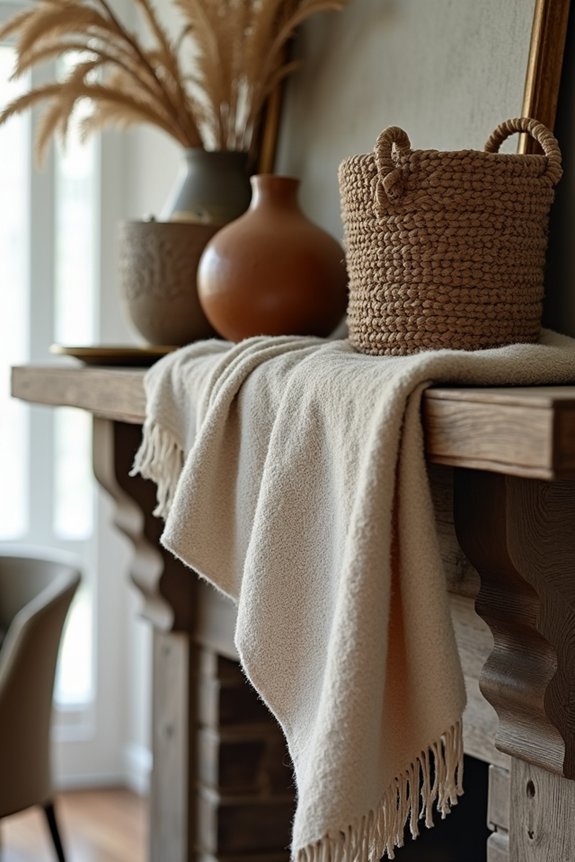
Place a metal candlestick next to a soft bundle of eucalyptus, lean a wooden frame beside a mirror with a sleek metal frame, or nestle a woven basket near smooth glass bottles. This is how I create visual depth on my mantel.
When you layer textures and materials, your display gains dimension and interest. I’ve found that mixing hard and soft elements produces better results. Here’s what works best:
| Texture Type | Example | Why It Works |
|---|---|---|
| Hard surfaces | Candlesticks, mirrors | Creates structure |
| Soft elements | Greenery, florals | Provides softness |
| Natural materials | Wood, ceramic | Builds richness |
| Metallic accents | Metal frames | Brings polish |
Tip 4: Arrange Items Asymmetrically to Avoid a Stiff Look
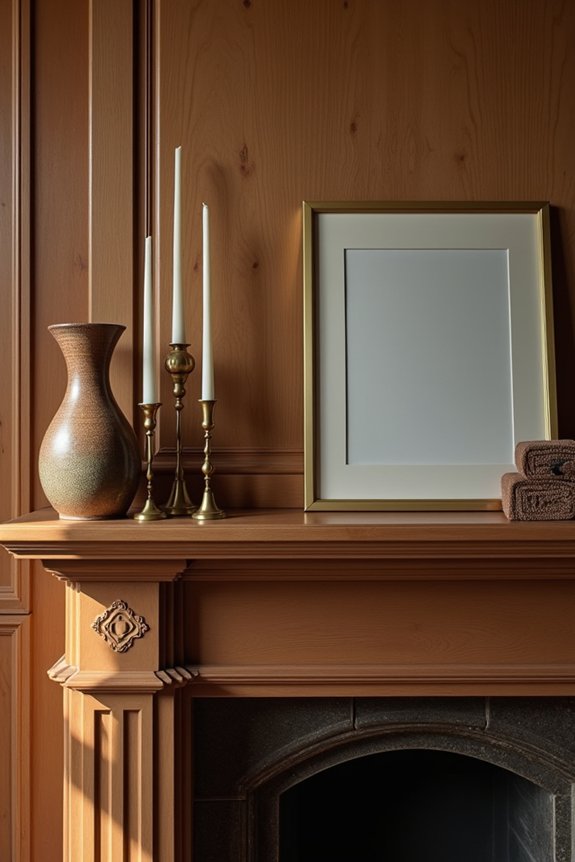
Have you ever noticed how perfectly matched items on a mantel can feel a bit… boring? I’ve learned that asymmetry works well for mantel decor that actually feels inviting. Instead of placing identical decorative pieces on each side, I start with a symmetrical base, then introduce imperfect touches that create genuine balance.
Here’s what works: pair a tall 18-inch vase opposite a shorter stack of three books, roughly 6 inches high. This height variety draws your eye naturally across your white mantel, creating movement and interest. I’ve found that offsetting one striking piece with smaller companions prevents that stiff, static feeling.
The key is embracing slight imbalance. It’s not about being messy—it’s about inviting warmth. That touch of imperfection makes your space feel lived-in and personal.
Tip 5: Add Life With Greenery and Florals
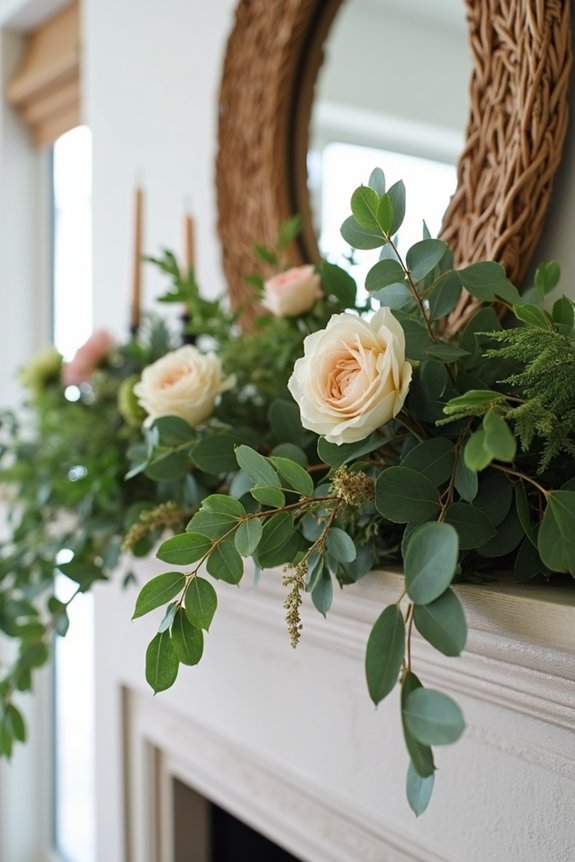
I’ve found that asymmetrical branches and greenery—like eucalyptus stems or curly willow—work well on a mantel when you vary their heights across the shelf. Natural elements like air plants, dried pampas grass, or foraged botanicals bring visual interest and become conversation starters when friends visit. Pairing these pieces with glass vases, wooden boxes, or metal holders creates depth and keeps the look from feeling flat or one-dimensional.
Asymmetrical Greenery And Branches
When you’re ready to break free from perfectly matching décor, that’s when your mantel becomes more livable. I’ve discovered that asymmetrical greenery and branches create warmth that rigid arrangements simply can’t match. I place tall, sculptural branches on one side—like curly willow or contorted hazelnut reaching 24-30 inches high—then balance the opposite end with shorter stems or stacked books. This height balance prevents your mantel from feeling flat.
I choose unexpected natural textures too: quince branches with their gnarled character, jasmine’s delicate drape, or ornamental grasses that catch light beautifully. These varied textures introduce movement against smooth surfaces. The visual weight shifts in a natural way across your mantel, guiding eyes without overcrowding the space. This asymmetrical approach feels deliberate and unhurried, like you’ve simply gathered what appeals to you.
Natural Elements Add Warmth
Fresh greenery and flowers give a mantel a sense of life and movement. I’ve found that foraged branches provide an authenticity that store-bought decorations lack. When I gather quince branches or jasmine from my garden, I’m incorporating outdoor elements into my interior in a genuine way.
The key is using asymmetrical foliage placement. I set taller stems on one side, then balance with shorter florals or books opposite. This creates natural movement rather than stiff symmetry. Seasonal greenery keeps things current—I swap spring grasses for autumn branches, always matching my room’s mood.
Natural elements paired with contemporary pieces prevent everything from feeling too matchy. The contrast allows both to stand out. This approach makes your mantel a living, breathing centerpiece that welcomes everyone who enters.
Foraged Botanical Conversation Pieces
How do you make a bare mantel more inviting? Foraged botanical conversation pieces work well for this. I gather quince branches, jasmine, and seasonal greenery to create natural focal points along my mantel. The key is positioning these elements at varying heights—some reaching 18-24 inches tall—to establish movement and prevent flatness.
I place delicate botanicals asymmetrically, letting them interact with contrasting materials like antique wood or modern sculptures. This creates visual interest. I refresh my seasonal greenery quarterly, keeping fresh foliage year-round while incorporating holiday-specific touches during celebrations.
These foraged pieces bridge indoor and outdoor spaces, making my mantel feel alive. It’s not about perfection—it’s about creating a gathering spot that welcomes people and reflects who you are.
Tip 6: Skip These Three Mistakes: Overcrowding, Understatement, and Poor Proportions
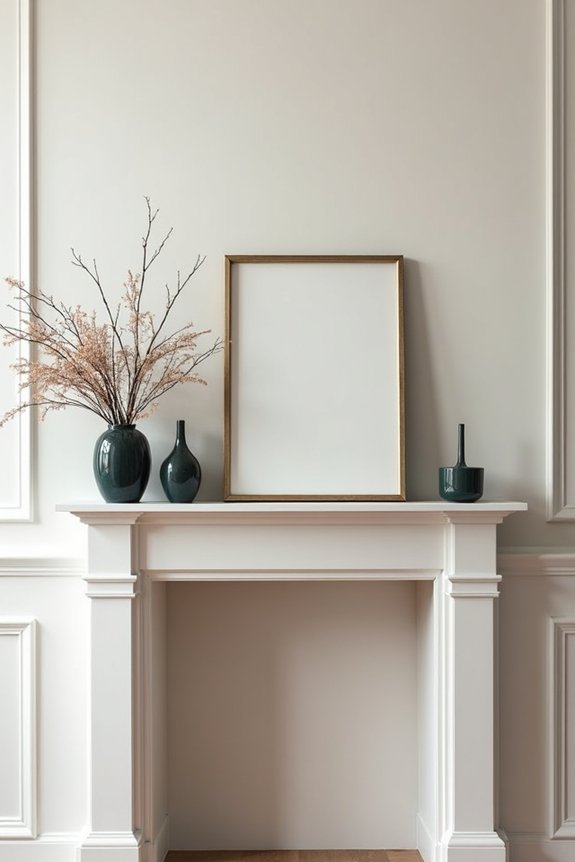
After I’ve styled dozens of mantels—some successfully, others not—I’ve noticed three patterns that derail even the best intentions.
First, overcrowding happens when I cram too many picture frames, candles, and florals onto one surface. The result? Visual chaos that distracts from your fireplace’s beauty. Second, understatement is equally problematic. A single clock sitting alone wastes valuable real estate and misses styling opportunities entirely.
Third, poor proportions trip me up constantly. Small items get swallowed by empty space, while layered vignettes require intentional scale mixing. I’ve learned that vertical balance matters—tall mirrors and pieces draw eyes upward by natural means.
The sweet spot? Achieving mantel decor through negative space, varied heights, and a well-composed layered vignette. Skip extremes. Instead, balance abundance with breathing room for genuine impact.
Tip 7: Leave Breathing Room: Know When to Stop
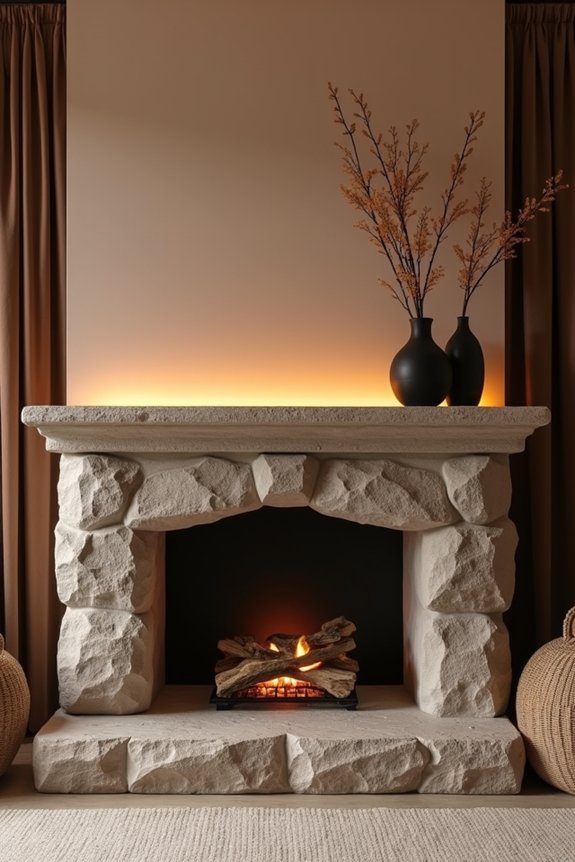
When does a beautifully styled mantel stop being beautiful? When you’ve filled every inch with stuff. I’ve learned this the hard way—I’d layer candles, frames, and trinkets until my mantel looked cluttered rather than organized.
The key? Negative space. You need breathing room between pieces to let your eye rest and appreciate each item’s visual weight. I aim for at least 30% of my mantel empty.
Here’s my approach: start with symmetry, then add intentional asymmetry gradually. Before placing another piece, I step back and ask myself honestly—does this improve the balance, or just fill space?
Stop when your mantel has height variation, balanced proportions, and breathing room. That’s when you’ve succeeded. Your mantel decor should whisper, not shout.